
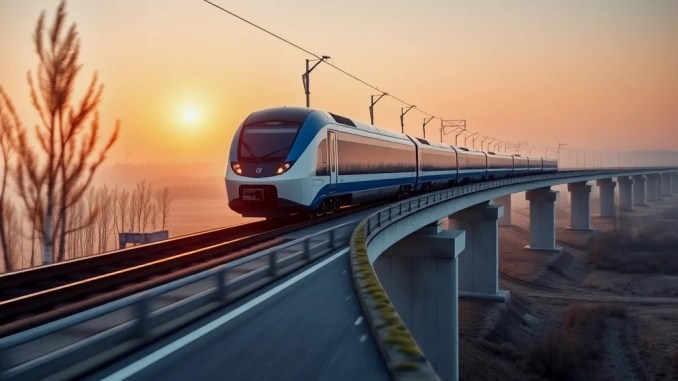
CEF Transport Funding Request and Timeline
RB Rail AS lodged a targeted request for €357.5 million from the European Union to fund construction and infrastructure works for Rail Baltica between 2027 and 2030. The package splits into €157.5 million via the Cohesion Fund and €200 million from the General Fund. The proposals were prepared in coordination with national implementing bodies in Estonia, Latvia and Lithuania and submitted into the CEF Transport selection process administered by the European Commission and CINEA.
CEF Transport calls that ended on 6 October 2026 allocated a total budget of €1.1 billion, of which €260 million sat in the Cohesion Fund for rail projects and €350 million in the General Fund for core network rail and inland waterways. CINEA reported roughly €3 billion in requests across 246 projects—about 2.69 times the available call budget—so RB Rail’s request equates to roughly 33% of the 2026 CEF Transport call budget. Evaluation outcomes are scheduled for March 2027 with grant agreements expected by June 2027.
What the €357.5M Would Fund
The funding request is detailed and multi-component rather than a single civil works line item. It covers:
Estonia: rehabilitation and replacement of bridges and viaducts on the Tootsi–Timmermanni section, wildlife crossings, and works on the Pärnu rail bridge.
Latvia: extension of the main line toward the Lithuanian border, including earthworks, bridge construction, road overpasses and wildlife passages.
Lithuania: electrical infrastructure to support future operations, including high‑voltage connections to traction substations, as well as land acquisition across the corridor in all three countries.
The request also explicitly funds systems needed to put the line into operation: control‑command and signaling (CCS), electrification, energy supply, and preparatory operational works so cross‑border sections operate as a single uninterrupted rail system.
Why These Investments Matter Now
RB Rail frames this tranche as critical to delivering continuous, interoperable operations across national borders. Practical examples include:
• Replacing structurally deficient bridges on the Pärnu approach to avoid costly, disruptive emergency closures during future test or service phases.
• Delivering high‑voltage traction connections in Lithuania early so electrification works can be commissioned in sequence, reducing integration risk and avoiding duplicate mobilizations by contractors.
• Building wildlife crossings in Estonia and Latvia to reduce animal–train collisions and meet environmental permit conditions that otherwise delay works.
Staging these investments within the 2027–2030 window shortens the risk period between completed track geometry and available power and signalling, accelerating the moment Rail Baltica can carry revenue passengers and freight.
Project History and Current EU Support
Rail Baltica has already secured substantial EU backing. Previous CEF calls generated more than €4.5 billion for corridor studies, design, preparation and construction across Estonia, Latvia and Lithuania through 12 separate CEF grant agreements. In an earlier CEF Transport submission, RB Rail sought over €325 million and received a €295.5 million approval under the applicable CEF regulation ceiling.
The project’s strategic objective remains to integrate the Baltic states into the European standard‑gauge network, enabling direct passenger and freight links to Poland and other EU regions while improving military mobility along the corridor.
Long‑term Financing and the Next EU Budget
National leaders are pressing the EU for a much larger commitment in the next Multiannual Financial Framework. Estonia, Latvia and Lithuania jointly requested at least €10 billion through the Connecting Europe Facility or other instruments to ensure the main line can reach operational status within the upcoming budget period. Their September 2026 joint declaration asks for timely bridge‑financing to keep works continuous between 2026 and the new budget start and requests an increase in EU co‑financing rates up to 85% for the project.
If the €357.5 million ask is approved under the 2026 call, its share of the Cohesion Fund and General Fund budgets would represent a significant portion of available rail allocations: roughly 61% of the Cohesion Fund rail pot and 57% of the General Fund reserved for core network rail and waterways.
How the Call Evaluation Works and What to Watch
CEF Transport applications are assessed by technical and financial criteria designed to measure readiness, cross-border benefit, environmental compliance, and value for money. Key indicators and potential bottlenecks to monitor:
• Readiness and permitting: projects with land acquisition and environmental permits already progressed are advantaged in scoring.
• Technical integration: completeness of CCS and electrification designs reduces uncertainty on deliverability.
• Cost realism: detailed, independently validated cost estimates limit deductions during grant negotiations.
• Cross‑border planning: clear coordination between national implementers avoids scope misalignment that can stall disbursements.
Given oversubscription of the call, RB Rail will need strong evidence of deliverability and European added value to secure its requested share.
Immediate Next Steps and Practical Implications
Between the submission closure and the award decision in March 2027, RB Rail and the national bodies should prioritize:
1. Finalizing any outstanding permits and land acquisitions to move projects from preparation to move implementable status.
2. Completing independent cost validation and packaging procurement lots to show realistic mobilization timelines.
3. Confirming traction substation connection agreements with national transmission system operators to remove energy delivery risks.
4. Documenting environmental mitigation measures—especially for wildlife crossings—to demonstrate compliance and reduce conditionalities in grant offers.
For regional stakeholders, award or refusal will materially affect construction schedules, contractor procurement strategies and the sequencing of electrification and signaling. A positive award accelerates the corridor toward testing and entry into service; a shortfall would require reprioritisation and bridge financing.
Key Numbers at a Glance
• Requested grant: €357.5 million (€157.5M Cohesion Fund + €200M General Fund).
• 2026 CEF Transport call budget: €1.1 billion total (with €260M Cohesion Fund rail pot; €350M General Fund for core rail and inland waterways).
• Applications submitted to the call: ~246 projects requesting ~€3 billion.
• RB Rail’s request as share of call budget: ~33%.
Bottom line for decision‑makers
The Rail Baltica funding bid is large, targeted and operationally focused: it aims to close gaps that would otherwise delay the corridor’s ability to operate as a single, electrified, signalled international railway. Given the heavy oversubscription of the 2026 CEF Transport call, success will hinge on demonstrable deliverability, mature permits and technical readiness, plus clear documentation of the corridor’s cross-border benefits and cost realism.









Be the first to comment