
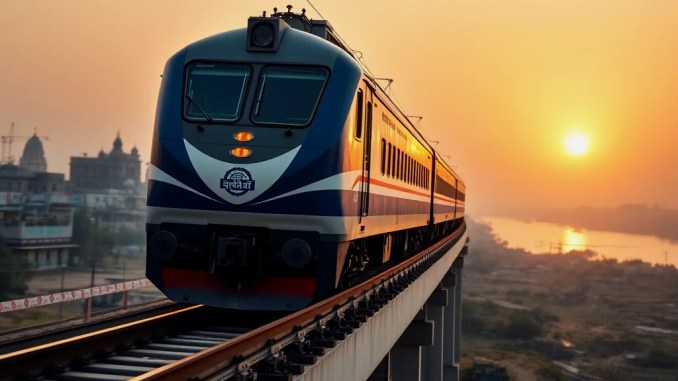
Vande Bharat Sleeper launches overnight Varanasi–New Delhi service
Indian Railways will start the new Vande Bharat Sleeper overnight service between Varanasi and New Delhi on 31 October 2026. The train departs Varanasi at 20:50 and arrives New Delhi at 06:10 the next morning; the return departs New Delhi at 21:40 and arrives Varanasi at 07:10. Operated six days a week, the service skips Varanasi departures on Fridays and New Delhi departures on Saturdays, creating a reliable overnight link for students, professionals, pilgrims and tourists traveling between the two cities.
How much time does the Vande Bharat Sleeper save compared with Shiv Ganga Express?
The Vande Bharat Sleeper shortens travel time by up to 55 minutes in the Varanasi→New Delhi direction and by 35 minutes on the return. Timetable and typical journey times:
Timetable snapshot
Varanasi → New Delhi: depart 20:50 — arrive 06:10 (9h 20m) — time saved: 55 minutes.
New Delhi → Varanasi: depart 21:40 — arrive 07:10 (9h 30m) — time saved: 35 minutes.
Which stations does the train call at and why those stops matter?
The service halts at Prayagraj, Kanpur Central, Aligarh and Ghaziabad. Each stop connects major passenger flows: Prayagraj links pilgrims and inter-regional travelers, Kanpur Central is a dense industrial and educational hub, Aligarh serves students and small-business corridors, and Ghaziabad functions as a suburban feeder for the National Capital Region. These intermediate stops balance speed gains with commercial demand to maximize ridership and revenue.
What safety and crashworthiness features protect passengers?
Vande Bharat Sleeper uses stainless-steel car bodies manufactured to EN15227 crashworthiness standards and includes EN45545 HL3 fire-protection components. The train fits Train Collision Avoidance System (TCAS) and has multi-layered fire detection, smoke sensors, fire-barrier doors on end walls, and a closed-circuit camera system. Alarm buttons positioned throughout the train give passengers a direct way to raise alerts in emergencies. These measures reduce injury risk in collisions and improve early detection and response for onboard fire or smoke incidents.
How is passenger comfort arranged in sleeper coaches?
Design focuses on long-distance overnight comfort. Key fittings include vacuum toilets, dedicated luggage zones, USB Type-A and Type-C charging outlets at berths, and onboard Wi‑Fi. First AC compartments provide hot-water showers. The train also offers accessible berths and toilets for passengers with reduced mobility. Climate control runs across cabins, and regenerative braking contributes to smoother deceleration and energy efficiency.
What technical systems support operations and reliability?
The train features underfloor traction, regenerative braking and centrally controlled single-leaf automatic sliding doors to speed station boarding and reduce dwell time. Remote diagnostics and CCTV increase operational oversight. These systems reduce energy consumption, enable predictable timetabling and shorten station stops without compromising passenger safety.
How will the new service change travel patterns and demand?
By cutting nearly an hour off some journeys and providing overnight convenience, the service aims to shift passengers from daytime expresses and buses to an overnight rail option. Students and daily-wage commuters traveling weekly or biweekly stand to gain the most from reduced travel disruption. Pilgrimage and tourism markets will see broader scheduling options for day-two itineraries and early-morning arrivals at Delhi for onward connections. Expect a measurable modal shift on weekends and festival periods when occupancy on existing overnight trains and buses is highest.
Where does this route sit in the wider Vande Bharat Sleeper expansion?
The Varanasi–New Delhi introduction follows the earlier Howrah–Guwahati (Kamakhya) Sleeper launch. Railways plan to extend sleeper Vande Bharat services across other long overnight corridors to connect regional capitals and high-demand pilgrimage routes. Each new corridor aims to cut travel time, raise onboard standards and expand night-time capacity without adding daytime path congestion.
Practical tips for travelers using the new Vande Bharat Sleeper
Book early for peak-demand days around festivals and university terms; the train runs six days a week with a scheduled weekly off from each end. Choose First AC if you need a private compartment and hot-water shower; otherwise AC sleeper berths still provide USB charging and luggage space. Arrive at the station at least 30–45 minutes early for berth verification and luggage checks; use the train’s Wi‑Fi for last-mile planning on arrival. Keep alarm locations and CCTV visibility in mind for safety, and notify crew promptly of any assistance needs—accessible berths are available but limited.
Quick facts
Start date: 31 October 2026
Days of operation: six days per week (no Varanasi departures on Fridays; no New Delhi departures on Saturdays)
Major stops: Varanasi, Prayagraj, Kanpur Central, Aligarh, Ghaziabad, New Delhi
Journey times: 9h20 (Varanasi→New Delhi), 9h30 (New Delhi→Varanasi)
Key safety standards: EN15227 crashworthiness, EN45545 HL3 fire protection









Be the first to comment