

Sm7 Fleet Expands to 41 Units After New 21-Train Order
RailStock Finland, the state-owned rolling stock company, signed a contract in late October 2026 to exercise options within its 2022 supply agreement with Stadler and purchase 21 additional Sm7 electric multiple units (EMUS). That addition brings the total Sm7 order to 41 units and represents roughly 240 million in capital commitment. The company intends those units to replace the aging Sm2 fleet and to ensure vehicle availability ahead of a new public service obligation (PSO) contract period starting in 2031.
Why RailStock Placed the Order and How It Fits PSO Timelines
RailStock prioritized pre-procurement of rolling stock so operator competition under the upcoming PSO regime will use a common, state-managed pool of modern trains. The current VR-operated PSO contract ends in late 2030; from 1 January 2031, services will transition to competitive tenders in line with EU rules. By securing 41 Sm7s now and retaining options for up to 50 further units under the original framework, RailStock reduces delivery risk for prospective operators and supports seamless service transfers at contract start.
Delivery Schedule and Manufacturing Details
Stadler manufactures Sm7s within the FLIRT family at its Siedlce facility in Poland. The production run started with the first vehicle arriving at the Port of Hanko in May 2025. As of the October 2026 announcement, Stadler has delivered four units and plans to deliver five more during 2026. The baseline 20-unit order aims to complete deliveries by late 2027, while the expanded 41-unit fleet is scheduled to enter full passenger service by 2030. RailStock retains optional rights to procure 29 additional trains through 2036, giving flexibility to scale the fleet if demand or service patterns change.
Operational Rollout: Where and When Sm7s Will Run
The initial Sm7s will enter service on Helsinki suburban lines, with fleet deployment planned on R, M, D, Z and T routes. VR intends to place the first units into passenger service by the end of 2026 in the metropolitan area, improving capacity and reliability on busy commuter corridors. Over subsequent years, RailStock and sequence-winning operators can extend Sm7 operations to regional corridors across southern and northern Finland, matching capacity to passenger demand and seasonal travel patterns.
Technical Features Designed for Finland’s Climate and Network
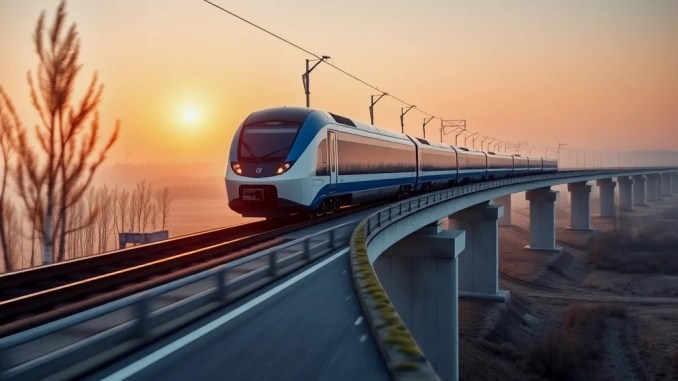
Each Sm7 arrives as a four-car set roughly 106 meters long with a top speed of 160 km/h. The low-floor layout simplifies boarding and reduces dwell times at suburban stops. Seating varies by season—around 320 seats in summer and 340 in winter—while bicycle zones and standee areas raise the theoretical capacity toward 700 passengers per set. To operate reliably in harsh winters, Sm7s include enlarged snow plow equipment, enhanced underfloor heating, and reinforced thermal insulation—measures that reduce service disruptions from heavy snowfall and extreme cold.
Capacity Planning, Examples and How Operators Can Use the New Fleet
Operators can use Sm7s flexibly: pair multiple units for peak-hour spine services, run single sets for off-peak branches, or reallocate units between suburban and regional duties seasonally. Example deployment: using two coupled Sm7s on an urban trunk can offer roughly 640 seats in winter (680+ capacity including bicycles/standing) and deliver fast turnaround with low dwell times thanks to wide doors and low floors. RailStock’s centralized ownership model allows short- and long-term leasing terms that incumbent or new entrant operators can tailor to tender-winning service patterns.
Procurement Options, Risk Management and Future Expansion
The underlying 2022 contract structure contains call options for up to 50 further units; exercising the 21 units used the early tranche of those options. By holding additional options through 2036, RailStock defers capital deployment while preserving the ability to scale capacity if tender outcomes or ridership growth require it. This staged procurement minimizes financial exposure and aligns capacity deliveries with PSO start dates, helping avoid surplus rolling stock and allowing for operational fine-tuning between now and 2031.
Impact on Passengers, Operators and Regional Mobility
Passengers will gain more reliable, accessible and climate-robust rolling stock across both commuter and regional services. Operators benefit from standardized fleet characteristics (performance, maintenance, driver training), which reduce lifecycle costs and speed deployment when contracts change hands. Regionally, replacing Sm2s with modern Sm7s should improve punctuality in winter months and enable operators to run longer trains where demand justifies it, improving overall modal attractiveness and capacity during peak travel windows.
What to Watch Next: Milestones and Contractual Triggers
Key milestones to monitor include: the scheduled completion of the baseline 20-unit deliveries by late 2027; the arrival of the additional 21 units to complete the 41-unit fleet by 2030; tender rounds for PSO contracts leading up to 1 January 2031; and any exercises of the remaining 29-unit fleet option through 2036. Each milestone will affect availability, leasing rates and how operators plan service rollouts under the new competitive regime.
Practical Example: How an Operator Prepares for 2031 With RailStock Units
Step 1: Model capacity needs by line and season using historical ridership and projected growth scenarios. Step 2: Request leasing terms from RailStock for the number of Sm7s needed for proposed service patterns. Step 3: Run driver and depot qualification programs on Sm7 technical systems to ensure staff readiness. Step 4: Stage phased service introduction—start suburban trunk services in year one, expand to regional routes in year two—and monitor on-time performance and passenger feedback to adjust allocations. This approach balances financial commitments and operational readiness ahead of the competitive PSO start.







Be the first to comment