

Jean-Germain, Alstom’s Vice President for Digital and Integrated Systems in Africa, Middle East and Central Asia, shared key evaluations regarding his recent visit to Türkiye. Highlighting the pivotal role of localized expertise in railway engineering, Germain emphasized Türkiye’s growing prominence as an international engineering hub alongside Alstom’s ongoing investments in the country. Reflecting on his journey, the senior executive noted that beyond Istanbul’s historical grandeur, he was deeply impressed by the advanced maturity of Türkiye’s technical capabilities.
Situated at the intersection of trade routes and economic activity where Europe and Asia meet, Istanbul stands out as a clear reflection of the nation’s dynamism. Having resided in Türkiye previously, Germain mentioned following the country’s transformation closely over time. He stated that observing this massive growth firsthand reaffirmed his confidence in the nation’s potential. A vibrant young population, strong industrial base, strategic location, and rapidly expanding transport networks collectively position Türkiye as an essential regional core for railway technologies, moving beyond simple construction toward advanced system design.
Local Talent Serves As A Primary Source For Global Engineering
Tracing Alstom’s presence in Türkiye back to the 1950s, Germain recalled that the company has contributed to numerous milestones over 70 years, ranging from early electric locomotives to modern urban subways, signalling systems, and maintenance services. Today, with a workforce of 600 people actively managing 10 major projects, he stressed that the true value lies within the established technology infrastructure.
In this context, the Alstom Türkiye Engineering and Technology Centre delivers technical expertise far beyond national borders. The facility provides high-level engineering services across Africa, Middle East, Central Asia, and extends support to projects in Italy and India. Involving young Turkish engineers in complex international operations strengthens the nation’s long-term technical capacity, supported by upcoming academic and technology park partnerships.
Testing Facilities Complement High-Tech Development Efforts
Ensuring that newly developed technologies undergo rigorous safety testing remains an indispensable requirement in railway engineering. The newly operational Alstom Railway Innovation and Integration Laboratory allows safety-critical evaluations—previously conducted exclusively in European facilities—to be performed directly within Türkiye. Localizing these testing phases grants engineers direct system interaction, enabling faster issue resolution and enhanced cross-disciplinary collaboration.
Furthermore, this laboratory serves as a real-time demonstration platform for international clients and partners. Beyond validation tasks, the facility represents a key showcase highlighting Alstom’s commitment to innovation and engineering excellence.
Manufacturing Strength And Local Ecosystem Drive Growth
Translating geographical advantages into tangible economic power requires solid manufacturing and operational decision-making capacity. Located in Bursa, Alstom’s railway components plant serves as the manufacturing backbone of this localization strategy. The facility produces driver cabs, car bodies, and structural parts that are exported directly to Alstom projects across Spain, France, Poland, and the Czech Republic.
Additionally, the company collaborates with 28 local suppliers in Türkiye, generating roughly €100 million in annual economic value. By connecting local construction partners with global project opportunities, Alstom continues to fortify every aspect of Türkiye’s position as an international hub.
The Future Of Rail Transport Relies On Skilled Professionals
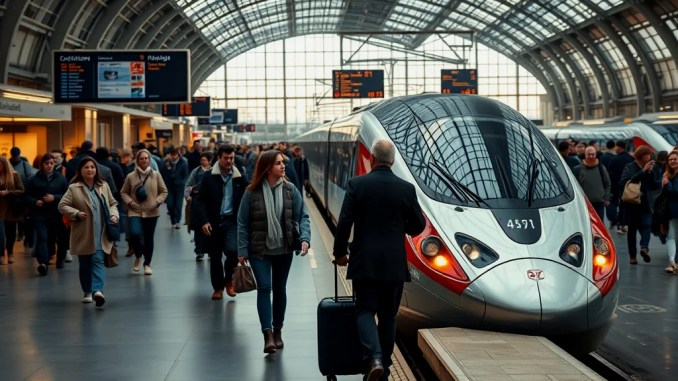
National strategic frameworks, including the Transport Master Plan and 2053 net-zero targets, indicate that railway investments will continue to accelerate rapidly. Expanding high-speed rail lines, urban transit networks, and modernized signalling infrastructure will inevitably drive an increasing demand for specialized technical talent.
Alstom aims to foster lasting value in Türkiye by continually expanding its engineering workforce and technological capabilities. Concluding his observations, Germain highlighted that Türkiye possesses the potential to not only utilize future transit systems, but to actively design and develop them, proving that the future of rail advances through human expertise.




Be the first to comment