
China’s Large-Scale Afforestation: Strategy, Results, and Constraints
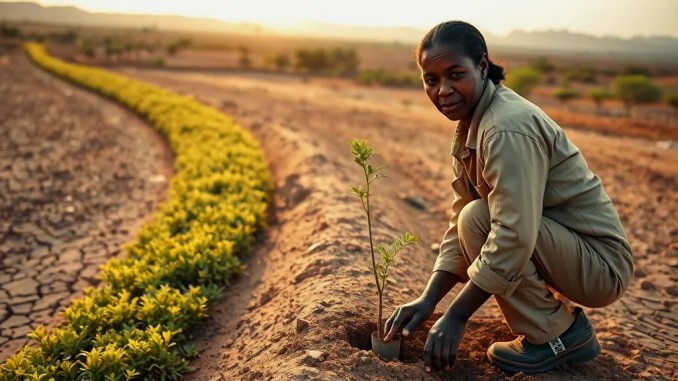
China launched a systematic afforestation program in 1978 to stop sand encroachment, protect croplands, and stabilize vulnerable ecosystems. Planners combined dense tree planting with dune fixation techniques, soil amendments, and selection of drought-tolerant species. By November 2024 officials reported a continuous green belt of 3,046 km around the Taklamakan Desert composed primarily of poplar, sacsaoul (Haloxylon), and tamarisk (tamarix) species. Field teams paired live planting with mechanical barriers and organic mulches to reduce wind erosion and seedling desiccation.
Key interventions that produced measurable results:
1. Species selection and mixed structure: fast-growing poplars provided initial windbreaks while deeper-rooted sacsaoul and tamarisk stabilized dunes over the middle term.
2. Soil and water techniques: sand-binding nets, straw checkerboards, and targeted soil amendments conserved moisture. Where available, localized irrigation supported initial establishment.
3. Landscape-scale planning: corridors connected oases and agricultural plots, reducing the frequency and intensity of dust storms that historically degraded productivity.
Reported achievements include rehabilitation of roughly 53% of identified restoration-suitable land. Persistent constraints remain: limited freshwater availability, multi-year drought cycles that raise mortality risk after planting, and trade-offs between water-intensive species and long-term sustainability. Recent program adjustments favor xerophytic species and solar-powered water delivery to reduce groundwater pressure.
Africa’s Great Green Wall: Purpose, Design, and Practical Steps
The African Union’s Great Green Wall initiative, launched in 2007, aims to restore degraded land across the Sahel along an approximately 7,000 km corridor. Rather than a single continuous forest, implementers pursue mosaic interventions: targeted reforestation, agroforestry strips, pasture improvement, water-harvesting structures, and livelihood supports. These diversified actions reduce desert advance while improving food security.
Practical, step-by-step activities that deliver on-the-ground impact:
Step 1 — Land assessment and zoning: map erosion hotspots, groundwater depth, and community land tenure to select priority plots for restoration.
Step 2 — Soil stabilization: apply stone bunds, contour trenches, and vegetation checkerboards to trap sediment and increase infiltration.
Step 3 — Native, drought-tolerant planting: use local species (Acacia, Commiphora, and moringa in some zones) and combine seedlings with nurse shrubs to improve survival.
Step 4 — Water-smart infrastructure: employ zai pits, microcatchments, and small rock catchments to concentrate scarce rainfall for seedlings and crops.
Step 5 — Community capacity and value chains: train local technicians, create tree nurseries, and connect restoration to income generation (fodder, fruit, gum arabic) to sustain engagement.
Mauritania Example: Solar Pumps, Stabilized Sands, and Measurable Gains
Mauritania’s partnership with Chinese teams illustrates a practical hybrid approach. Since 2017 projects combined fencing, dune stabilization, and technology transfer. Concrete outputs through June 2025 include 100 hectares of stabilized sandy land, conversion of 4 hectares into oasis-like plots, training of 45 local specialists, and employment for 120 people. Project plans aim to scale active planting to 10,000 hectares.
Technical tools used on-site:
– Solar-powered pumps: deploy renewable energy to lift groundwater or pump from shallow aquifers for targeted irrigation, cutting diesel costs and reducing emissions.
– Smart irrigation: drip lines and timed delivery minimize evapotranspiration losses and boost seedling survival rates.
– Sand barriers and nets: combine biodegradable geotextiles and native shrub planting to trap moving sand and create microclimates for young trees.
Species Choices and Nursery Practices that Raise Survival Rates
Successful programs prioritize species adapted to local hydrology and seasonal variability. For the Sahel and northwestern China the resilient palette includes acacias, sacsaoul, tamarisk, poplar (for windbreaks only where water permits), and moringa in dryland agroforestry niches. Nurseries follow these operational principles to lift survival above 70–90% in pilot zones:
– Harden seedlings: gradually reduce watering and expose seedlings to local temperature cycles before outplanting.
– Use nurse plants: plant fast-growing shrubs first to lower wind speed and shade the soil, then outplant longer-lived trees beneath.
– Schedule planting to rainfall: sow or transplant at the onset of reliable seasonal rains and follow with emergency supplementation only when necessary.
Water Management, Renewable Energy, and Cost-Efficient Scaling
Scaling green corridors requires careful water budgeting and low-energy pumping solutions. Combining solar pumping with gravity-fed micro-irrigation and water-harvesting structures minimizes dependence on deep aquifers. Cost drivers and mitigation options:
– Capital for infrastructure: initial investment in solar arrays and pumps is high but yields low operational costs and improves resilience.
– Labor and training: create local nurses and employ community contractors to reduce transport costs and ensure long-term stewardship.
– Monitoring and adaptive management: use simple remote-sensing metrics (NDVI trends, sand-movement imagery) plus on-the-ground survival surveys to reallocate resources to the most effective sites.
How These Projects Answer Common ‘People Also Ask’ Questions
Do trees stop deserts? Trees and shrubs do not magically erase deserts but they significantly slow desert advance by stabilizing soils, reducing wind erosion, and increasing local soil moisture where interventions are well-matched to hydrology and species tolerance.
Which species survive best in arid restoration? Native xerophytes—acacias, sacsaoul, tamarisk, and drought-hardy multipurpose species like moringa—feature highest survival when combined with appropriate planting techniques.
Can solar pumps make large restoration projects viable? Yes. Solar pumps lower recurring fuel costs and, when coupled with efficient irrigation, make small- to medium-scale restoration financially and operationally feasible.
Measuring Success: Indicators and Early Wins
Robust monitoring focuses on a few clear indicators: vegetation cover increase (NDVI), seedling survival rates at 6 and 24 months, reduction in dust storm frequency, soil organic carbon gains, and socioeconomic outcomes (jobs created, income from tree products). Early wins in China and Mauritania include reduced sand movement, higher crop stability in adjacent fields, and vocational skill development for local workers.
Practical Recommendations for New Projects
Teams starting restoration should prioritize rapid, low-cost wins that build community trust: protect existing vegetation patches first, invest in community nurseries, install low-tech water-harvesting structures, and deploy solar pumps where groundwater access is moderate and legal. Maintain adaptive monitoring and switch species mixes when mortality patterns emerge.
Combining China’s decades of trial-and-error with Africa’s landscape-scale, livelihood-focused approach creates a pragmatic blueprint: match species to water budgets, use renewable energy for water delivery, and center local employment and training so green corridors persist beyond single funding cycles.








Be the first to comment