Imagine a bustling hub where Asia, Europe, and the Middle East converge—an epicenter of trade that shapes global commerce. This is not a distant future but today’s reality, driven by innovative intermodal logistics strategies bridging Turkey and North Rhine-Westphalia (NRW). As supply chains face unprecedented pressure from geopolitical shifts, infrastructure bottlenecks, and rising costs, establishing seamless, efficient transportation corridors between these regions becomes paramount. This article unpacks how new collaborations, state-of-the-art terminals, and visionary infrastructure projects are transforming Eurasian logistics into a robust, resilient network.
Unleashing the Potential of Turkey & NRW Trade Networks
Turkey and NRW share a dynamic economic relationship rooted in strategic geographic positioning and complementary industries. Turkey acts as the gateway between Asia and Europe, while NRW serves as Germany’s industrial heart and a crucial logistics hub. Recognizing this synergy, policymakers and industry leaders have prioritized developing intermodal transport routes that optimize both time and costs. These routes harness rail, road, maritime, and air transport, ultimately forming integrated corridors that rapidly move goods across continents. Companies leveraging these corridors access vast markets, benefit from reduced transit times, and capitalize on lower transportation costs—advantages that drive competitive edge in global supply chains.
Germany’s Duisport & Turkey’s Railport: Cornerstones of Intercontinental Logistics
At the forefront of this transformation, Duisburg’s Duisport and Turkey’s Railport stand as exemplars of modern intermodal facilities. Duisport, Europe’s largest inland port, operates as a freight portal seamlessly connecting Europe’s extensive rail and road networks with the North Sea and beyond. Meanwhile, Railport in Turkey functions as a strategic nodal point that links the Turkish domestic market with European and Asian transit routes. This intermodal hub integrates container handling, warehousing, and transportation services, effectively creating a corridor from the Far East through Turkey into Europe. These facilities enable cargo to traverse continents efficiently, bypassing congested ports and outdated infrastructure. They also facilitate the movement of diverse freight types—containerized goods, general cargo, vehicles, and bulk commodities—through tailored logistics solutions.
The Strategic Significance of the Kocaeli & Duisburg Corridors
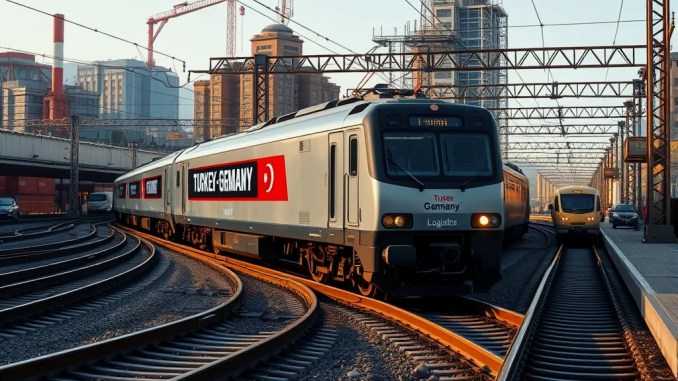
The connectivity between Kocaeli’s Railport and Duisburg’s Duisport epitomizes the new Eurasian logistics paradigm. The direct rail link between these two centers accelerates freight movement, drastically reducing transit times from weeks to mere days. This corridor serves multiple strategic purposes: – Reducing transit delays: Enables faster turnaround times for shipments, crucial for perishable goods and just-in-time manufacturing. – Lowering transportation costs: Rail transporting containers is significantly cheaper than road or air, especially over long distances. – Enhancing supply chain resilience: Diversifies routes and reduces dependence on congested maritime channels. Operationally, Railport’s capacity to handle 360,000 TEUs annually, combined with Duisport’s extensive infrastructure, creates a comprehensive backbone supporting continuous trade flows. Both facilities are equipped to handle the growing demands of global trade, particularly as Asian exports increase.
Infrastructure and Innovation Powering the Future
The backbone of this logistic revolution lies in continuous infrastructure investment and technological adoption. The development of intermodal terminals like Railport involves several key steps: 1. Strategic Site Selection: Proximity to major industries and transportation routes is critical. 2. State-of-the-Art Equipment: Automated cranes, container handlers, and intelligent tracking systems optimize operations. 3. Connectivity Enhancements: Upgrading rail lines, installing digital platforms, and deepening ports increase throughput. 4. Sustainable Practices: Incorporating green energy solutions reduces environmental footprint, aligning with global climate commitments. Turkey’s Railport and the Duisburg hub exemplify these advances, demonstrating how modern facilities support complex logistics needs and adapt to future demands.
The Role of Government and Private Sector Partnerships
Effective collaboration involves both government initiatives and private enterprise investments. Governments facilitate infrastructure upgrades, streamline regulations, and promote international agreements, while private companies bring operational expertise and technological innovations. In Turkey, authorities actively promote intermodal projects through incentives and strategic planning. In NRW, public-private partnerships support infrastructure modernization—such as expanding rail capacity and digitalization efforts. These collaborations result in a resilient, scalable logistics network capable of accommodating increasing freight volumes from emerging markets.
Overcoming Challenges and Unlocking Opportunities
Despite the momentum, several challenges must be addressed: – Regulatory Harmonization: Aligning standards and customs procedures across countries to streamline transit. – Capacity Constraints: Expanding infrastructure to meet growing demand. – Technological Integration: Ensuring compatibility across different systems and platforms. – Environmental Impact: Implementing sustainable practices to mitigate ecological concerns. Conversely, opportunities abound: expanding intermodal links can facilitate trade with Central Asia, the Middle East, and Africa, positioning Turkey and NRW as pivotal global logistics hubs.
Conclusion: Pioneering a New Era of Eurasian Trade
The strategic development of intermodal corridors connecting Turkey and NRW signifies a seismic shift in Eurasian logistics. These investments and collaborations empower supply chains to become faster, more cost-effective, and resilient against future shocks. As infrastructure projects mature and technological innovations advance, this corridor will deepen its role as a vital artery in global commerce. The continued commitment of both public and private sectors will unlock unparalleled opportunities for regional growth, economic integration, and global competitiveness—making Turkey and NRW the undisputed leaders shaping the future of intercontinental trade.