Revolutionizing South Korea’s Defense Capabilities: The Future of KF-21 and Strategic Collaborations
South Korea is poised to transform its military technology landscape through a series of groundbreaking initiatives that harness the power of advanced aircraft development and strategic industry partnerships. At the heart of this revolution lies the KF-21 Boramae, a next-generation stealth fighterjet designed to establish South Korea as a major player in global aerospace and defense markets. Uniting cutting-edge technology with strategic business alliances, the nation aims to craft a robust, versatile, and self-reliant defense system that can meet both regional threats and international export demands.
Deep Dive into KF-21’s Cutting-Edge Technology
The KF-21 Boramae is not just another multirole fighter; it embodies South Korea’s ambition to develop a domestically-produced, multi-mission aircraft equipped with state-of-the-art stealth features, high-speed performance, and superior avionics. Designed with a focus on cost-effectiveness and versatility, this fighter can perform air superiority, ground attack, and reconnaissance missions. It features an advanced composite material structure to reduce radar cross-section, and a modern cockpit interface designed for pilot efficiency and safety.
Crucially, the KF-21’s modular design allows seamless integration of the latest weapons systems, including long-range air-to-air and air-to-ground missiles, electronic warfare packages, and targeting pods. Its powerful twin-engine configuration ensures that South Korea can sustain high-performance operations, even under intensive combat conditions.
Partnerships That Power Innovation: KAI and Hyundai Rotem Collaboration
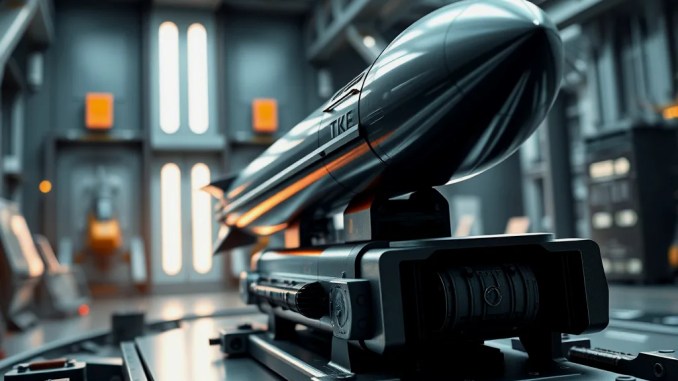
The recent alliance between Korea Aerospace Industries (KAI) and Hyundai Rotem代表sa strategic leap towards enhancing KF-21’s operational capabilities. This partnership aims to develop and integrate long-range air-to-air missiles into the fighter platform, significantly extending its combat reach. By consolidating their expertise, these companies streamline the development, testing, and deployment, ensuring the aircraft maintains technological edge and combat readiness.
This collaborative approach is not limited to missile integration. It encompasses system-level weapon integration, aircraft electronics, and mission systems. Implementing these innovations results in a fighter jet capable of engaging threats at greater distances, with improved accuracy and survivability, thereby boosting South Korea’s defense sovereignty.
Strategic Export Prospects & Global Competitiveness
The joint efforts between KAI and Hyundai Rotem are also geared towards positioning the KF-21 as a formidable export product. South Korea’s government envisions the fighter as a cost-effective alternative to Western and Russian aircraft, targeting countries that seek advanced technology without the exorbitant price tags. The global defense market is increasingly receptive to aircraft like the KF-21, which combines affordability with modern capabilities.
By fostering international partnerships and offering customization options such as integrated long-range missiles, the KF-21 could enter markets in Southeast Asia, the Middle East, and Latin America. Analysts predict that sustained production capacity and cutting-edge systems will boost South Korea’s export ambitions, potentially making the KF-21 a top contender in the multirole fighter market within the next decade.
Enhancing South Korea’s Military Self-Reliance
This strategic project underscores Seoul’s commitment to military self-reliance. By developing a domestically designed and manufactured fighter jet complemented by advanced missile systems, South Korea diminishes its dependency on foreign arms imports. The synergy between the KF-21 development and domestic industry supply chains ensures that the nation controls critical technology, reduces costs, and accelerates innovation cycles.
The government’s substantial investment—estimated at billions of dollars—facilitates research, skilled workforce training, and infrastructure expansion to support total production goals. These efforts align with broad national security strategies aimed at safeguarding sovereignty and establishing the country as a regional defense powerhouse.
Future Outlook: Evolving Threats and Military Readiness
As regional tensions escalate, particularly with neighboring North Korea and China, the need for a modern, adaptable, and technologically superior air force becomes evident. The KF-21 program ensures that South Korea not only addresses current threats but also stays ahead in technological innovation, capable of deploying future upgrades such as hypersonic weapons and artificial intelligence-powered systems.
With initial operational deployment targeted for 2028, the project expects to gradually expand its fleet—aiming for 120 fighters by the early 2030s—solidifying Seoul’s aerial dominance and strategic deterrent. The collaborative efforts between aerospace and defense industry leaders highlight a broader trend: nations that invest in indigenous innovation and strategic partnerships create resilient, future-proof military infrastructures capable of confronting emerging threats head-on.