MIT-Supported Robotics Training for the Greek Army

MIT-Supported Robotics Training for the Greek Army - RaillyNews

Revolutionizing Naval Operations Through Advanced AI and Robotic Technologies

The Greek has embarked on a pioneering journey to bolster its naval capabilities by integrating cutting-edge robotic technologies and artificial intelligence (AI). This effort, forged through a strategic collaboration between the Greek Defense Innovation Center (ELKAK) and the Massachusetts Institute of Technology (MIT) Open Learning, aims to deliver an intensive, hands-on training program for military personnel, elevating their operational effectiveness in modern maritime missions.

Empowering Military with Next-Generation Skills

The program focuses on transfer of practical skills and theoretical knowledge in autonomous systems, maritime robotics, and AI-driven operations. It targets primarily the officers and students of the Greek Navy, equipping them with expertise aligned with international standards. The initiative emphasizes strengthening local expertise in emerging dual-use technologies—those applicable to both military and civilian sectors—and seamlessly applying this knowledge directly into active missions.

Technology Transfer and Infrastructure Development

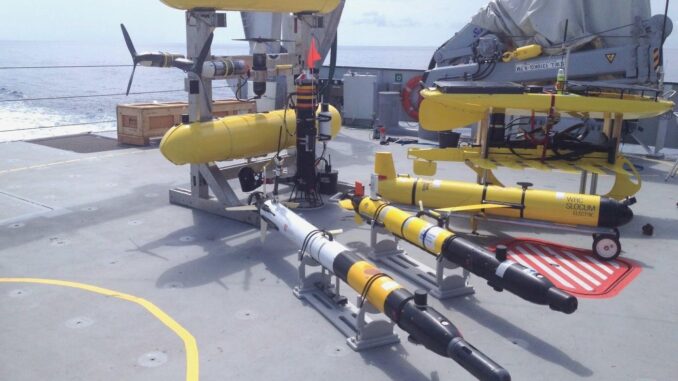
Central to the program’s success is the deployment of state-of-the-art robotic hardware during the training sessions. Post-program, these advanced systems will be transferred to the Hellenic Naval Academy, establishing a permanent R&D infrastructure for ongoing innovation. Additionally, ELKAK will provide licenses to access MIT’s Universal AI Program, fostering a culture of AI literacy among military personnel, which is vital for maintaining technological superiority.

Structured Learning Modules Rooted in MIT Expertise

The training comprises two focused modules, each lasting two weeks, designed to maximize skill acquisition in the shortest possible time. The modules include:

  • MIT 2.017: Electromechanical Robotic System Design—focusing on the design and development of robotic hardware, emphasizing robust architecture, sensor integration, and control systems.
  • MIT 2.680: Marine Autonomy, Sensors, and Communications—covering autonomous navigation in complex aquatic environments, sensor data processing, and secure communications for unmanned vessels.

This intensive curriculum is supported by hands-on exercises and real-world simulations, ensuring that military personnel do not merely learn theory but gain practical skills directly applicable in their daily duties.

Strategic Goals: Modernizing Naval Warfare and Enhancing Sovereignty

This joint initiative aligns with Greece’s broader strategic goal to modernize its naval forces through technological innovation. By equipping officers with AI and robotics expertise, Greece positions itself as a regional leader in maritime security and asymmetric warfare. The focus on dual-use technology ensures that innovations benefit civilian industries, too, fostering economic development and creating a resilient defense ecosystem.

Creating a Sustainable Innovation Ecosystem

The program aims to encourage ongoing collaboration between military, academia, and industry. The Triton Marine Robotics Summer School, supported by both ELKAK and StartSmart South Eastern Europe, represents a bridge between military training and commercial innovation. This environment nurtures entrepreneurship, accelerates the commercialization of robotic solutions, and promotes sustainable growth in the defense tech sector.

Real-World Impact and Future Outlook

As a result of this collaboration, Greek naval forces will experience a rapid upgrade in operational readiness, leveraging AI-enhanced decision-making and autonomous systems to maintain maritime superiority. The knowledge and infrastructure developed through this program will serve as a catalyst for ongoing innovation, positioning Greece as a regional hub for underwater robotics and AI-driven maritime solutions. The long-term vision involves expanding these capabilities into joint NATO operations, enhancing collective security, and contributing to global maritime stability.


Aogashima: Life Inside Japan's Isolated Volcanic Crater - RaillyNews
ASIA

Aogashima: Life Inside Japan’s Isolated Volcanic Crater

Aogashima’s Unique Double-Crater Geology Aogashima sits as a nested volcano: a broad caldera carved by past eruptions with a secondary volcanic cone—Maruyama—rising from its floor. The island measures roughly 3.5 km long and 2.5 km wide, ringed by steep cliffs that protect and isolate the inner crater. That inner cone 🚄
Train Services Resume on Hastings Line as Three Speed ​​Limits Removed - RaillyNews
EUROPE

Train Services Resume on Hastings Line as Three Speed ​​Limits Removed

Grove Hill Tunnel concrete track replaced and supporting systems upgraded Network Rail crews completed a focused renewal of the concrete track inside Grove Hill Tunnel, removing degraded track components and installing a reinforced concrete base that secures rails without traditional sleepers and ballast. Teams dismantled the old track bed, poured 🚄
Roberts Bank Terminal 2 Project at Vancouver Port Deferred to 2035 - RaillyNews
AMERICA

Roberts Bank Terminal 2 Project at Vancouver Port Deferred to 2035

Canada Lists Roberts Bank Terminal 2 as a Nationally Significant Project On October 30, 2026, the federal government added the Roberts Bank Terminal 2 project to the Canada Infrastructure Act’s Schedule 1, accelerating the planned commercial start from 2039 to 2035 while the final investment decision remains pending. The listing 🚄
PKP Cargotabor Restructuring Completed: New Operational Chapter Begins - RaillyNews
EUROPE

PKP Cargotabor Restructuring Completed: New Operational Chapter Begins

Court Confirmation Ends PKP Cargotabor Restructuring on October 24 The Warsaw Regional Court’s 18th Commercial Division finalized PKP Cargotabor’s restructuring by confirming a creditor-approved settlement covering 243.01 million PLN in liabilities. The court hearing on October 16 produced a judgment that became final on October 24, clearing the company to 🚄
AI-Powered Cyberattacks Target Educational Institutions - RaillyNews
SCIENCE

AI-Powered Cyberattacks Target Educational Institutions

Overview of the Campaign and Key Findings Kaspersky Threat Research detected a campaign in September–October 2026 that targeted educational institutions across Latin America and Africa. Attackers combined an open-source penetration-testing framework called CyberStrikeAI with implants on compromised hosts to orchestrate discovery, credential theft, lateral movement, and data exfiltration. The adversary 🚄
Turkish Youth Build Blockchain Fix for Internet's Hidden Security Flaw - RaillyNews
SCIENCE

Turkish Youth Build Blockchain Fix for Internet’s Hidden Security Flaw

Turkish student team builds a blockchain layer to harden DNS and DHCP Four Turkish engineers designed a distributed security layer that prevents stealthy DNS/DHCP attacks by decentralizing critical name and address records. The team—Ediz Ural, Özgür Pirli, Atahan Düryaz and Ahmet Atakan Okutan—spent about a year developing the prototype at 🚄
Wizz Air Flight Diverted to Budapest After Bomb Threat - RaillyNews
EUROPE

Wizz Air Flight Diverted to Budapest After Bomb Threat

Flight diverted to Budapest after bomb threat Wizz Air flight departing London for Sofia received a bomb threat in midair and was promptly diverted to Budapest’s Liszt Ferenc International Airport. Hungarian authorities cleared the route for the aircraft to land and coordinated an immediate on-ground security response. Airport operations received 🚄
1,000-Year-Old Gold Necklace Found in England Featuring 'Hand of God' Symbol - RaillyNews
EUROPE

1,000-Year-Old Gold Necklace Found in England Featuring ‘Hand of God’ Symbol

Rare 9th–10th Century Gold ‘Hand of God’ Pendant Found Near Highclere Castle Archaeologists surveying farmland near Highclere Castle in Hampshire uncovered a near-intact, solid-gold pendant depicting the Christian “Hand of God” motif. A metal-detecting surveyor noticed a bright glint close to the surface and recovered the piece; early assessment dates 🚄
Half-Century Mystery Solved: New Insect Species Introduced to Science - RaillyNews
SCIENCE

Half-Century Mystery Solved: New Insect Species Introduced to Science

Discovery and confirmation of an elusive insect Researchers first collected larvae in 1978 but could not locate adult specimens for decades. Field teams working in the Yadung region recently captured multiple adults and completed morphological and ecological descriptions. Laboratory dissection and microscopy revealed diagnostic features that separate this insect from 🚄