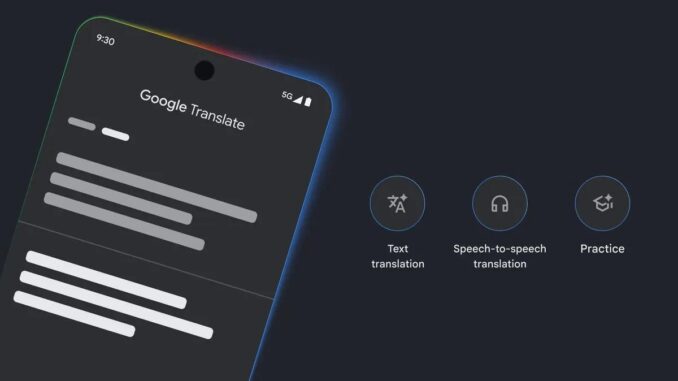
Take a Step Ahead: What is Live Translation and Why Does It Matter Now?
Live Translation is a technology that transforms voice communication into another language in real time and maintains the flow of communication uninterrupted. Beyond traditional translation approaches, these next-generation systems offer a natural speaking experience by taking into account contextual understanding, nuances of idioms and cultural cues. Especially with its hardware independence and contextual artificial intelligence integration, this technology brings users to a universal translation bridge without being tied to specific devices. In this article, we discuss the technical foundations of Live Translation, the differences in the sector and the concrete gains for the future, one by one.

Hardware Independent Content Translation: Flexibility and Accessibility
Today, hardware-agnostic translation solutions running over a network can work with any headset or microphone. This approach allows users to use equipment personalized according to user preferences and eliminates manufacturer lock-in. As a result, language barriers are not just a technical problem; The flow rate in communication increases and meetings, travels or daily conversations become practical. Moreover, thanks to broad device support, we can cover a wide range of scenarios for unique tasks without relying on a single solution: dedicated microphones, wireless headsets, integrations between desktop and mobile devices provide a logical flow.
Advanced Contextual Translation: Gemini and Naturalness Beyond Meaning
It is no longer enough to just find word equivalents in translation. The Gemini artificial intelligence model produces meaning-compatible translations by preserving the contextual integrity of idioms, proverbs and conversation. This process works as follows: user speech is analyzed in real time, pre-parsed to produce a meaningful and fluent response with context predictions, and a natural flow in the desired language is achieved. Currently, this system is actively used in beta version in more than 70 languages. In this way, collective language skills and cultural nuances are preserved more reliably. Context-oriented translation ensures correct understanding of even technical terms, medical expressions or legal jargon, reducing the chances of errors even in these complex areas.
Instant Translation Speed and Accuracy: The New Standard for Real-Time Chats
The heart of interactive communication beats with real-time translation speed and accuracy. A lag-free stream improves reliability in any environment, from boardrooms to international meetings and travel. AI-based models optimize context based on their expertise, minimizing the risk of lost understanding. Even at critical moments, intonation and nuances are preserved; A remarkable and surprising clarity is achieved. In addition, technical errors that disrupt communication between users are minimized and misunderstandings that may arise due to cultural differences are reduced.
Google’s Accessibility Advantage Over Apple
With its limited dependency on Apple’s own ecosystem, the Live Translation feature may pose some limitations when compared to Google’s hardware-agnostic solution. Google’s approach, on the other hand, offers a fast and inclusive experience through broad device compatibility and early adoption, without limiting users to only certain products. This quickly expands support for common languages and countries while respecting user preferences. Additionally, this flexibility is a great advantage for corporate users in terms of corporate integrations and up-to-date security standards.
2026 and Beyond: iOS Integration and Global Rollout
Future plans outline iOS integration by 2026. This move gives iPhone users access to a hardware-agnostic and contextually superior translation service. With increased language and country support, global accessibility increases; Redefined communication dynamics emerge in areas such as tourism, education, business and diplomacy. Being included in the iOS ecosystem takes the user experience to the next level, making transitions smoother and streamlining campaign and support processes. Additionally, linguistic diversity and regional adaptations are strengthened by localization strategies.
Continuous Development and Multidisciplinary Approach in the Multilingual World of the Future
Live Translation is not just a tool; It is an ecosystem that strengthens communication between people, builds intercultural bridges and accelerates digital communication. Multidisciplinary development proceeds at the intersection of linguistics, artificial intelligence, user experience and security. This combination creates a field of innovation that includes user security, privacy and data protection standards. The practical benefits of this technology for users from different industries are:
- Effective simultaneous interpretation and contextual consistency for international meetings.
- Instant assistance and ease of local communication during travels.
- Multilingual accessibility of learning materials in the field of education.
- Clear communication that reduces risks in diplomacy and business.
- Natural dialogues that strengthen cultural mutual understanding and cooperation.
Application Scenarios: Step-by-Step Guides
Here are practical steps that will help you use Live Translation technology in the most efficient way:
- Setup and integration: Optimize Bluetooth and Wi-Fi locations for fast pairing between supported devices. Keep software updated with updated drivers.
- Contextual settings: Create a term bank based on your usage area; Add custom dictionaries for medical, technical or legal terms.
- User interface experience: Adjust noise reduction settings to clear up voice input; Adjust the speaking rate as needed.
- Security and privacy: Control data processing preferences, transmit end-to-end data over secure channels.
- Feedback and learning: Flag incorrect translations; Allow the system to learn adaptively.
Comparative View: Strategic Advantages with Competing Solutions
Compared to competing solutions, hardware independence and contextual translation-focused approaches offer the user a broader ecosystem and higher flexibility. Additionally, gains in real-time risk mitigation and cultural sensitivity ensure long-term reliability for enterprise customers. While iOS integration and expansion of global language support expands the user base, it also prioritizes data security with its privacy-first approach. On this basis, experiences emerge that make a difference even in daily use: fluent conversations, correct technical terms and sustained communication without distorting the meaning.
Result: A New Normal in Global Communications
Live Translation is positioned not only as a tool but also as a bridge that unites cultures. Its ability to operate independently of hardware offers economic and practical advantages to the user; Contextual translation increases the natural flow and reliability of communication. Plans for 2026 and beyond indicate that it will spread to wider audiences with iOS integration, while aiming to reduce the social and economic effects of language barriers. This transformation will establish a new communication standard in many fields, from tourism to education, diplomacy and business. For every user, regardless of the language spoken, the boundaries of voice communication and contextual meaning are no longer stretchable; because this combination of technology enables a profound transformation in real-world interactions.