
Deferred orders and the impact of the European project
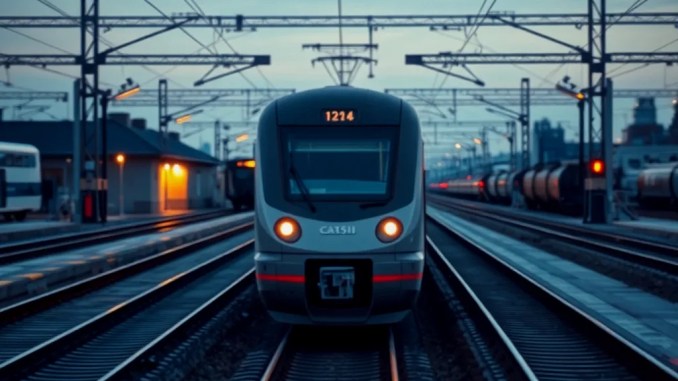
Knorr‑Bremse’s Rail Systems division recorded €1,045,000,000 in new orders in Q3 2026, a 10.9% decline versus the same quarter of 2025. Customers postponed roughly €80 million of orders that the company expects to materialize within six months, and management deliberately paused active engagement on a European project to protect margins. Together these decisions explain the bulk of the shortfall versus analysts’ consensus of about €1.18 billion.
How much of the decline is organic?
Excluding effects from acquisitions, disposals and currency translation, the division’s orders fell organically by 13.8%, equal to €162 million. The book‑to‑bill ratio dropped from 1.12 to 0.94, signaling that new orders now cover a smaller portion of reported revenue than a year ago. That metric and the announced order postponements indicate the shortfall is driven by timing and selective tender participation rather than broad market collapse.
Regional order trends and concrete examples
Regional patterns diverged in Q3. In Europe, original equipment orders declined while aftermarket demand (spare parts) rose, reflecting operators’ preference to extend fleet life rather than buy new vehicles in select markets. Asia‑Pacific benefited from increased OEM orders from India; a single large manufacturer pushed multiple carriage contracts, partly offsetting weakness elsewhere. North America showed stronger OEM momentum supported by rising passenger traffic on commuter and intercity routes, where transit agencies accelerated procurement to expand capacity. These examples show that market recovery is uneven and often driven by specific tender cycles or national investment programs.
Quarterly trajectory and backlog dynamics
Order intake across the first three quarters of 2026 remained below 2025 levels: Q1 at €1,263m (vs €1,312m), Q2 at €1,136m (vs €1,288m) and Q3 at €1,045m. Despite the slowdown in new orders, the backlog reached a record €5,933m at the end of March, eased slightly to €5,910m in June and €5,858m in September. The September backlog still exceeds last year’s €5,659m by 3.5%, providing a multi‑quarter revenue conversion runway even as new order flows fluctuate.
Revenue and operating profit expanded — why that matters
Revenue for the Rail Systems division rose 6.1% year‑on‑year to €1,114m in Q3. Operating profit (EBIT) increased 9.9% to €197m and the EBIT margin improved to 17.7% from 17.0%. Management attributes the margin uplift to initiatives under its BOOST program (targeted cost savings), productivity gains on existing programs and operating leverage as higher‑margin aftermarket sales grew. In practice this means the business converted a smaller intake into higher‑quality, more profitable revenue this quarter.
Q4 outlook and full‑year guidance — specifics to watch
Knorr‑Bremse expects rail orders in Q4 2026 to recover to about €1.2 billion. Group‑level Q3 orders rose 4.9% to €2,053m, while the Truck Systems division saw a 30.1% surge to €1,018m. For full‑year 2026 the company reiterates guidance of €8.1–8.3 billion in revenue, an EBIT margin of 14–14.5% and €750–850m in free cash flow. Management states that if the Middle East situation does not escalate, revenue and free cash flow could land near the top of those ranges. Investors should monitor confirmed tender awards, timing of the €80m postponed orders and any re‑entry into the European project for margin and backlog implications.
Practical implications for customers, suppliers and investors
Customers: Operators seeking capacity should evaluate aftermarket offers now — spare parts availability and retrofit windows are robust and margins indicate supplier willingness to support lifecycle extensions. Suppliers: Component vendors can expect steadier spare‑parts demand in Europe and project‑driven spikes in APAC and North America; plan capacity around confirmed contracts rather than broad forecasts. Investors: Backlog strength and improving margins temper concerns from weaker order intake; short‑term stock price sensitivity will depend on Q4 order confirmations and how management balances margin protection with selective bidding.








Be the first to comment