
Overview of the closure and scope of works
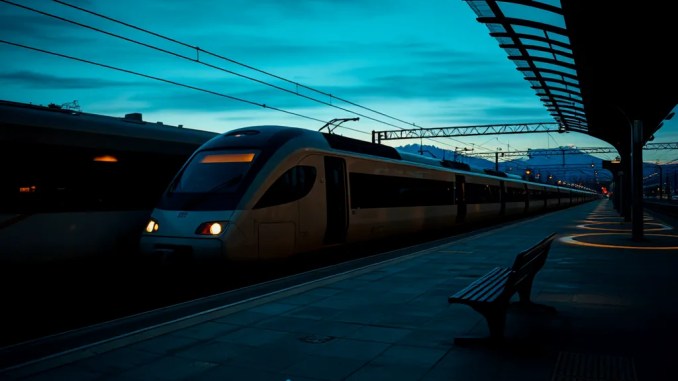
Deutsche Bahn (DB) has closed the Nürnberg–Ingolstadt high-speed line through 12 December 2026 to carry out a comprehensive renewal of track, turnouts and cabling across the Allersberg–Kinding–Ingolstadt Nord corridor The outage began on 30 October at 22:00 and affects long-distance and regional timetables, particularly services originating in Munich. DB InfraGO is replacing more than 160 kilometers of rail and installing new turnsouts and signaling cabling; project planners report roughly 10,000 tonnes of material and a budget near €70 million. Work also includes tunnel inspections and drainage cleaning to restore track reliability after roughly 20 years of service on the busiest sections.
How passenger journeys change and travel-time impact
Long-distance ICE schedules have been adapted to maintain at least one direct Munich–Berlin connection each hour, but many journeys face detours or extended running times. For example, Munich–Berlin ICE trips now typically add about 45 minutes, bringing total trip time to approximately 4 hours 50 minutes on affected services. Lines that normally use the closed corridor are routed via alternative nodes such as Augsburg or start/end at Nürnberg instead of Munich, producing timetable gaps and different stop patterns for passengers.
Specific ICE route adjustments and practical effects
DB published concrete route changes to preserve capacity while construction proceeds:
ICE 18 continues to run via Augsburg on its regular timetable and is largely unaffected by the closure. ICE 28 now operates only between Nuremberg and Hamburg and bypasses Munich Central Station entirely. ICE 29 is rerouted between Ingolstadt and Nürnberg, adding roughly 30 minutes to travel time and shifting Munich–Nürnberg departure/arrival slots. ICE 25 that usually serve Augsburg remain on schedule; services that would normally use the Nuremberg corridor now run between Nuremberg and Hamburg and do not call at Munich or Ingolstadt central. ICE 41 loses its Munich–Nürnberg–Frankfurt direct link temporarily, with trains operating between Nürnberg and Essen or Dortmund.
Passengers traveling Munich–Hamburg via Kassel will see frequencies reduced from hourly to every two hours; many off-peak and odd-hour departures will start or terminate at Nürnberg instead. Ingolstadt retains an hourly ICE connection but only towards Berlin during the closure window. Direct Munich–Frankfurt trains via Nuremberg are not available; DB advises affected travelers to use direct services routed via Stuttgart where possible.
Regional services: RE1 diversions and bus replacement plans
The closure affects regional traffic as well. RE1 regional trains running between Munich, Ingolstadt, and Nürnberg are diverted via Treuchtlingen or rerouted via Augsburg depending on service. DB has implemented bus replacement links for sections without rail service: passengers on Nuremberg–Ingolstadt journeys can use buses provided between key stations. RE1 and S5 riders will transfer to buses at Allersberg and Allersberg (Rothsee) Johannisbrücke. Additional replacement stops include Kinding, Kinding Marktplatz and Ingolstadt Nord. These bus links aim to preserve one-seat journeys where feasible and to limit additional transfer times; planners estimated typical bus-leg durations and coordinated timetables to meet arriving regional services.
Why DB chose full closure and the engineering benefits
DB opted for a continuous full-line closure rather than lengthened nightly works to accelerate delivery, reduce overall risk and shorten the calendar impact on the corridor. Concentrating heavy interventions—rail replacement, new turnouts, signal and power cabling, and tunnel drainage—enables teams to complete discrete, interdependent activities safely and avoid repeated partial interruptions to traffic over many months. Replacing 20-year-old track on a heavily used, 300 km/h-capable route restores geometric tolerances and reduces future maintenance needs, which improves reliability and allows higher sustained speeds without speed restrictions caused by worn rails and degraded drainage.
Timeline to reopening and what changes after work completes
Work is scheduled to finish on 12 December 2026, one day before DB implements the 2027 timetable on 13 December. Returning the line to service before the new timetable allows DB to slot restored capacity into planned schedule changes. From 13 December DB plans a new Hamburg–Munich ICE Sprinter service that will run in both directions three times daily and stop only in Hannover and Nürnberg; this Sprinter is projected to shorten travel time between the two cities by about 20 minutes to roughly 5 hours 20 minutes because of optimized stopping patterns and timetable priority.
Tips for passengers while the line is closed
Passengers can reduce disruption by checking these points before travel:
1) Confirm the precise station and platform. Some trains that previously called Munich Central may now start or end at Nürnberg or bypass Munich entirely. 2) Allow extra connection time. In many cases services add 30–45 minutes or require a bus transfer. 3) Use DB’s official timetable tools and mobile alerts. DB continuously updates diversionary routings and replacement bus schedules; real-time updates reduce missed connections. 4) Seek alternative nonstop routes via Stuttgart. For Munich–Frankfurt journeys, Stuttgart-routed direct services often offer faster door-to-door times than diverted Nuremberg routes. 5) Consider flexible tickets or reservations. During large engineering works, using flexible fare options and seat reservations where available helps cope with canceled or changed trains.
Operational data and network impact
The renewed corridor typically carries around 170 trains per day, including a mix of ICE, regional and freight movements, with some services reaching speeds up to 300 km/h. Removing this capacity necessitates systematic retiming and rerouting across the southern German network, temporarily shifting traffic density to alternative corridors such as Augsburg and Stuttgart and increasing load on interchange hubs like Nuremberg. DB says the concentrated intervention will reduce unscheduled speed reductions, lower long-term maintenance costs and improve punctuality metrics once the refurbished infrastructure returns to service.






Be the first to comment