
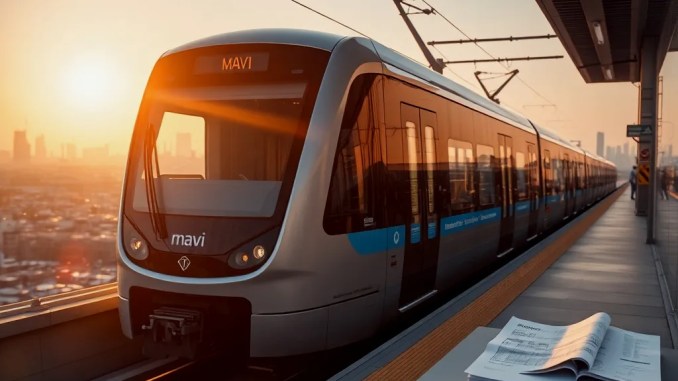
Overview of the AECOM Contract and Project Scope
The Chicago Transit Authority (CTA) awarded AECOM a $17 million contract to design roughly 70,000 feet of track on the Blue Line’s Forest Park Branch between the Illinois Medical District (IMD) station and the I‑290 bridge east of Forest Park station. The contract focuses on track systems but explicitly includes signaling, traction power, drainage, civil infrastructure, and related facilities. Field surveys and engineering investigations will precede detailed design so the team can align design solutions with actual site conditions along the corridor.
What AECOM Will Deliver and Why It Matters
AECOM will produce constructible design packages covering:
Track and trackbed: new rail alignment details, fastening systems, and specifications for sub-ballast or other support systems suited to the corridor’s conditions.
Signals and train control: updated signaling designs intended to integrate with CTA’s existing systems and to remove operational restrictions where feasible.
Traction power: analysis and upgrades to substations, feeders, and catenary (where applicable) to support reliable service.
Drainage and civil works: evaluation and replacement strategies for I‑290 adjacent drainage features to prevent water-related track deterioration.
Design work will include constructability reviews, right-of-way coordination, permitting support, and environmental documentation. Completing detailed design reduces cost uncertainty for later construction phases and helps prioritize components that will most quickly improve reliability and speed.
DBE Participation and Local Partner Roles
Over 15% of the contract value is subcontracted to three local Disadvantaged Business Enterprise (DBE) firms—DB Sterling Consultants, Facet Engineering, and GSG Consultants. These partners will perform local survey work, specialized design tasks, and community coordination. That DBE allocation both meets federal participation goals and channels design work into firms familiar with Chicago site conditions and stakeholder expectations.
How the Design Is Funded
The primary funding source for the design phase is a $15.8 million Carbon Reduction Grant awarded through the Federal Highway Administration. The Illinois Department of Transportation (IDOT) applied on CTA’s behalf and completed an interagency agreement to pass funds to CTA. CTA estimated the overall design phase cost at $28.2 million; IDOT will cover eligible costs under the grant while remaining design-phase funding is expected from a mix of state and federal sources. Importantly, design funding is in place for this contract, but full construction financing for a complete reconstruction of the branch remains unresolved.
Current Construction Funding Gap and Program Context
CTA has not yet secured construction funds to remove and replace more than 13 miles of track and associated infrastructure. The North Illinois Transit Authority (NITA) proposed $129 million in 2027 budget resources to continue work between IMD and Kedzie, but CTA requested roughly $316.7 million for design and construction of the same corridor—an amount not covered by the new PAYGO interest fund. CTA’s community meeting on October 29 announced plans to begin design work in early 2027 for the segments already budgeted; however, broader construction phasing will await additional appropriations.
Asset Condition: Why Renewal Is Urgent
More than 80% of the Forest Park Branch runs on infrastructure installed in 1958. The CTA reports widespread slow zones across the line—an operational constraint that forces trains to operate below normal speeds for safety reasons. The CTA’s rebuild site lists the slow-zone coverage at 84.4%. Of 11 stations on the branch, only five were vertically accessible as of 2025, leaving the system out of compliance with contemporary accessibility goals. Rebuilding the line addresses two parallel problems: restoring safe, higher-speed operation and bringing stations into full ADA-compliant accessibility.
Planned Station and Segment Work: Timeline and Priorities
The CTA sequences work to maintain service while delivering upgrades. Completed and planned items include:
Completed (2023): IMD–LaSalle track renewal (~15,000 feet), completed under a separate contract.
Near-term (2027): Pulaski–Kedzie track work and the previously designed Kedzie–Keeler segment expected to start construction using federal Reconnecting Communities funds.
Mid-term (2028–2031): Remaining segments (Kedzie–IMD, Cicero–Pulaski, Cicero–Central, I‑290 bridge–Central) are planned but await financing. CTA’s phased schedule targets finishing the station projects and corridor rebuild elements through 2035 for final touches.
The Racine station’s main entrance reopened on October 10, 2025, with an accessible design, and Central station—closed since 1973—will return as a modern, accessible stop. IDOT is slated to rebuild Austin, Oak Park, and Harlem stations, reducing CTA’s direct capital load for those sites.
Ridership, Regional Coordination, and Strategic Importance
More than 4 million passengers use the Forest Park Branch annually. CTA, IDOT, and the Chicago Metropolitan Agency for Planning (CMAP) coordinate through the Connect 290/Blue Program to align Eisenhower (I‑290) reconstruction with Blue Line renewal—an approach intended to maximize corridor-level benefits and cost efficiencies. CMAP’s executive leadership has cited the I‑290/Blue Line corridor as a prioritized investment in the 2026 regional transportation plan, highlighting potential benefits to travel time, economic access, and reduced carbon emissions.
What To Expect Next: Design Milestones and How They Inform Construction
Design milestones that will determine readiness for construction include:
1. Field investigation completion: geotechnical borings, drainage inspections adjacent to I‑290, and utility and structure assessments.
2. Preliminary engineering: alignment options, signal staging plans, and a cost‑estimate range tied to defined scope choices.
3. Final design and permitting: complete bid-ready documents, environmental clearances, and permit approvals from IDOT and local agencies.
4. Procurement strategy: packaging of work into construction contracts to maximize competition and match funding profiles.
Each milestone reduces risk and provides clearer budget needs for the construction phase. If funding follows the design, CTA can proceed with phased procurement that minimizes service disruption and concentrates work where reliability improvements yield the highest immediate benefit.
Practical Impacts for Riders and Nearby Communities
Riders should expect intermittent construction staging, temporary slow zones during transitional work, and station access changes when individual station projects execute. Community benefits include safer, faster trips, new accessible stations, improved drainage reducing service interruptions due to water, and long-term reduced maintenance costs. The phased approach aims to preserve as much service as possible while delivering durable capital improvements.
Key Numbers at a Glance
Contract value: $17 million to AECOM for track design
Design funding: $15.8 million Carbon Reduction grant + additional state/federal sources to reach $28.2 million estimated design cost
Branch length affected: ~13 miles overall; ~70,000 feet included in this design contract
Annual ridership on Forest Park Branch: >4 million
Targeted completion window for major station works: phased through 2028–2035 depending on funding
Why This Contract Is a Turning Point
Signing a dedicated design contract represents a concrete step from planning toward execution: it funds rigorous site-level analysis, engages local DBE firms, and aligns federal grant support with CTA and IDOT planning. Though it does not guarantee full reconstruction funding, it provides the technical foundation that future capital decisions will rely on. By reducing design risk and producing bid-ready documents, the AECOM contract increases the likelihood that subsequent construction packages can be funded and delivered efficiently once capital becomes available.
Bottom line: the AECOM design contract advances technical readiness for a long-delayed, system-critical renewal—while the region continues to seek the larger capital investments needed to rebuild the Forest Park Branch end-to-end.






Be the first to comment