
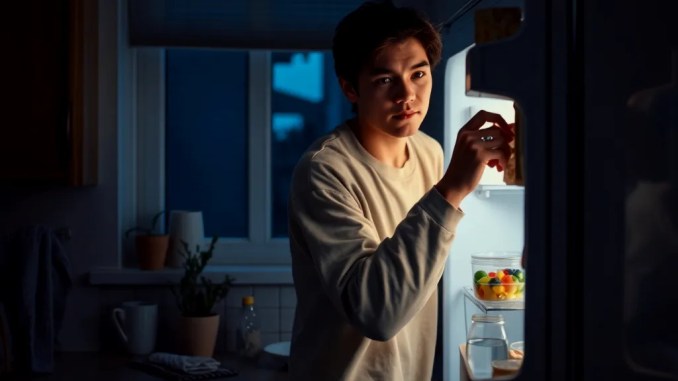
Why evening snacking is so common
Circadian rhythms and hormones shift appetite towards the evening. Ghrelin—an orexigenic hormone—often rises later in the day and increases desire for energy-dense foods, while satiety signals can weaken. The brain’s reward circuits also amplify preference for fat, sugar and salt after daylight hours. Environmental cues and learned routines—like watching TV with a bowl of snacks—turn occasional hunger into an automatic behavior. When dinner lacks protein, fiber and volume, metabolic signals can produce a rapid “dip” in perceived energy that prompts reaching for convenient calories.
Neurobiology behind preferring sweet, fatty foods at night
Evening preference arises from interacting neural systems. Dopamine-driven reward pathways respond strongly to palatable foods and encode the habit of post-dinner eating. Leptin and insulin signaling, which inform the brain about energy sufficiency, become less effective for some people late in the day, reducing inhibitory control over reward-driven impulses. Functional imaging studies show enhanced striatal responses to high-calorie cues at night; Behavioral experiments confirm people select higher-fat, higher-sugar options as evening progresses.
How late-night eating affects sleep and metabolic health
Large, fatty or very spicy late meals can delay gastric emptying and prolong sleep latency. High-sugar snacks produce glycemic swings that fragment sleep architecture, especially when consumed close to bedtime. Repeated nocturnal caloric intake can shift metabolic set points, increase total daily energy intake, and raise risk markers such as fasting glucose and triglycerides. However, causality varies by individual: some people with sleep disruption may crave sweets, while others who snack more develop poorer sleep. Tracking timing, content and individual responses clarifies cause and effect.
Quick test: is it real hunger or habit?
Use this 3-step check to decide before you reach for food: 1) Rate physical signs (stomach rumble, lightheadedness, decreased concentration). 2) Note time since last balanced meal and whether thirst could explain sensations. 3) Wait 20 minutes while drinking a glass of water; if sensations fade, habit likely drove the urge. If genuine hunger persists, choose a planned, portion-controlled snack that supplies protein and fiber.
Designing evening meals to prevent later snacking
Build dinners that extend satiety through bedtime: aim for a plate that contains ~25–35 g protein, ample vegetables for volume and fiber, and a moderate portion of low-glycemic carbohydrate. Examples: grilled salmon with roasted broccoli and quinoa; Lentil stew with mixed greens and a side of roasted squash. Prioritize protein sources that digest steadily (eg, fish, poultry, legumes, Greek yogurt) and include non-starchy vegetables to add bulk without extra calories.
Healthy evening snack options with portions and rationale
Choose snacks that combine protein, fiber and a small amount of fat to blunt glycemic spikes and increase satiety.
Examples and portions
– 150 g plain Greek yogurt + 1/4 cup berries: delivers ~12–15 g protein and low sugar.
– 1 medium apple + 10–12 almonds: provides fiber and a small protein/fat combo to curb cravings.
– 2 tablespoons hummus + raw veg sticks: offers plant protein and fiber.
– 1 slice whole-grain toast + 1 teaspoon peanut butter: minimal added sugar, steady carbs.
Behavioral tools to break the habit loop
Alter cues, routines and rewards. Identify the trigger (time, environment, emotion). Replace the routine with a low-calorie, non-food action that satisfies the cue—examples: after dinner, switch on a warm herbal tea and tidy the dishes; stand and do a 10-minute walk; Engage in a 20-minute hobby session that uses hands. Make the reward explicit (quiet relaxation, completed task, calmer mood) so the brain learns a non-food outcome.
Practical environment changes that reduce impulsive snacking
Restructure visibility and access. Keep bulk treats in opaque containers or out of the kitchen. Place prepared healthy snacks within easy reach and move tempting packages to higher shelves or less convenient rooms. Use single-portion containers rather than eating from the original bag. Set lights-off or kitchen-closed times to create a physical barrier to late eating.
Step-by-step evening snack management plan
Follow this five-step routine for two weeks and track results.
Step 1: Plan dinner with balanced macros and include a late-evening minimeal if needed.
Step 2: After dinner, perform a non-food ritual (tea, walk, hobby).
Step 3: Apply the 20-minute hunger test before snacking.
Step 4: If you snack, choose a planned portion from the healthy list and log it.
Step 5: Review patterns weekly: note triggers, timing, and feelings; adjust dinner composition or rituals accordingly.
When to seek professional help
If you experience recurring nocturnal binge episodes, persistent loss of control over eating at night, or if evening eating coincides with severe sleep disruption, consult a clinician. Night eating syndrome and other eating disorders require targeted treatment—options include cognitive behavioral therapy, chronotherapy to realign eating times, and collaboration between dietitians and mental health professionals.
Short answers to frequent questions
Does evening snacking cause weight gain? Yes when it increases total daily calories beyond needs and favors calorie-dense foods; portion and content matter.
Will a small snack ruin my sleep? A small, protein-rich snack often harms sleep less than a sugary or heavy fatty choice; timing within 1–2 hours of bedtime matters.
Why is my appetite stronger at night? Hormonal fluctuations (ghrelin, leptin, insulin) plus reward sensitivity and learned cues commonly increase evening appetite.
Bottom line: sustainable, flexible strategies win
Reduce evening overeating by strengthening dinners, testing true hunger, swapping routines, and making healthy options convenient. Use small behavioral experiments (two-week cycles) to find what lowers your night-time urges without rigid bans. Combine environmental tweaks, planned snacks, and professional support when needed to create a lasting change.







Be the first to comment