
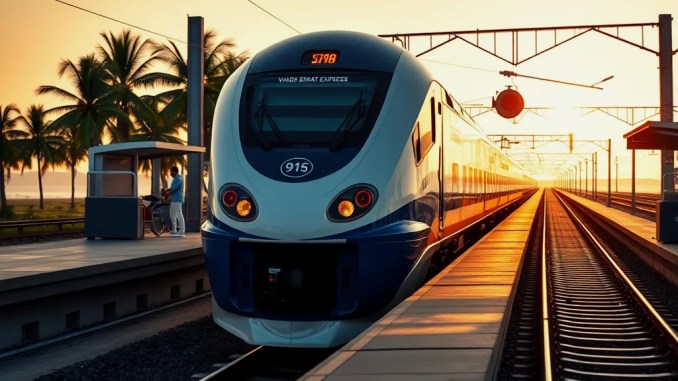
Overview of the Vande Bharat launch and electrification milestone
Prime Minister Narendra Modi will inaugurate the Bengaluru–Mangaluru–Madgaon Vande Bharat Express on 13 November, marking the formal opening of a fully electrified coastal rail corridor that connects Bengaluru to Goa. The inauguration also celebrates the completion of the 55-km Sakleshpur–Subrahmanya Ghat electrification, a critical engineering that removes a long-standing barrier to high-speed, electric and freight services along the route.
Why the Sakleshpur–Subrahmanya Ghat electrification matters
The 55-km ghat section traverses steep gradients and complex passenger terrain that required diesel traction, speed restrictions and frequent maintenance windows. Electrification delivers three immediate benefits:
1) Faster, more reliable passenger services: Electric traction improves acceleration and maintains higher average speeds on gradients, enabling the new Vande Bharat to cut journey times and operate tighter schedules.
2) Increased freight capacity and operational efficiency: Electrification supports heavier and longer freight trains; with double-stack and bi-directional planning elsewhere on the corridor, coal and container flows—such as supplies to NTPC’s Kudgi plant—become more predictable.
3) Lower operating costs and emissions: Electric trainsets reduce fuel dependency and lifecycle emissions compared with diesel. For a busy mixed-traffic corridor this improves economics and reduces track-side maintenance triggered by diesel soot and heat.
Details of the inaugural services and regular operations
Two special inauguration runs will operate on 13 November at 13:30. The service numbers and routings are:
• 06512: SMVT Bengaluru → Madgaon
• 06213: Mangaluru Junction → SMVT Bengaluru
South Western Railway announced that regular two-way commercial services using the Vande Bharat will commence from 15 November. The trains will call at Hassan, Sakleshpur, Mangaluru Junction, Udupi, Murdeshwar, Gokarna Road and Karwar before reaching Madgaon, providing faster coastal connectivity for both commuters and long-distance travelers.
Technical and testing milestones that enabled service start
Electrifying a ghat section requires overhead equipment tailored to gradient and tunnel profiles, traction neutral section planning, and robust signaling. Key technical steps completed:
• Overhead catenary installation and sectionalizations designed to accommodate regenerative braking from Vande Bharat sets.
• Power supply augmentation to ensure stable feed along long gradients, completed by December 2025 in the corridor’s substations and feeder lines.
• Field testing of a modified Vande Bharat set by the South Western Railway’s Mysuru division in August 2026, including trials of the Automatic Emergency Braking (AEB) system on gradient-intensive stretches.
These tests validated traction control, brake blending and dynamic speed profiles needed for scheduled commercial runs.
Complementary projects opening alongside the Vande Bharat
The inauguration forms part of a broader set of infrastructure handovers in Bengaluru on 13–14 November valued at more than INR 15,600 crore. Rail-specific projects include:
• Bagalkot–Wandal double-tracking (45 km) — Part of the 284 km Gadag–Hotgi project, this section expands capacity for both passengers and freight, and helps streamline coal movement to NTPC Kudgi.
• Amrit Bharat station upgrades — Renovated Chamarajanagar, Chikkamagaluru, Sakleshpur and Subrahmanya Road stations will enter service, improving passenger amenities and multimodal integration.
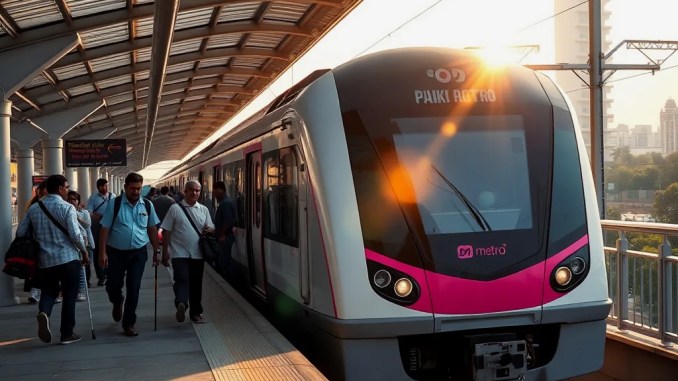
• Bengaluru Metro Pink Line (Pink Line) Kalena Agrahara–Tavarekere — A 3,470 crore investment whose new section will be inaugurated and immediately used to travel to IIM Bangalore, enhancing urban connectivity to the new rail hub.
How this launch changes travel options and trip planning
For passengers traveling between Bengaluru and Goa (Madgaon), the Vande Bharat brings competitive journey times without intermediate traction changes. Practical implications:
• Fewer transfers and faster point-to-point travel: Travelers from Bengaluru can expect direct, higher-speed service to coastal Karnataka and Goa, replacing or supplementing slower express trains that required longer timetables.
• Better timetable resilience: Electrified corridors allow quicker recovery from delays due to improved acceleration/deceleration and centralized traction control.
• Tourism and regional economy: Faster rail connectivity to Gokarna, Murdeshwar and Goa can boost weekend tourism flows and distribute economic activity along previously under-served stations.
Operational checklist for a smooth ramp-up to regular services
To ensure consistent performance in the first 90 days after commercial launch, rail operators typically follow a stepwise plan. Applied here, the checklist includes:
1) Intensive crew training: Drivers and onboard staff trained for gradient handling, AEB engagement points and emergency procedures specific to the ghat.
2) Timetable padding and progressive speed-up: Initial timetables include conservative margins that are tightened as crew and infrastructure demonstrate reliability.
3) Post-launch monitoring: Daily operational reviews of traction equipment, OHE parameters, and signaling interlocks with rapid maintenance response teams deployed at ghat access points.
4) Passenger information and feedback capture: Real-time passenger announcements, revised reservation slots and a feedback channel to log ride quality, punctuality and seat/boarding issues for continuous improvement.
Sample timetable and travel examples (practical illustration)
Example trip: A business traveler who needs to attend a late-afternoon meeting in Mangaluru could use an early Vande Bharat from SMVT Bengaluru and arrive in time for midday commitments, thanks to improved average speeds. Conversely, leisure travelers can plan same-day returns from Goa for weekend trips when timetables offer early departures and late returns.
What to expect next on the corridor
Further network benefits will follow as freight and passenger services optimize their schedules on the newly electrified corridor. Expect phased capacity increases, targeted timetable rationalizations linking metro and regional rail services, and incremental station upgrades focused on first-mile/last-mile connectivity around key interchange nodes such as Mangaluru Junction and SMVT Bengaluru.
Key facts at a glance
• Inauguration date: 13 November (special runs at 13:30)
• Regular services begin: 15 November
• Electrified ghat length: 55 km (Sakleshpur–Subrahmanya)
• Main stops: Hassan, Sakleshpur, Mangaluru Junction, Udupi, Murdeshwar, Gokarna Road, Karwar, Madgaon
• Complementary openings: Bagalkot–Wandal double track, renovated Amrit Bharat stations, Bengaluru Metro Pink Line section





Be the first to comment