
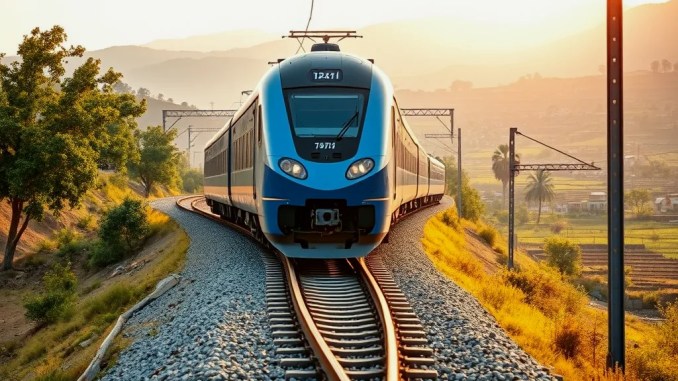
Madhya Pradesh activated two new rail corridors totaling 118 kilometers on 24 October, extending passenger services to Churhat in Sidhi district and advancing the Lalitpur–Singrauli corridor. The Rewa–Churhat section (≈65 km) and the Satna–Devendranagar section (≈53 km) entered service after targeted civil works, tunnels and bridges, and last‑mile track completion. These links aim to ease passenger movement, speed mineral and cement freight flows, and broaden market reach for rural producers.
Rewa‑Churhat and Satna‑Devendranagar: what changed and why it matters
State and central leaders inaugurated the lines at events in Churhat and Nagod, with Madhya Pradesh Chief Minister Mohan Yadav and Railway Minister Ashwini Vaishnaw participating. The practical changes on the ground are immediate: direct train connectivity to Churhat from Rewa and Satna, reduced dependence on long road hauls for bulk freight, and improved daily commute options for students, workers and patients. For Sidhi district, the Rewa–Churhat link closes a long-standing rail gap; for Satna, the new spur opens more efficient routes for limestone, clinker and cement traffic destined for domestic markets and downstream industries.
Rewa‑Churhat: engineering, cost and operational highlights
The Rewa–Churhat section cost about INR 1,070 crore and spans roughly 65 kilometers. Key engineering works included bridges across hilly terrain and a 3.33‑kilometer tunnel; the final 22.5‑kilometer piece between Rampur Naikin and Churhat completed the connection. Operational benefits include:
Freight: Shorter, more predictable transit for agricultural inputs and regionally produced goods.
Passengers: New daily services that reduce travel times and create alternatives to crowded buses, particularly for inter-district travel.
Local impact: Sidhi’s market access expands immediately; businesses along the corridor can schedule rail movements with greater confidence.
Satna‑Devendranagar: freight potential and community gains
The Satna–Devendranagar line, completed at an investment of about INR 873 crore, includes the last 8‑kilometer stretch between Phulwari and Devendranagar. Satna’s industrial cluster—cement plants, lime processing and mineral extraction—now has a direct rail artery that will typically lower unit transport costs and reduce heavy‑truck traffic on regional roads. Anticipated outcomes:
Cost savings: Rail carriage for high‑density bulk commodities commonly cuts transport costs per tonne‑km versus road, improving competitiveness of local producers.
Market access: Farmers and small traders around Devendranagar, Nagod and Panna can move produce to larger markets or aggregate at rail sidings for onward shipping.
Modal shift: Expect incremental diversion from road to rail for cement and clinker over the next 12–24 months as operators negotiate rake slots and establish loading points.
How these lines fit into the Lalitpur–Singrauli masterplan
The 541‑kilometre Lalitpur–Singrauli project connects Uttar Pradesh and Madhya Pradesh across Lalitpur, Chhatarpur, Panna, Satna, Rewa, Sidhi and Singrauli. Rewa–Churhat and Satna–Devendranagar are operational fragments that shorten travel and freight legs while larger civil works continue elsewhere. A notable package on the Sidhi–Singrauli segment awarded to GR Infraprojects carries a contract value of INR 1,897.51 crore and started mobilization with an engagement date of 15 June 2026. The contractor’s 900‑day completion window places a projected finish around 1 December 2028 for that tranche.
Implementation timeline and contract specifics you should know
Key schedule points to track for project stakeholders and nearby communities:
Mobilization and execution: For the GR Infraprojects package, formal mobilization began mid-June 2026; Civil, tracking and signaling works must conclude within 900 days from that date.
Interim milestones: Progressive delivery of bridges, tunnels and earthworks; track laying; electrification and signaling; trial runs and safety certification.
Permits and environment: Contract clauses require compensatory tree planting where felling occurred and ongoing survival checks; contractors must comply with forest and environment clearances before further clearances proceed.
Data‑driven expectations for freight, ridership and regional growth
Estimate framework and short‑term projections (first 12–36 months after opening):
Freight tonnage: Using regional industrial mix, anticipate a phased ramp from 0 to 2–3 million tons per year on the Satna spur within two years, concentrated in cement and mineral cargoes
Passenger volumes: Early services will attract daily commuters, students and intercity travelers; Conservative estimates point to several hundred to a few thousand passengers per day on the Rewa–Churhat link depending on service frequency.
Road relief: Expect a measurable reduction in heavy‑truck movements on primary feeder roads after freight operators realign logistics—typically within the first operational year as rake availability and loading points stabilize.
Practical next steps for businesses, farmers and travellers
Actionable steps each stakeholder group should take to leverage the new lines:
Freight forwarders and manufacturers: Coordinate with regional freight reservations to secure rake slots, identify siding or private‑loop needs, and calculate unit cost savings versus road haulage for contract renegotiations.
Farmers and co-operatives: Form collection hubs near newly active stations, map cold-chain or bulk storage needs, and negotiate group shipments to reduce per-tonne handling costs.
Daily travelers and institutions: Work with local rail authorities to request appropriate timings for MEMU/short‑distance services; colleges and hospitals can survey demand to justify additional stops.
Environmental mitigation and social safeguards in practice
Rail projects often require vegetation clearance and land acquisition. Authorities combined compensatory afforestation with monitoring directives: for every tree felled, additional saplings must be planted, with periodic survival checks and replanting where required. Social safeguards include consultation with affected communities, phased acquisition to reduce displacement shocks, and provisions for improved local access once lines are operational. Monitoring these commitments will determine long‑term social acceptability.
What to watch next: indicators of success and potential bottlenecks
Track these indicators over the coming quarters to gauge project impact:
Success signals: rising freight volumes and stable rake schedules; increases in station‑area commerce and market linkages; passenger load factors sustained above break‑even levels for new services.
Possible bottlenecks: limited siding capacity delaying freight loading, delayed electrification or signaling commissioning, or slow uptake by freight customers due to contractual or handling constraints.
Timely coordination among railways, local industry and district administrations will convert the infrastructure into measurable socio-economic benefits.
Key takeaways for policy makers and planners
To maximize returns on the new lines, planners should prioritise: integrating last‑mile logistics (sidings, warehousing), scheduling mixed traffic to avoid precedence conflicts between slow freight and faster passenger services, and actively monitoring environmental compensation. Targeted incentives for first‑movers in rail freight can accelerate modal shift and demonstrate cost benefits to the broader freight market.
These 118 kilometers represent both immediate connectivity gains and building blocks for the larger Lalitpur–Singrauli corridor — a project that, when complete, will reconfigure regional passenger and freight flows across central India.









Be the first to comment