
Train collision near Toledo killed 68 and injured more than 50, authorities confirm; new audio transcripts reveal control-room missteps and unclear protocol during a system failure.
System failure shifted traffic control to Atocha
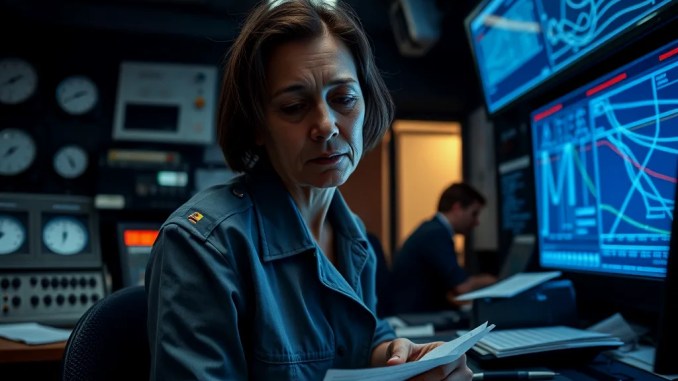
A signal-system malfunction at Urda station stopped trains on the Madrid–Andalusía corridor and transferred traffic supervision to Madrid Atocha main control. Records published by El Pais show the same Atocha operator conversed multiple times with the Iryo driver and once with the following AVE driver. The control-room operator issued movement instructions without independently confirming whether the line remained ahead obstructed, according to the transcript.
What the transcripts say and why it matters
At 08:36 the operator told the AVE driver to restart some systems and proceed at normal speed after a brief intervention — a directive that, by protocol, should have been tempered by a 40 km/h sight-distance restriction when another train occupies the track. At 08:41 the operator spoke with the Iryo driver, who reported a signal loss and that his train remained stopped near Urda. Roughly seven minutes later the Iryo driver reiterated that he could not restart the train. Yet the AVE driver received no explicit warning that the line was still obstructed, and at 08:54 a high-speed rear-end collision occurred.
Sequence of operational decisions that preceded impact
Reconstructing the timeline shows three critical decision points: (1) the transfer of control after the Urda system fault, (2) the operator’s instruction to the AVE driver to resume normal running without independent line verification, and (3) the lack of an emergency stop or protective speed order after the Iryo driver reported ongoing immobilization. Each point reflects a deviation from layered safeguards — signaling confirmation, restrictive speed limits under degraded conditions, and fail-safe emergency warnings — which investigators will examine closely.
Search, rescue and rescue operations
Search-and-rescue teams worked through the night with heavy machinery, nearly one thousand personnel, drones, search dogs and helicopters. Crews focused on extracting survivors from crushed carriages and recovering the deceased; operations prioritized medical triage, extrication, and scene stabilization. Local incident commands set up casualty collection points and patient-flow corridors to regional hospitals to optimize triage-to-treatment times during the initial hours.
Human toll and personnel details
Authorities identified the AVE driver as 36-year-old Antonio Acedo Meneses; reports indicate a multigenerational rail-worker family background. A trainee driver, David Cabanas, also died. Official tallies list 68 fatalities and more than 50 wounded, 15 of them in serious condition. These figures will be subject to revision as investigators and medical examiners complete their work.
Family support and public response
Relatives of passengers were offered contact centers at the crash site and in Toledo; embassies and consulates assisted international families. Social media amplified requests from distant relatives seeking information. Renfe suspended ticket sales on the Madrid–Andalusía services through December while emergency reviews proceed.
Immediate safety gaps to investigate
Investigators will focus on four areas: (1) why the control operator did not confirm track occupancy with signaling systems or track circuits before allowing the AVE to proceed; (2) whether normal-speed instructions violated the protocol requiring restrictive speeds during degraded signaling; (3) the communication loop and timing between Iryo and Atocha after the Iryo reported immobility; and (4) whether automated protection systems (eg, ATP/ETCS) were available, correctly configured, or overridden. Preliminary public records indicate the control-room instructions and in-cab messages will provide primary evidence to answer these questions.
How similar rail systems prevent rear-end collisions: concrete controls
Rail networks reduce rear-end risks by layering technologies and procedures: continuous train protection systems that enforce speed limits and stops automatically; overlapping traffic controllers with cross-check obligations; dynamic message and automatic-train-stop logic linked to track-circuit status; and mandatory protective speed orders when signaling gradients. Examples: networks using European Train Control System (ETCS) Level 2 keep movement authority centrally overseen and transmit limits directly to cabs; other systems require a dispatcher confirmation plus an independent signaling-system verification before resuming trains in a failed area.
What passengers and families should expect next
Expect a phased response: immediate forensic and operational inquiry by national accident trainees; criminal or administrative probes if staff or procedures show clear negligence; an audit of signaling hardware and software; and recommendations to revise protocols and training. Families will receive victim-support services and compensation channels will open once liability determinations progress. Rail operators commonly pause services on affected lines while corrective measures and inspections occur.
Lessons investigators will likely prioritize
Investigations tend to prioritize: rapid reconstruction of timeline and communications; evaluation of technological safeguards and override authority; human factors analysis of operator workload and decision-making amid abnormal conditions; and systemic recommendations that combine engineering, rules, and training changes to close the failure modes exposed by the incident.
Key data points to watch as investigation progress: timestamps of each control-room exchange, track-circuit occupancy logs, on-board event recorders, CCTV of the approach and crossing points, and maintenance records for the failed Urda equipment. Transparency on those artifacts will shape whether the crash leads to technical fixes, procedural change, or accountability actions.




Be the first to comment