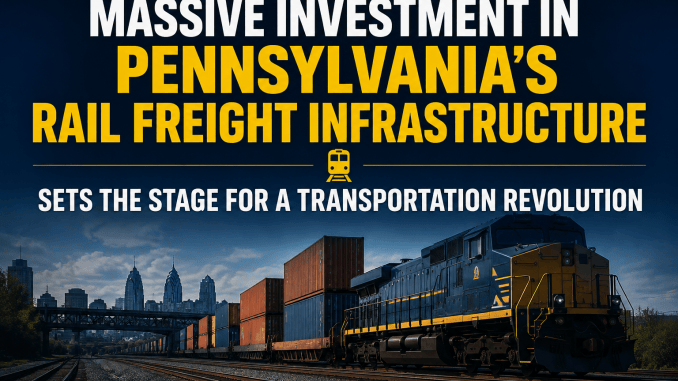
Massive Investment in Pennsylvania’s Rail Freight Infrastructure Sets the Stage for a Transportation Revolution
In a strategic move to strengthen its logistics backbone, Pennsylvania allocates an impressive $240 million over the next four years specifically for rail freight development—a notable increase from the previously designated $236 million in the last 12-year transportation plan. This targeted funding aims to revolutionize freight movement, boost economic growth, and establish Pennsylvania as a critical hub in the national freight network.
Understanding the Significance of Rail Freight Funding
The $240 million dedicated to rail freight demonstrates Pennsylvania’s recognition of the sector’s vital role in modern logistics. Rail freight remains one of the most cost-effective, energy-efficient, and environmentally friendly transportation modes, capable of moving large volumes of cargo over long distances with minimal emissions. This investment reflects Pennsylvania’s ambitions to modernize its rail infrastructure, expand its capacity, and improve safety standards.
How Will the Funds Be Utilized?
- Track and Infrastructure Upgrades: Modernizing existing rail lines with new rails, ties, ballast, and signaling systems to ensure smoother, safer operations.
- Capacity Expansion: Widening rail corridors to accommodate increasing freight traffic and reduce bottlenecks, leading to faster delivery times.
- Maintenance and Safety Improvements: Regular upkeep and safety enhancements on critical sections of the network to prevent accidents and minimize downtime.
- Intermodal Facilities: Developing hubs that seamlessly connect rail freight with trucking and ports, boosting intermodal transportation efficiency.
The Broader Context of Pennsylvania’s Transportation Funding
The total projected investment over 12 years exceeds $90 billion, Emphasizing Pennsylvania’s comprehensive approach to infrastructure. Of this, approximately $16.9 billion targets roads and bridges, while $12.9 billion focuses on public transit, reflecting a balanced strategy to improve all faces of mobility.
Why Is This Investment Essential Now?
Several converging factors make this investment particularly timely:
- Rising Freight Demand: The rise in e-commerce and regional manufacturing necessities expanded freight capacity.
- Climate Goals: Rail freight’s lower carbon footprint aligns with Pennsylvania’s green initiatives.
- Supply Chain Resilience: Strengthening rail infrastructure cushions against global disruptions by providing reliable freight routes.
- Economic Development: Improved rail logistics can attract new industries and foster job creation across the state.
Implementation Timeline and Future Outlook
The $240 million allocated for rail freight will be disbursed over four years, with initial projects likely focusing on safety upgrades and capacity expansion in strategic corridors such as Philadelphia, Pittsburgh, and other industrial regions. These initiatives aim to modernize Pennsylvania’s rail freight network and set standards for interstate cooperation and national freight policies.
How Will This Impact Local Communities and Industries?
- Economic Stimulus: Construction and upgrading projects create jobs and stimulate local economies.
- Enhanced Logistics: Local businesses benefit from faster and more reliable freight services, reducing costs and improving competitiveness.
- Environmental Benefits: Shifting more freight to rail reduces road congestion and lowers emissions, contributing to cleaner air quality.
- Safety Improvements: Upgraded tracks and signals decrease accident risks, protecting both workers and communities.
Expanding the Scope of Pennsylvania’s Transportation Strategy
The investment highlights Pennsylvania’s commitment to a multi-modal transportation system that prioritizes efficient, sustainable, and resilient infrastructure. The combined focus on rail, road, public transit, and aviation ensures a comprehensive approach to meet future transportation demands and promote statewide mobility.