
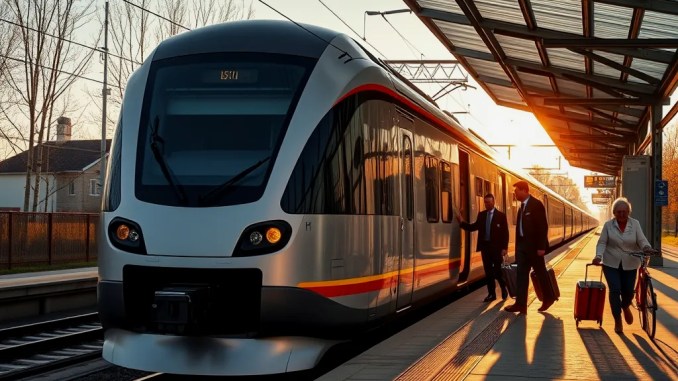
Lithuanian Railways (LTG) Group’s LTG Link put its first Stadler FLIRT into passenger service on 22 October 2026, operating Vilnius–Kaunas–Vilnius. This arrival begins the phased introduction of a 15-unit order—nine electric and six battery-electric trains—with the remaining units scheduled over the next weeks and battery trains entering service in December.
New FLIRT Units Replace Old Rolling Stock and Boost Capacity
The first electric FLIRT began scheduled operations after a public launch at Vilnius station. LTG Link will phase out older units as new trains enter service, increasing both seating capacity and onboard comfort. Each five-car electric FLIRT Intercity measures 93 meters and carries up to 200 passengers, including 16 first-class seats. The wider carbody—more than 0.5 meters wider than standard variants—creates larger aisles, more luggage and bicycle space, and an onboard bistro for hot meals and drinks, improving long-distance traveler experience.
Deployment Plan and Route Prioritization
LTG is operating the new electric units initially on the Vilnius–Kaunas corridor and plans rapid expansion to Vilnius–Klaipėda once certification completes. Operational planning prioritizes lines with electrification in place; Until the Vilnius–Klaipėda electrification and certification conclude, LTG expects a mix of electric and battery-electric operations. LTG Link’s schedule projects most services on the Vilnius–Klaipėda route to shift to the new electrics by year-end once approvals are secured.
Battery-Electric Trains: Routes, Range, and Service Role
Six battery-electric FLIRTs will enter service in December. Initial deployment focuses on Kaunas–Šiauliai and Radviliškis–Klaipėda lines, with plans to add Vilnius–Varėna–Marcinkonys in the second half of the month. These battery units use a dedicated power car plus three passenger coaches, total length exceeding 65 meters and up to 128-seat capacity. Designed to operate where overhead electrification is absent, they enable diesel-free services on non-electrified routes while offering ranges that make regional runs practical; configuration allows carrying between 6 and 30 bicycles depending on route and season.
Electrification Project: Vilnius–Klaipėda Corridor and Certification Steps
LTG Infra is completing the Vilnius–Klaipėda electrification in three phases. Dynamic tests on the Radviliškis–Klaipėda segment finished 5 October 2026; certification remains in progress. Once regulatory and safety approvals are granted, LTG will switch to regular electric operations and deploy the Stadler FLIRTs across the corridor. The electrification program aims to raise national rail electrification from 8% to 28%, changing operational planning, energy procurement, and maintenance routines across the network.
Passenger Experience Upgrades and Accessibility Measures
The new fleet focuses on inclusivity and practical amenities. Designers integrated low-gradient ramps and interior layouts to ease access for passengers with reduced mobility. Wider interiors free up space for bicycles—supporting regional tourism and daily multimodal commutes—and a bistro area on electric intercity sets restores a long-missing onboard catering option in Lithuanian intercity services. Battery trains will use snack vending instead of bistros to balance weight and energy usage constraints.
Procurement, Contract Terms, and Maintenance Support
LTG Link signed a €226.5 million contract with Stadler Polska in June 2023 following a 2020 tender. The deal covers manufacture of 15 FLIRTs, technical maintenance support and spare parts supply through 2037. The contract includes nine five-car electric Intercity units and six battery-electric sets with a separate traction battery car. Stadler also offered options to expand the fleet by up to 39 additional units (13 electric intercity, 15 battery units with 100 km range, and 11 battery units with 70 km range), giving LTG future procurement flexibility if demand and funding alignment.
Operational Impacts, Timetabling, and Short-Term Constraints
LTG notes short-term timetable effects: initial Vilnius–Kaunas runs may take about eight minutes longer while overhead line maintenance continues. Timetable planners are adjusting block times and dwell periods to balance newly increased acceleration and top-speed profiles of the FLIRTs with ongoing infrastructure works. As more units enter service, schedules will be optimized to reduce journey times and improve connection reliability across intercity corridors.
Strategic and Defense-Related Considerations
LTG’s interim CEO Arūnas Rumskas frames fleet renewal, electrification and infrastructure upgrades as a strategic transport modernization. Lithuania’s Defense Minister highlighted rail improvements’ role in military mobility: enhanced rail freight and passenger capacity and electrified corridors contribute to rapid allied movements and logistics resilience on NATO’s eastern flank. These considerations influenced prioritization of corridor upgrades and rolling stock capabilities that support both civilian and contingency uses.
What to Expect Next: Rollout Timeline and Passenger Advice
Expect staged introductions through December: the remaining electric units will enter service in the coming weeks; battery trains are due in December with route expansions into the Vilnius region later that month. Passengers should monitor LTG Link notices for timetable changes, seek bistro availability on electric intercity trains, and consult bicycle carriage rules which vary by train type and season. For travelers requiring accessible boarding, LTG is publicizing ramp procedures and platform assistance to shorten boarding times as crews gain routine with the new equipment.






Be the first to comment