Creating Engaging Learning Experiences for Children During Summer
Summer is the perfect opportunity to combine fun with education, especially in vibrant environments like Balıkesir Metropolitan Municipality Environmental Education and Science Center. These workshops are designed to captivate children’s curiosity in environmental sciences, biology, physics, and art, making learning an adventurous journey rather than a chore.
Why Summer Workshops Are Vital for Children’s Development
During these interactive summer programs, children develop essential skills such as scientific thinking, problem-solving, teamwork, and creativity. Engaging in hands-on activities helps children grasp complex concepts more effectively and ignites a passion for lifelong learning. These workshops serve as a platform where kids can ask questions, explore ideas, and create, fostering an environment of curiosity and discovery.
Curriculum Focus: From Recycling to Natural Science
The curriculum spans broad themes including recycling, natural sciences, physics, biology, and art inspired by nature. For example, children learn the importance of recycling by transforming waste materials into innovative designs. These activities instill environmental awareness while cultivating artistic skills and scientific literacy.
The Power of Hands-On Learning and Creativity
Active participation enhances understanding—children don’t just watch demonstrations; they engage in experiments, design projects, and creative problem-solving. Through activities like constructing models, conducting experiments, and designing eco-friendly art, children deepen their comprehension of scientific principles, while also gaining confidence in their abilities.
Step-by-Step: How These Workshops Foster Critical Skills
- Introduction to Concepts: Teachers introduce themes in an interactive way, often using storytelling to make topics relatable.
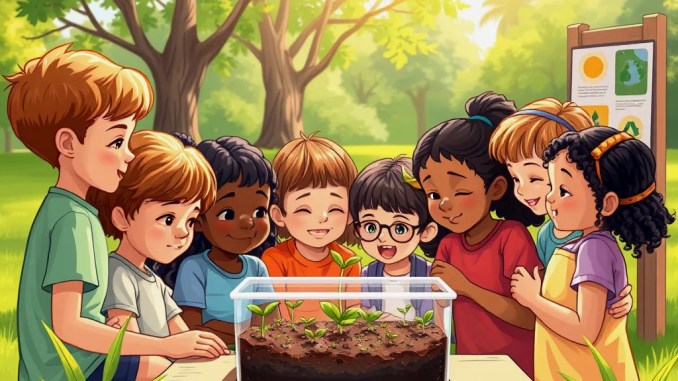
- Experiential Learning: Children participate in experiments, such as observing plant growth or exploring physical properties of materials.
- Creative Application: Using recycled items, kids craft original artworks or models demonstrating their understanding of the topic.
- Reflection and Sharing: Participants discuss their work, share ideas, and receive constructive feedback, building communication skills.
- Recognition and Motivation: At the end, certificates and awards motivate children to pursue career learning and curiosity.
Enhanced Environmental Awareness Through Interactive Play
This approach not only teaches scientific facts but also emphasizes environmental responsibility. Kids learn that their actions impact the planet, and they become aware of eco-friendly habits like recycling, conserving water, and reducing waste. These lessons are reinforced through supervised activities like creating art from waste materials, demonstrating how innovation can help solve environmental problems.
Building a Scientific Mindset with Art and Nature
Integrating art and nature encourages children to see the environment as a source of inspiration. They observe the Beauty of natural phenomena, then translate these observations into creative projects. Such activities strengthen their observation skills, foster individual expression, and deepen their connection to nature.
Long-Term Benefits of Participating in Summer Science Camps
Beyond immediate enjoyment, children develop an appreciation for science and environment, laying the foundation for future careers and responsible citizenship. The collaborative environment enhances social skills, and the confidence gained from successfully completing projects fosters resilience and perseverance.
Conclusion: The Future of Kids’ Education is Now
By emphasizing interactive, creative, and environmentally conscious learning experiences, summer workshops like these ensure that children are not passive recipients of knowledge but active explorers. As the world faces pressing environmental challenges, nurturing eco-aware, scientifically literate children is more crucial than ever—these workshops are shaping the innovators and problem-solvers of tomorrow.