Uncovering the Mysterious Flight Connecting Iran and Russia
In recent days, a series of unusual sightings and data points have sparked intense speculation about the movement of a Russian military aircraft near Iran’s borders. This, combined with reports of Iran’s newly appointed religious leader, Mojtaba Khamenei, undergoing medical treatment abroad, has led to widely circulated theories about covert operations and high-stakes diplomatic maneuvering. While official sources remain silent, open source tracking tools and eyewitness accounts paint a compelling picture of a complex, behind-the-scenes political drama involving multiple nations.
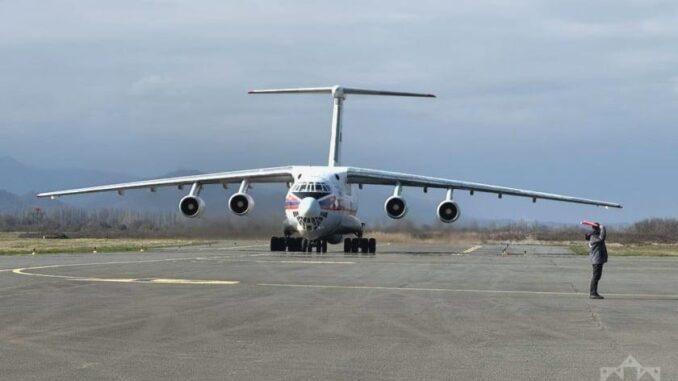
The aircraft in question is an Ilyushin Il-76TD, a heavy-lift transport aircraft typically used for military logistics, humanitarian aid, and strategic movements. On the day in question, the aircraft departed from Lankaran, Azerbaijan, a strategic border city bordering Iran, and headed towards Moscow. This route is notable because of its proximity to sensitive regions and the timing of departure, which coincides with reports of Khamenei’s alleged health crisis and subsequent evacuation.
Tracking the Flight and Its Significance
Flight tracking data from platforms like Flightradar24 reveal that the aircraft, registered as RA-76362, flew over the Caspian Sea and lingered near Iran’s northern borders before heading north. The visual evidence confirms the aircraft’s precise location over Lankaran, a city often used as a transit point for cargo and personnel moving between Azerbaijan and Iran.
Observers argue that this flight deviation is not typical for a routine military operation, especially given the aircraft’s flight path and the timing with reported medical emergencies involving Khamenei. The possibility of a high-priority transfer—whether for medical evacuation, diplomatic communication, or intelligence purposes—remains a significant concern for analysts tracking regional stability.
Details of the Medical Transfer Allegations
According to sources from Kuwait’s Al-Jarida, a high-level confidant indicated that Khamenei was injured during a recent air attack—a claim that has yet to be officially confirmed. The report states that he was moved in a Russian aircraft on March 12 and taken directly to Russia. This claim, if verified, would mark a dramatic shift in Iran’s internal stability and potentially impact regional alliances.
The aircraft involved reportedly carried 13 tons of medicines and medical supplies on a subsequent flight, which landed at Lankaran International Airport. From there, the supplies were believed to have been transferred via land routes into Iran, suggesting a humanitarian or emergency aid mission. However, complaints of a covert medical evacuation dominate the discourse, fueling speculation about the true nature of the flight and its cargo.
Official Responses and Diplomatic Implications
Both Iran and Russia have issued statements dismissing the rumors. Iran’s Ambassador to Moscow, Kazim Jalili, explicitly denied the reports, labeling them a “psychological operation” aimed at destabilizing diplomatic relations. He reaffirmed that Khamenei remains in Iran and has not traveled abroad, dismissing any claims of his injury or escape as false propaganda.
Meanwhile, Kremlin spokesperson Dmitry Peskov declined to comment directly on the flight’s purpose, citing the need for secrecy in sensitive matters involving national security and diplomacy. The lack of official confirmation has only fueled speculation, prompting intelligence agencies and geopolitical analysts to scrutinize the unusual flight patterns and cargo details more closely.
The Broader Context: A Turbulent Geopolitical Landscape
This incident emerges against a backdrop of increased regional tensions and complex alliances. Iran’s recent political shifts, combined with its strained relations with Western powers, create an environment where covert operations are likely, especially involving Russia’s strategic interests in the Middle East and Central Asia.
Russia’s geomilitary role in supporting Iran and the broader geopolitical stakes cannot be ignored. The movement of military aircraft near Iran could indicate preparations for a larger strategic realignment or an attempt to provide urgent medical aid in a clandestine manner. This scenario gains plausibility considering Russia’s history of operating in high-stakes geopolitical environments with a preference for deniable operations.
Analysis of the Humanitarian and Political Dimensions
What makes this scenario particularly alarming is the intersection of humanitarian aid and political maneuvering. The transport of medicines and supplies, if genuine, could be routine humanitarian logistics or a cover for a more clandestine operation. The injury of a political figure like Khamenei suggests internal instability within Iran, which could have ripple effects regionally.
Inserting a military aircraft into this equation underscores the potential for limited yet impactful covert actions. The possibility that Khamenei’s health crisis was severe enough to merit international medical intervention implies cracks within Iran’s political hierarchy—cracks that external powers may seek to exploit or stabilize at their discretion.
Next Steps and Strategic Considerations
Given the current ambiguity, experts recommend increased vigilance and open-source monitoring of aircraft movements, diplomatic communications, and regional developments. Governments and intelligence agencies are likely to continue scrutinizing flight data, cargo manifests, and public statements for clues about the true motivations behind these covert flights.
Moreover, diplomatic channels could be employed to verify or deny these attacks more transparently, potentially increasing stability if the rumors are dispelled or escalating tensions if they prove true. The situation underscores the importance of real-time intelligence sharing and strategic communication among regional and global actors.