
Revolutionizing High-Temperature Materials with In-Situ Sintering
In an era where hypersonic flight and advanced nuclear systems push the boundaries of technology, the demand for materials that can stand with extreme conditions has skyrocketed. Traditional alloys falter when faced with the blistering heat generated by reentry speeds or nuclear reactors, prompting scientists to seek innovative solutions. Among these, ultra-high temperature ceramics such as zirconium carbide (ZrC) have gained remarkable attention due to their superior melting points, chemical stability, and mechanical strength.
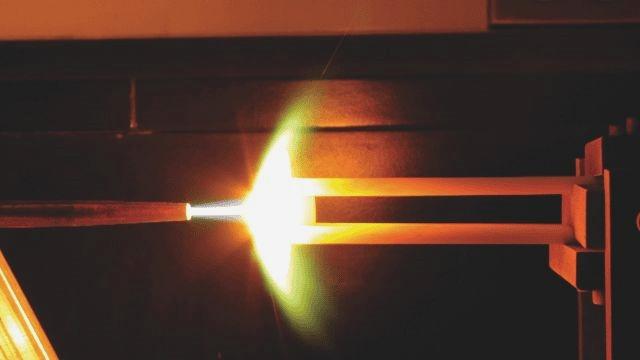
However, pushing these ceramics from theoretical potential to practical application presents a host of challenges. The core issue lies in their inherent brittleness, difficulties in densification, and the need for microstructural control at nanometer scales. Overcoming these obstacles is critical to enabling new classes of aerospace engines, space exploration tools, and nuclear energy systems that operate safely and efficiently under extreme stress. These efforts have led to a paradigm shift—moving away from conventional sintering methods towards innovative, high-precision processes that significantly enhance properties like toughness and durability.
Limitations of Conventional Sintering Techniques
Traditional sintering methods, such as hot pressing and hot isostatic pressing, have long dominated ceramics fabrication. While effective for many materials, these techniques encounter significant barriers when applied to ultra-high temperature ceramics like ZrC, TiSi₂, and B₄C. High required temperatures for densification often result in grain growth, which weakens the microstructure and decreases material strength. Additionally, these processes can lead to residual stresses, porosity, and uneven microstructures, all of which compromise performance in demanding environments.
Moreover, the difficulty in controlling grain size and distributing secondary phases even limits the ability to tailor properties at the nanoscale. For applications such as hypersonic aircraft components or nuclear reactor linings, where high fracture toughness and thermal stability are mandatory, these limitations are unacceptable. As a result, researchers have sought alternative methods that can produce dense, uniform, and mechanically resilient ceramics more efficiently and reliably.
Innovative In-Situ Reactant Sintering and Its Advantages
The breakthrough came with the development of in-situ reactive sintering techniques. Unlike traditional methods, this approach involves initiating reactions within the powder by applying heat, which leads to the formation of a dense composite with refined microstructures. By integrating this technique with reactive plasma jet or spark discharge processes, scientists have achieved unprecedented control over the microstructure development at the nanometer level.
For example, a recent study by researchers at Harbin University of Science and Technology employed an in-situ reactive spark plasma sintering (SPS) process to synthesize ultra-dense ZrC-based ceramics. This method involves a two-step process: initial reaction and nucleation at lower temperatures, followed by rapid densification at higher temperatures. This sequential approach allows for:
- Homogeneous microstructures with grain sizes under 500 nanometers
- Enhanced fracture toughness surpassing 7 MPa·m^1/2
- Superior mechanical strength exceeding 800 MPa in bending tests
- Improved thermal stability suitable for extreme environments
> The key lies in the controlled formation of solid solutions and secondary phases during the in-situ reactions, which act as strengthening agents. These results in ceramics that are both dense and resilient, able to endure the relentless conditions typical of hypersonic travel and nuclear operation.
Microstructural Engineering for Superior Performance
Microstructure plays a decisive role in determining ceramic behavior. In the case of the newly developed ZrC ceramics, nanometer-scale grains provide a significant increase in strength, toughness, and resistance to crack propagation. Achieving such microstructures requires precise temperature control, optimized reaction parameters, and rapid cooling techniques.
With the in-situ approach, manufacturers can tailor grain sizes and phase compositions in real-time, leading to metastable microstructures that outperform their traditionally sintered counterparts. This microstructural engineering enables materials to handle not just thermal stresses but also mechanical vibrations, shocks, and neutron irradiation — critical factors in aerospace and nuclear contexts.
Real World Implications and Future Perspectives
The immediate impact of this advancement extends to the development of next-generation thermal protection systems for hypersonic vehicles, which face atmospheric re-entry temperatures exceeding 3,000°C. The ceramics produced via in-situ reactive sintering can sustain these temperatures without degrading or cracking, ensuring the safety and longevity of space-bound crafts.
Similarly, in nuclear energy sectors, these ceramics can serve as core components and accident-tolerant fuels that stand with severe conditions while maintaining structural integrity. The scalability of the two-stage in-situ process means that manufacturing large, complex ceramic parts could become economically viable, opening avenues for industrial-scale production.
In the broader scope, continued research aims to combine nano-reinforcements and multiphase composites into the in-situ sintering framework, pushing the thermal and mechanical limits even further. Advanced modeling and in-situ monitoring are expected to refine these techniques, offering real-time insights into phase evolution, grain growth, and densification, leading to even more tailored, high-performance ceramics.