US Army Redefines Logistics with Lessons from Ukraine

US Army Redefines Logistics with Lessons from Ukraine - RaillyNews

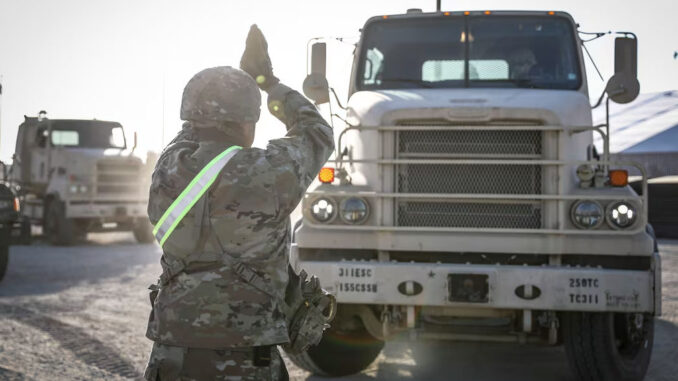
The Russian-Ukrainian war radically changed the rules of the modern battlefield in terms of logistics. A drone operator’s dream, it created an environment in which supply trucks and warehouses were overwhelmed by an almost endless stream of unmanned aerial vehicles (UAVs) and long-range munitions. For the first time since World War II, US Army logisticians must contemplate a bleak future in which being behind the front lines will no longer protect them from enemy bombardment.

Secure Back Zone Assumption Fails

Captain Stephanie Torres, an experienced logistics officer, told Defence News and in an article for Army Sustainment magazine that the assumption that logistics operations are conducted in the secure rear area is no longer valid.

Equal Threat: “Support troops are being targeted with the same precision and lethality as manoeuvre troops,” Torres said, noting the swarms of drones that have turned the Ukrainian battlefield into a vast zone of destruction stretching 32 kilometres or more beyond the front line.

Russian Tactics: Russian forces repeatedly ambushed Ukrainian supply units and destroyed logistical elements through coordinated UAV surveillance and rapid sensor-to-shooter strikes.

Logistics as the Art of Survival

In this new environment, supply units must think and act like combat units to survive. Torres listed measures that are vital for logistics units:

Concealment and Deception: Support troops should receive not only the technical details of material distribution, but also survival training, move in manoeuvre formations and plan deception and concealment.

Signature Minimisation: Sustainability nodes must reduce their electromagnetic and physical signatures in order to survive in an environment full of sensors. This means minimising radio transmissions, using camouflage and decoys, limiting the number of tents and using low-signature platforms to deliver supplies.

Transition to Distributed and Autonomous Systems

Torres argued that the Army logistics system must evolve from fixed and vulnerable centres to distributed, autonomous nodes that send mobile support teams that “relocate frequently, adapt quickly and are compatible with manoeuvre formations”. Supply convoys should be timed to coincide with times when the chances of detection by enemy ISR (Intelligence, Surveillance and Reconnaissance) are low.

A Question of Priority: Despite the fact that vehicles used against UAVs, such as machine guns and jammers, will be scarce and often prioritised for manoeuvring troops, Torres noted the importance of logistics: “If logistics fails, the lifespan of our operations is extended. We cannot rule out the possibility of survival of the sustainers.”

Lessons from the Commercial World: Lean Logistics

Torres, who has an MBA, said the military could learn from the commercial world, particularly from decentralised fulfilment and just-in-time logistics practices used by companies such as Amazon.

Lean: In tactical operations, these principles translate into lean logistics. In contested environments, leaner footprints encourage agility, and agility increases the chances of survival.

Avoiding Excess Inventory: Torres argued that excess inventory stored in undefended warehouses near the front line had become a burden, and that instead unneeded supplies should be returned every day.

Greece Takes Delivery of Second FDI HN-Class Frigate Nearchos - RaillyNews
EUROPE

Greece Takes Delivery of Second FDI HN-Class Frigate Nearchos

Greece commissions second FDI HN frigate Nearchos in Lorient ceremony Greece received the second FDI HN (Belharra) class frigate, Nearchos, after a formal naming and flag-raising ceremony held on 30 October 2026 in Lorient, France. Greek Defense Minister Nikos Dendias attended the ceremony and signed the formal decision to add 🚄
Germany Unveils AI-Controlled Counter-Air Defense System - RaillyNews
EUROPE

Germany Unveils AI-Controlled Counter-Air Defense System

Helsing unveils Contra — an AI-driven layered air defense designed for mass raids Helsing developed Contra to detect, prioritize and defeat large concentrations of fast air threats such as jet-powered UAS and cruise missiles. The system combines distributed sensors, an AI decision-support layer and multiple interceptor types so operators can 🚄
Isle of Wight Island Line Closed Until November 15 - RaillyNews
EUROPE

Isle of Wight Island Line Closed Until November 15

Island Line closure, scope and schedule The Island Line on the Isle of Wight closed on 31 October for a concentrated period of track renewal and infrastructure upgrades. Network Rail Wessex and South Western Railway (SWR) carry out the works in two phases: the first phase runs until 15 November 🚄
CPKC Objects to Union Pacific–Norfolk Southern Merger - RaillyNews
AMERICA

CPKC Objects to Union Pacific–Norfolk Southern Merger

CPKC asks STB to end Union Pacific–Norfolk Southern merger review, citing misconduct Canadian Pacific Kansas City (CPKC) has asked the US Surface Transportation Board (STB) to terminate the review of the Union Pacific–Norfolk Southern merger, arguing that Union Pacific’s conduct—particularly comments by CEO Jim Vena at the March 2026 SWARS 🚄
Amtrak Cascades Schedule Change - RaillyNews
AMERICA

Amtrak Cascades Schedule Change

Vancouver station clocks will show a one-hour advance on Nov 1 Amtrak updated Cascades schedules to reflect local clock differences, not train speed or routing changes. Starting Nov 1, Amtrak’s published timetable lists Pacific Central Station in Vancouver one hour ahead of Seattle local times because British Columbia will remain 🚄
158-Year-Old Vught Station Building in the Netherlands Moved 13.6 Meters - RaillyNews
EUROPE

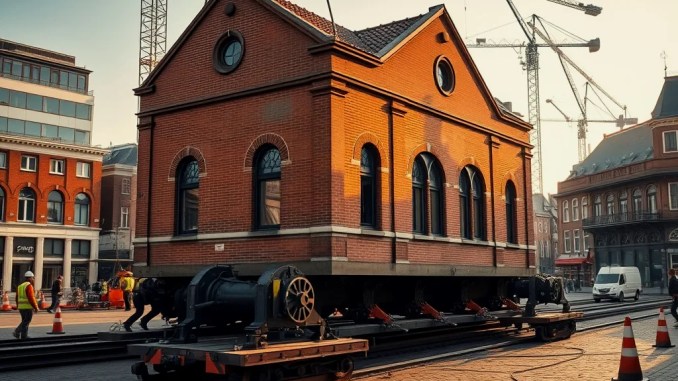
158-Year-Old Vught Station Building in the Netherlands Moved 13.6 Meters

Historic Vught station moved intact to enable sunken railway — what happened ProRail relocated the 1868 Vught station building, including its basement, 13.6 metres east on 30 October using a controlled sliding operation so the structure could remain as a national monument while the railway line is put below the 🚄
EU Rail Passenger Transport Breaks Record - RaillyNews
EUROPE

EU Rail Passenger Transport Breaks Record

EU rail passenger traffic reached an all-time high in 2025 Railway operators across the European Union reported 457 billion passenger‑kilometers in 2025, the most since Eurostat began collecting comparable data in 2004. That volume represents a 2.6% increase on 2024 and stands 14.2% above the 2019 pre-pandemic level. Operators in 🚄
Finland Orders €240M for 21 New Stadler Sm7 Trains - RaillyNews
EUROPE

Finland Orders €240M for 21 New Stadler Sm7 Trains

Sm7 Fleet Expands to 41 Units After New 21-Train Order RailStock Finland, the state-owned rolling stock company, signed a contract in late October 2026 to exercise options within its 2022 supply agreement with Stadler and purchase 21 additional Sm7 electric multiple units (EMUS). That addition brings the total Sm7 order 🚄
Vande Bharat Sleeper Express Launches Varanasi–New Delhi Service - RaillyNews
ASIA

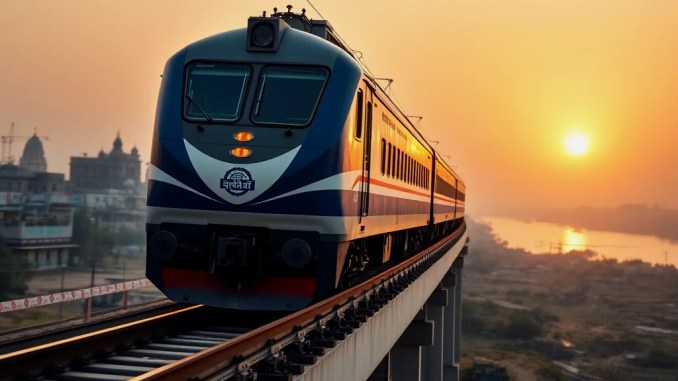
Vande Bharat Sleeper Express Launches Varanasi–New Delhi Service

Vande Bharat Sleeper launches overnight Varanasi–New Delhi service Indian Railways will start the new Vande Bharat Sleeper overnight service between Varanasi and New Delhi on 31 October 2026. The train departs Varanasi at 20:50 and arrives New Delhi at 06:10 the next morning; the return departs New Delhi at 21:40 🚄