
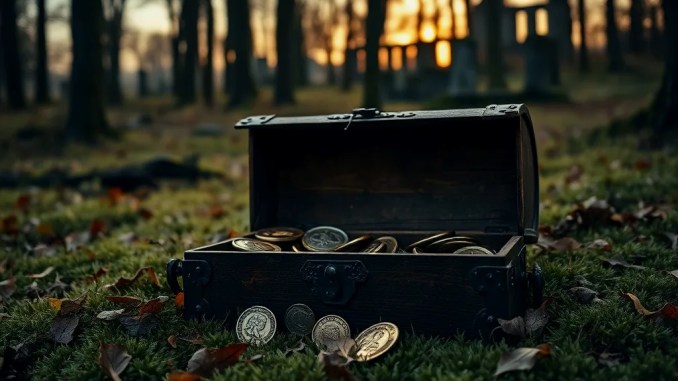
Two hikers in the northern Czech Republic discovered a concealed treasure weighing 5 kilos 230 grams and handed the entire find to authorities. The collection, hidden between stones on a hillside, included 598 gold coins, more than 30 gold snuffboxes from the 19th and 20th centuries, and multiple pieces of jewelry and valuable objects. Officials awarded the pair a combined €470,000 reward — the largest payout for a discovered hoard in the country’s history.
How the Reward Was Calculated
Officials based the reward on the hoard’s bullion value. Because the items are composed directly of gold, the museum and authorities priced the collection using the current market gram price for gold and agreed to pay 100% of that market value as the finders’ reward. This method produced the record-breaking payment and surpassed previous high payouts, such as a roughly €82,000 reward issued in 2015 for a silver coin collection.
What Exactly Was Found and Its Condition
The assembled hoard contains 598 gold coins plus over 30 gold snuffboxes dating to the 19th and 20th centuries, along with assorted jewelry and valuable household pieces. The total mass of the gold objects is 5.23 kilograms. Initial inspections indicate the items were stored together and concealed deliberately within a stone cairn; Corrosion is limited given the hoard’s protected placement. Museum conservators will perform cleaning, stabilization, and cataloging before public display.
Why Experts Think the Hoard Was Hidden After 1921
Specialists examined coin types, snuffbox styles, hallmarks, and any maker’s marks to estimate a concealment date. Stylistic and numismatic evidence points to a post-1921 interment date: coin minting dates, box manufacturing techniques, and the absence of earlier-period contaminants support this window. Investigators will continue metallurgical testing and provenance research (die studies, assay marks, and alloy composition) to refine the timeline and possibly identify origins or ownership traces.
What Happens Next: Museum Processing and Public Access
The museum receiving the hoard will follow a sequence of steps: careful unpacking and photographic documentation, non-invasive imaging (X‑ray/CT when needed), conservation treatment (mechanical cleaning, electrolytic reduction where applicable, corrosion inhibitors), cataloging with detailed provenance metadata, and finally exhibition planning. Restoration reports and conservation data will accompany any public display. Authorities expect the restored collection to enter a curated exhibition accessible to researchers and the public once conservation and interpretation are complete.
Legal and Valuation Considerations That Determined the Payout
Czech finders’ reward rules and cultural property law guided the decision. Key factors included: clear transfer of ownership when the finders delivered the items to the museum, the hoard’s tangible bullion composition (allowing straightforward market valuation), and precedent amounts for similar discoveries. The museum and state agreed that compensating at 100% of current gold value was fair given the complete surrender of the collection and its archaeological importance.
Implications for Archeology and Local Heritage
The discovery highlights how recent-period deposits — not only ancient hoards — can inform regional economic, social, and cultural histories. The mix of coins and personal items suggests private concealment, potentially linked to social upheaval or a personal decision to safeguard valuables. Conservation and subsequent research (contextualizing maker marks, tracing workshops, and mapping findspot landscape features) will enrich Central European material culture studies for the 19th–20th centuries.
Questions Often Asked About Such Discoveries
How common are large gold hoards in Central Europe? Large, intact gold hoards are rare; finds are more often fragmented or dispersed. When found intact, they attract significant scholarly and public interest due to their research value.
Do finders always get paid? Payment depends on local law and the circumstances of discovery. In the Czech Republic, finders who transfer items to official institutions typically receive compensation; Amounts vary based on item type, cultural status, and valuation method.
Can such hoards be privately owned? National rules often grant state ownership or require declaration; Private ownership rights depend on whether discoverers follow legal channels. Handing finds to a museum usually ensures legal protection, conservation, and public benefit.
Practical Steps for Hikers Who Discover Artifacts
1) Secure the area and avoid moving objects unnecessarily to preserve context. 2) Record the exact findspot with GPS coordinates and take photos of the site in situ. 3) Contact local authorities or the nearest museum promptly and follow legal reporting procedures. 4) Do not attempt cleaning or restoration—leave artifacts to trained conservators. Following these steps protects archaeological information and maximizes chances for fair valuation and reward.
The hoard’s discovery, its thorough handover, and the record reward together set a precedent in the Czech Republic for transparent handling of valuable finds and underscore the scientific potential of relatively recent concealed deposits.






Be the first to comment