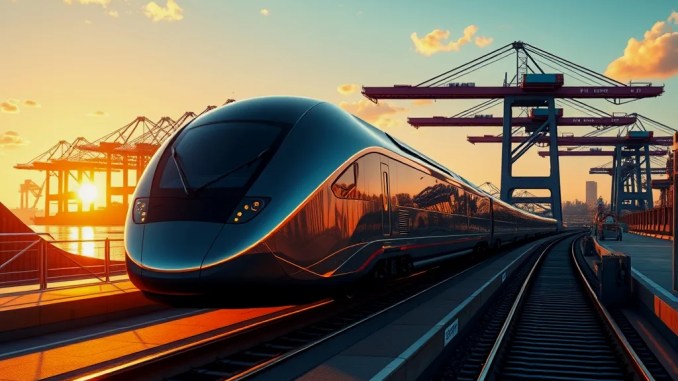
A strategic overhaul is underway to dramatically boost Liverpool’s freight capacity through innovative rail infrastructure projects. Current data reveals that only about 2% of containers arriving at Liverpool Port utilize rail transportation, leaving vast untapped potential for modal shift from road to rail. This limited rail shares constrains capacity, increases congestion, and elevates environmental impacts. Recognizing this challenge, transportation experts designed comprehensive corridor proposals to catalyze freight growth and unlock Liverpool’s logistical potential. ## Rethinking Liverpool’s Rail Network: New Strategic Corridors The existing rail network connecting Liverpool Port to industrial hubs and inland regions lacks the capacity and direct routes needed for dynamic freight growth. To address this gap, planners propose a new corridor that bypasses Manchester, directly linking Seaforth to Blackburn and radiating outward towards North and East England. This corridor aims to: – Provide a more direct route for container trains, reducing transit times. – Alleviate congestion on the heavily trafficked Manchester routes. – Increase the overall rail share of port freight from 2% to significantly higher figures. Detailed feasibility studies, commissioned by the Foundation for Integrated Transport and supported by the Greengauge 21 think tank, highlight the potential benefits alongside necessary infrastructure upgrades. These include electrification of key segments, double-tracking critical sections, and reactivating existing but dormant rail lines. ## Electrification and Capacity Expansion: Key Upgrades One primary focus involves electrifying the Preston-to-Blackburn section. Electrification not only accelerates freight movements but also reduces carbon emissions, aligning with the UK’s climate commitments. Re-establishing the connection at Tardy Gate near Lostock Hall involves reconstructing approximately half a mile of track, considering existing land use and property constraints. Electrification would enable faster, more reliable freight services and facilitate seamless integration with the broader North of England rail network, including the crucial Settle & Carlisle Line. A structured upgrade plan envisions double-tracking this segment, bolstering capacity and operational flexibility. ## Connecting Northern Scotland and Yorkshire: New Cross-Regional Links Beyond the immediate Liverpool-Blackburn corridor, the proposals emphasize connecting northern Scotland and Yorkshire directly to the Liverpool freight hub. From Blackburn, trains could diverge through Hellifield onto the Settle & Carlisle line, bypassing congested routes, and connecting to Scotland efficiently. In the south, trains traveling from Liverpool could access the Calder Valley line via Rose Grove, linking to major industrial and urban centres. These cross-regional links aim to create a resilient, high-capacity network capable of handling future freight demand, including intermodal containers, bulk commodities, and specialized cargos. Key advantages include: – Diversification of routes reducing bottlenecks. – Shorter transit times for freight reaching northern markets. – Improved integration of freight logistics hubs. ## The Role of Switch Island and Inland Ports An innovative feature of these proposals involves establishing a new inland terminal at Switch Island, near Liverpool, functioning as a multimodal freight interchange. Utilizing disused rail lines and modern automation, this facility could support container transfers from road to rail with minimal delays. This inland port concept directly addresses the recent cancellation of the A5036 Port Access Road project, which, had it proceeded, would have facilitated smoother road access. The rail-based inland hub offers a resilient alternative, easing city congestion, lowering emissions, and providing scalable expansion opportunities. ## Impact on Passenger Services and Urban Mobility Enhancing freight rail corridors offers secondary benefits for passenger services, especially in urban areas. Expanding rail capacity in Liverpool and wider North West England could enable the extension of Merseyrail services to Preston, improving local mobility. Moreover, smarter freight corridors allow for dedicated freight lines, minimizing conflicts with passenger traffic, which leads to more punctual, frequent, and reliable commuter services. Integrating freight and passenger infrastructure exemplifies holistic urban transport planning. ## Timeline and Investment Outlook Achieving these ambitious upgrades requires coordinated investment over the next five to ten years. Estimated costs for electrification, track upgrades, station reconstruction, and new terminal facilities vary but are projected to be manageable relative to the economic benefits. Public-private partnerships, coupled with national rail funding programs, will be vital. Emphasizing environmental benefits and congestion mitigation can also attract green investment, making these projects politically and socially viable. ## Conclusion: Toward a Sustainable, Resilient Freight Network The proposed rail corridor enhancements stand to fundamentally transform Liverpool’s freight landscape. By establishing direct, electrified routes that circumvent congested urban centres, the UK can increase rail’s modal share, reduce environmental impact, and create a resilient logistics framework capable of adapting to future demands. These interventions foster a cleaner, more efficient economy and set a precedent for regional logistics strategies nationwide, emphasizing rail’s vital role in sustainable urban development and national supply chain robustness. ## FAQs Q1: How much can these rail corridor improvements increase Liverpool’s freight capacity? – They aim to boost rail freight share from around 2% to possibly over 20%, depending on implementation scope. Q2: What are the main technical upgrades required? – Electrification of key segments, double-tracking critical sections, reactivating dormant rail lines, and building new inland freight terminals. Q3: How will these projects impact environmental goals? – They will significantly reduce CO2 emissions by shifting freight from road to rail, which is more environmentally efficient. Q4: When can these upgrades become operational? – A realistic timeline suggests completion within 5 to 10 years, contingent on funding and planning approval. Q5: Are passenger services affected by these freight corridor projects? – Ultimately, improved freight infrastructure can enhance passenger services by freeing capacity and enabling more direct and frequent urban transit options.