
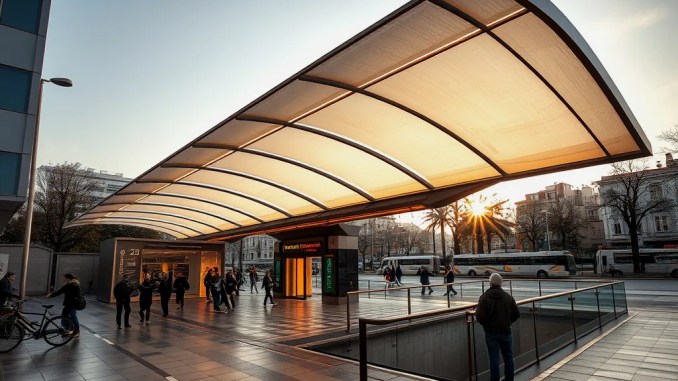
Ankara Metropolitan Municipality continues canopy installations at 19 metro stations and various underpass exits to protect escalators from rain, snow and hail. By shielding equipment from exposure, the project extends service life, reduces breakdowns and lowers maintenance costs while improving passenger safety and comfort at station entrances and exits.
Scope and current status of canopy installations
The Urban Aesthetics Department leads the program across the city. Completed locations include three stations along Yüksel and Sakarya Streets and the Ministry of Agriculture stops, plus the Koru D exit. Teams work on Akay underpasses and the Karanfil Street installation with a one-week target for those finishes. Remaining sites — including Emek İş Hanı, Ziya Gökalp, Meşrutiyet, Necatibey, MTA and AKM stations — follow a phased timeline, with municipality schedules projecting all works to conclude within several months.
Why canopies matter: technical and operational benefits
Canopies deliver measurable benefits beyond simple shelter. By preventing direct exposure to precipitation and hail, they:
Reduce corrosion and mechanical wear: Water intrusion and freeze–thaw cycles accelerate rust and bearing failures in escalator drive systems. Covering the access points lowers humidity and thermal shock on components.
Lower maintenance frequency and costs: Fewer emergency repairs and part replacements reduce unplanned downtime and spare-part consumption. Municipal maintenance budgets can reallocate predictable savings to preventive programs.
Improve passenger flow and safety: Dry, well-lit access ramps and steps reduce slip hazards. Canopies also allow installation of targeted lighting and signage, improving visibility during peak and off-peak hours.
Design considerations and how they protect equipment
Effective canopy design balances protection, aesthetics and structural demands. Key considerations applied in Ankara’s program include:
Coverage geometry: Overhang length and slope direct water away from escalator wells. Designers calculate the 100-year rainfall runoff and position gutters to avoid splash-back.
Material choices: Corrosion-resistant steels and laminated glazing resist hail impact and require low maintenance. Selected finishes match station architecture to preserve visual continuity.
Wind and snow loads: Structural members size to stand with local wind speeds and snow accumulation. Anchorage details prevent uplift and transfer loads into existing station frames without compromising integrity.
Implementation steps used by the municipality
The municipality follows a step-by-step implementation to reduce passenger disruption while ensuring quality:
1. Site assessment: Engineers inspect existing station egress geometry, utilities and structural anchors to determine feasible canopy footprint.
2. Design and approvals: Architects produce canopy designs that integrate with station facades; structural calculations and materials specifications obtain regulatory sign-offs.
3. Fabrication: Canopy panels, frames and fixings are prefabricated off-site to minimize on-site work windows and disturbances.
4. Phased installation: Teams schedule night and off-peak installations, erect temporary barriers and maintain pedestrian access, completing one exit at a time.
5. Final inspection and commissioning: After installation, technicians verify drainage, lighting, and anchorage, and escalate to a handover with maintenance instructions.
Expected outcomes and performance metrics
The project defines measurable outcomes to verify performance:
Escalator mean time between failures (MTBF): A baseline MTBF measured pre-installation will be compared to post-installation values to quantify longevity earnings.
Maintenance cost reduction: Municipal accounting will track reductions in emergency repair invoices and spare parts procurement for escalator components.
Passenger satisfaction: Short surveys at affected stations and incident reports (slips, weather-related delays) will determine perceived improvements in comfort and safety.
Examples and practical impacts for riders
On Yüksel and Sakarya corridors where canopies finished first, commuters reported fewer wet steps after rainstorms and quicker, safer access during winter mornings. Maintenance crews noted a decline in water-related escalator faults in those pilot locations within the first two months following installation.
How this project fits broader urban resilience goals
Protecting transit infrastructure is a cost-effective resilience measure. By extending equipment life and stabilizing maintenance budgets, the municipality reduces lifecycle costs and preserves continuous mobility for residents. The aesthetic integration of canopies also supports public realm improvements and encourages use of public transport during adverse weather.
What residents can expect next
Residents can expect phased openings as each canopy segment completes final inspections. The municipality will publish short notices about temporary access changes and completion dates for specific station exits. Continued monitoring and feedback channels will help prioritize any minor adjustments after handover.



Be the first to comment