
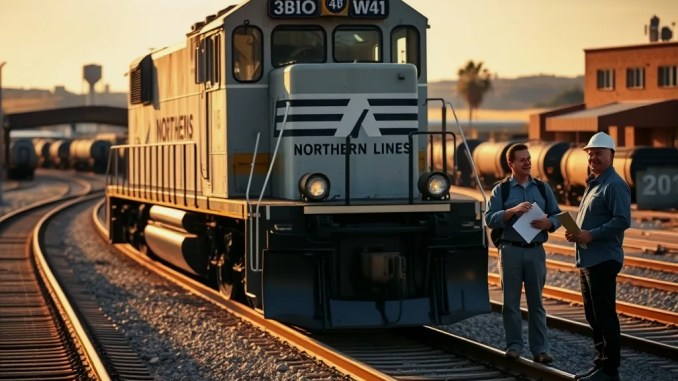
St. Cloud short line awarded up to $1.3 million to renew almost its entire 25‑mile route
Northern Lines Railway will use a federal CRISI (Consolidated Rail Infrastructure and Safety Improvements) grant to replace worn ties, fix rail-surface defects, and realign track along roughly 25 miles of its Minnesota short line that serves greater St. Cloud. The Federal Railroad Administration selected the project for the 2025–2026 funding round, approving an up to $1.3 million federal share while requiring 35% of the project cost to come from non‑federal sources.
What the work renewal covers and why it matters
The scope covers final design and construction tasks that directly reduce derailment risk and increase load capacity: targeted tie replacement, rail grinding and defect repair, ballast and drainage corrections, and alignment restoration on main segments that connect to the BNSF network. For a short line that handles hazardous and bulk commodities—lumber, aggregate, cement, grain, propane, butane, and chemicals—those specific fixes both maintain safe hazardous‑material routing and preserve consistent customer service for about 20 shippers.
How the upgrades improve safety and operations — step by step
The FRA and Northern Lines project plan follows a sequence proven to extend track life and improve operational durability:
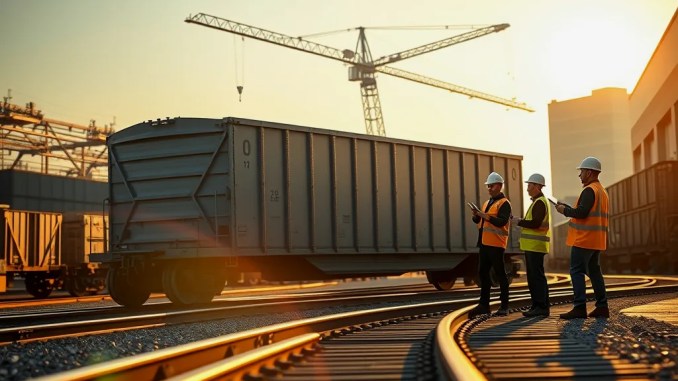
1. Condition survey and priority mapping: inspectors log tie conditions, rail wear, and geometry defects to prioritize sections with highest operational risk.
2. Targeted tie replacement: replace rotten or broken ties first on curves and sections with fastener or gauge problems to restore track stability.
3. Rail and surface corrections: rail grinding and local rail replacement remove defects and correct rolling contact fatigue before they propagate.
4. Alignment and surfacing: tamping and ballast cleaning restore proper track geometry and drainage, reducing stress points and derailment likelihood.
5. Verification testing: post-work geometry runs and loaded car tests confirm restored capacity and safe operation.
Network context: 25 miles that link customers and BNSF
Northern Lines operates an approximately 25-mile route built to interchange with BNSF. Roughly 3 miles of that track are shared with other freight operators. The line moves about 10,500 railcars per year and serves roughly 20 customers across central Minnesota. The CRISI renewal would touch nearly the entire route, a cost‑effective approach for a short line whose primary capital needs are track structure and drainage rather than major bridge or tunnel work.
How the funding fits within Minnesota and CRISI program results
The US Department of Transportation announced 105 projects across 45 states and DC in this CRISI round, allocating roughly $2.336 billion for selected projects. The program drew 368 applications requesting about $12.17 billion; selected projects carry additional expected non-federal contributions exceeding $1.9 billion. In Minnesota, two other CRISI awards complement Northern Lines:
– Minnesota Commercial Railway: up to $5.36 million for track renewal in Minneapolis, St. Paul, and Roseville.
– Twin Cities & Western Railroad: up to $22 million to buy 200 grain cars and improve short‑line infrastructure.
Anacostia Rail Holdings’ portfolio and related awards
Northern Lines operates under Anacostia Rail Holdings, which also placed two other subsidiaries in this funding round. Chicago South Shore & South Bend received up to $2.88 million for tie and switch work and grade crossing improvements across northern Indiana and northeastern Illinois. New York & Atlantic Railway secured up to $6.54 million to re‑power four locomotives with Tier 4 emissions modules on Long Island. Combined, the three Anacostia awards total an up to $10.72 million federal cap.
Timeline, limitations, and what “up to” means for the sponsor
CRISI awards commonly state maximum federal participation; the actual grant agreement finalizes when FRA and the recipient sign a project grant agreement. Northern Lines’ $1.3 million figure is an upper limit tied to a required non‑federal match of 35%. FRA has not published a firm grant‑execution date for this project. Historically, similar CRISI projects move from announcement to executed agreement in a variable 6–18 month window depending on environmental reviews, procurement pace, and scheduling of construction windows to limit customer disruption.
Operational examples and expected outcomes after completion
Short lines that complete comprehensive tie and alignment programs typically see measurable operational benefits within months: fewer slow orders, lower emergency maintenance costs, reduced risk of derailment, and higher effective axle loads. For Northern Lines, restoring full allowable weight and eliminating recurring slow orders can translate into improved weekly car cycles for customers—shortening delivery lead times and increasing annual throughput without adding locomotives or crews.
Questions shippers and local stakeholders will ask next
Shippers typically want clear answers on these items:
– Construction timing and service interruptions: operators schedule sectional work windows and may provide transload or storage alternatives to minimize disruptions.
– Weight and speed restorations: shippers expect a timeline for when full permitted axle loads and normal operating speeds return.
– Long‑term maintenance plan: recipients must show plans and funding for recurring maintenance to preserve the benefits of the capital work.
FRA approval plus Northern Lines’ non-federal position contribution the company to answer these questions during the project-planning phase and while preparing the grant agreement.
Bottom line: targeted capital to preserve a regional freight corridor
The CRISI award gives Northern Lines Railway the means to surgically renew nearly the entire short line, limit derailment risk, maintain hazardous materials routing, and improve capacity for 20 local customers. The precise schedule and final funding numbers will appear once FRA and Northern Lines execute the grant agreement, but the project’s technical focus—ties, rail surface, alignment, and drainage—aligns with proven interventions that quickly improve safety and operations on short lines.





Be the first to comment