
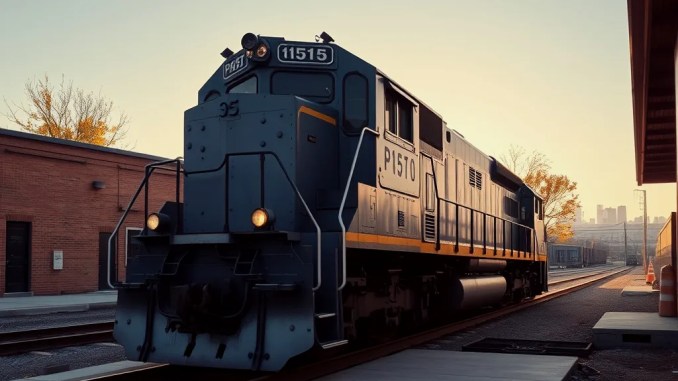
New grain cars and targeted track upgrades to unlock heavier loads
The Federal Railroad Administration (FRA) approved up to $22 million through the 2025–2026 Consolidated Rail Infrastructure and Safety Improvements (CRISI) program for Twin Cities & Western Railroad Company (TC&W). The award funds procurement of 200 modern covered hopper grain cars and upgrades on short-line track in central Minnesota to allow 286,000‑pound railcars to operate safely. FRA anticipates that heavier-capacity cars and focused track work will reduce delays and increase throughput at key grain origination points.
What the project will deliver and why it matters
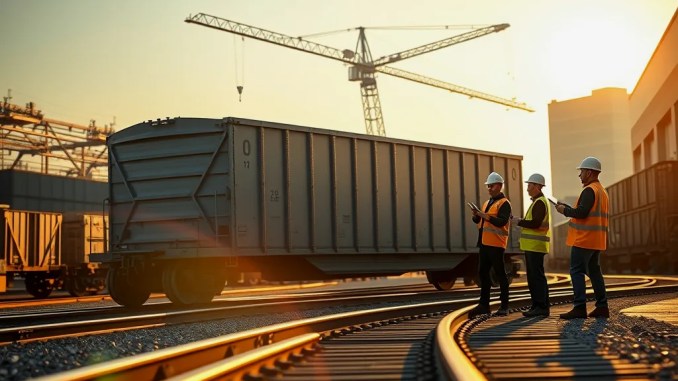
The project combines rolling stock acquisition with track rehabilitation in the same corridor. TC&W will receive new covered hopper grain cars engineered for larger axle loads and improved unloading efficiency. Concurrent infrastructure work includes replacing and reinforcing switches and rail joints, upgrading turnout components, and ensuring rail geometry meets the tolerances required for 286k operations. By pairing equipment and track investments, the project reduces the operational mismatch that often limits car utilization and creates bottlenecks at interchange and loading facilities.
Funding details and sponsor commitment
FRA’s announcement identifies $22 million as the maximum federal contribution for the selected project; the number reflects the program ceiling rather than a signed grant amount. TC&W will fund the remaining project cost share at 20% of total costs for this award. Earlier CRISI rounds required a higher sponsor match for TC&W projects, so the 20% match increases the project’s feasibility and the company’s ability to leverage federal support for additional improvements.
How this fits TC&W’s prior CRISI investments
TC&W has previously used CRISI awards to modernize mainline rails and improve continuity welding: in FY2021 it up obtained to $1.478 million to rehab about 12 miles; in FY2022 it secured up to $2.103 million for ~13 miles; and the FY2023–24 announcement included up to $11.748 million for roughly 24 miles of mainline work. Those past projects focused on converting bolted or joined rails to continuously welded rail (CWR) and reducing maintenance frequency. The current award complements those investments by expanding car capacity so the upgraded track can carry heavier, higher-volume grain trains efficiently.
Operational benefits and measurable outcomes
Expected near-term benefits include higher loaded tonnage per car, fewer trains needed to move the same grain volume, reduced dwell time at loading facilities, and lower per-unit logistics cost for growers. Measurable outcomes FRA and TC&W can track include: percent of cars meeting 286k operation standards, reductions in shipper wait time (hours), tonnage moved per week, and number of defects or slow orders attributable to switch/joint issues. These metrics help justify future capital cycles and demonstrate return on public investment.
Why pairing cars with track work is essential — a step-by-step view
1. Assess capacity bottlenecks: engineering teams identify switches, joints, and short segments where 286k cars would cause stress beyond current tolerances.
2. Specify compatible cars: select covered hopper designs with appropriate truck frames, coupler draft gear, and discharge rates tuned to existing loading systems.
3. Sequence work to minimize disruption: replace critical turnout components during off-peak windows, deliver cars in tranches aligned with completed track segments.
4. Commission and test: run instrumented test moves to confirm vehicle/track interaction and validate absence of emergent defects.
5. Monitor and maintain: deploy targeted inspection regimes (ultrasonic, geometry, joint torque checks) for the first 12–24 months to capture early wear patterns and refine maintenance plans.
CRISI 2025–2026 portfolio and rural emphasis
The Fall announcement selected 105 projects from 368 applications requesting more than $12.17 billion. FRA allocated up to $2.336 billion across winners, with roughly $1.777 billion directed to projects in rural areas — exceeding the statutory minimum for rural investment. TC&W’s grain car and track project is the only CRISI-funded grain-car acquisition in this round, while other awards address locomotive replacements, maintenance-of-way equipment, siding and mainline renewals, and research into autonomous rail vehicles.
Other Minnesota winners and regional impact
Minnesota had additional awardees. Minnesota Commercial Railway received up to $5.36 million to replace worn rail, renew ties, and improve railhead profiles around Minneapolis–St. Paul–Roseville operations. Northern Lines Railway earned up to $1.3 million for tie replacement and defect remediation on roughly 25 miles near St. Cloud. Combined, these projects reduce regional friction, improve interchange reliability, and increase the overall capacity available to agricultural shippers in central Minnesota.
Examples and data points illustrating expected grain market effects
Example: a typical covered hopper at 286k capacity moves approximately 60–70 more tons per car than 263k units, depending on commodity density. For a 200‑car fleet, that increment can translate into an additional 12,000–14,000 tons per train cycle when fully utilized, reducing the number of train cycles required during peak harvest windows. That capacity increase relieves congestion at truck-rail interface facilities and shortens dwell time for growers who coordinate multiple farm loads into unit trains.
Practical considerations for local stakeholders
Shippers and county planners should expect periodic construction windows where temporary speed restrictions or short-term outages occur. Coordinated staging, advance notice of work windows, and temporary transloading plans will minimize disruption during peak harvest. Local elevators should review their track lead lengths, unloading pit capacity, and truck staging zones to make the most of increased car capacity once commissioning is complete.
Next steps and monitoring
FRA will finalize grant terms and disbursement schedules once agreements are executed. Project milestones typically include procurement milestones for rolling stock, specific track segments and work packages, acceptance testing, and documented performance monitoring. Stakeholders can watch FRA and TC&W announcements for procurement specifications, delivery timetables, and public notices of construction that affect local road crossings or operations.
Longer-term implications for short-line freight and grain logistics
Strategically, pairing federally funded car purchases with complementary track upgrades creates a template short lines can replicate: targeted federal support can unlock higher-capacity equipment that otherwise would be unused due to local infrastructure limits. This approach improves unit economics for short lines, supports rural shippers, and reduces total supply-chain emissions per ton by hauling larger volumes per movement.






Be the first to comment