
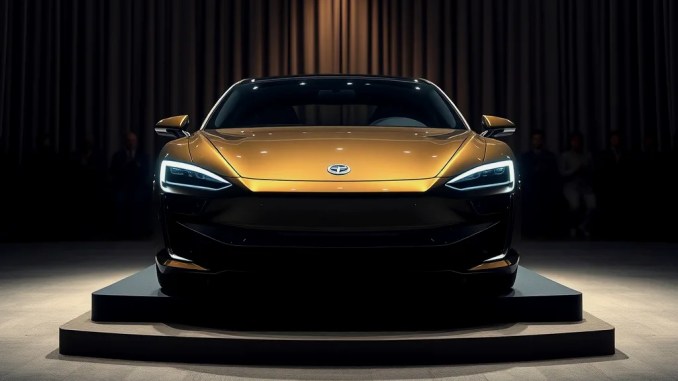
PEUGEOT E-T16 wins Best Concept Car at 2026 Paris Motor Show
PEUGEOT’s E-T16 Concept earned the 2026 Paris Motor Show award for Best Concept Car from automotive press jurors. The car channels the brand’s rally legacy, notably the 205 T16’s 1985–86 World Rally Championship victories, into a fully electric performance package. Journalists singled out its 816 HP electric powertrain, sculpted proportions and motorsport-driven technology as decisive factors in the voting.
Why the E-T16 matters: a clear link between past wins and future EV performance
The E-T16 does more than mimic styling cues: engineers integrated lessons from PEUGEOT’s competition history into a contemporary electric platform. By combining lightweight geometry, aerodynamic shaping and an 816 HP power unit, the concept demonstrates that rally-derived packaging and chassis intent can scale to electric propulsion without losing driver-focused dynamics. That translation provides a direct example of how motorsport know‑how accelerates EV performance development across production ranges.
Powertrain and numbers: what 816 HP delivers and how it’s applied
The concept’s total output of 816 HP stems from a multi-motor electric architecture optimized for instantaneous torque distribution. In practice, that delivers sharp launch acceleration, precise torque vectoring through corners, and usable regenerative braking tuned for track and road environments. PEUGEOT Sport calibrated the system so the chassis balance and software limits preserve predictable handling at the limit—turning high peak power into repeatable lap times rather than an unpredictable surge.
Hypersquare steering and Steer-by-Wire: how the cockpit changes driver control
Hypersquare steering reinterprets steering geometry and user inputs, while Steer-by-Wire removes the mechanical link between steering wheel and front wheels. Together they let engineers program distinct steering personalities—daily, sport and track modes—without changing physical steering ratios. The system reduces feedback lag and enables corrective torque input patterns that mimic mechanical feel. PEUGEOT Sport tuned haptics and force feedback so drivers receive actionable sensations through the wheel even when control is electronic.
Design language: translating 205 T16 DNA into a modern EV silhouette
Designers distilled the 205 T16’s iconic elements—compact footprint, wide track, aggressive wheel arches and signature lighting—into a low, aerodynamic EV body. The result preserves recognition while improving airflow management: integrated vents, underbody diffusers and a rear aero deck control wake and cooling for high-power electrical systems. Visual cues reference rally heritage without compromising the thermal and aerodynamic priorities of an 800+ HP electric architecture.
Technology and usability: features that hint at future production models
Beyond headline figures, the E-T16 showcases production-relevant solutions: modular battery cooling, scalable multi-motor layouts, and software-first driver controls that can migrate to mass-market platforms. Designers placed emphasis on serviceability—accessible cooling circuits and modular suspension pick-up points—so lessons from the concept could shorten development cycles for models like a future E-208. The car acts as a technology demonstrator for both high performance and everyday reliability.
How PEUGEOT Sport shaped the project: engineering choices that matter
PEUGEOT Sport contributed suspension tuning, electronics calibration and aerodynamic validation. Their approach emphasized repeatability: durable components rated for repeated track use, realistic thermal budgets for sustained runs, and control logic that prevents thermal runaway while preserving peak performance. This means the concept’s behavior reflects engineering choices that production engineers can adopt without extensive rework.
Potential impact on consumers and Competitors
For consumers, the E-T16 sets expectations about how electrified performance can feel—instant torque paired with refined handling and selectable steering personalities. For competitors, it signals that rally-derived design and engineering remain a route viable to differentiate electric models. The concept pressures rivals to combine authentic motorsport roots with scalable EV technologies rather than rely solely on power figures.
Key takeaways: what to remember about the E-T16 Concept
– Heritage-driven design: The 205 T16’s proportions and spirit inform the concept’s silhouette and stance.
– High-performance EV architecture: 816 HP with multi-motor torque distribution tuned for controllable, repeatable performance.
– Innovative control systems: Hypersquare steering and Steer-by-Wire enable programmable steering personalities and sharper driver engagement.
– Production relevance: Modular thermal management and serviceable components that hint at future PEUGEOT production models, including an evolved E-208.
Frequently asked practical questions answered
Will the E-T16 become a production car? The concept primarily functions as a technology and design demonstrator. Several systems—stepped-down versions of the powertrain, steering electronics and thermal solutions—can appear in future production models, but a full 816 HP homologated road car would require regulatory, safety and reliability adaptations.
How will the Steer-by-Wire affect everyday driving? When implemented for consumers, Steer-by-Wire will let manufacturers tune steering feel and responsiveness by software. Properly calibrated, it enhances urban maneuverability and high-speed precision while offering customizable feedback modes. PEUGEOT’s demonstrator shows the system’s capability to maintain driver confidence through engineered haptics.
Does the concept improve battery longevity or charging? The E-T16 highlights advanced cooling and modular pack architectures that improve sustained performance and thermal control, indirectly supporting longer life under high-stress use. It does not primarily introduce new charging speeds, but thermal management innovations help maintain charge acceptance during repeated high-power sessions.
Examples and scenarios: how the E-T16 tech translates to real use
On a short sprint stage, instantaneous torque and torque vectoring provide decisive exits from slow corners. On a canyon road, programmable steering allows a sharper, more communicative setup without compromising low-speed comfort. For daily commuters, production derivatives benefit from improved thermal resilience and selectable drive modes that balance efficiency with spirited performance.
Conclusion: a practical bridge from rally history to electric future
The PEUGEOT E-T16 Concept turns a 40-year rally legacy into a concrete demonstration of how motorsport expertise accelerates EV performance. It blends 816 HP propulsion, programmable steering control and production-aware engineering choices to illustrate a credible path from concept to impactful technology in future PEUGEOT models.






Be the first to comment