
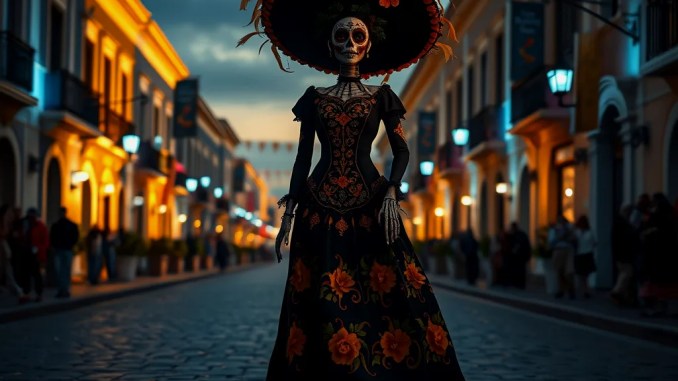
Mexico City staged a vivid Catrina parade ahead of Day of the Dead, bringing skeleton-faced participants and traditional costumes from the Angel of Independence to Zocalo. The procession celebrated a living cultural symbol that blends satire, remembrance, and artistic expression, drawing large crowds and renewing public interest in altar-making, face-paint techniques, and community rituals.
Reforma Avenue Transforms with Catrina Figures
Participants painted their faces with elaborate skull designs and wore period dresses, top hats, and hand-stitched costumes that referenced the original La Calavera Catrina image. Organizers mapped the route along Reforma Avenue to maximize visibility: staging areas near the Angel of Independence allowed photographers and vendors to capture portraits; segmented marching groups helped maintain flow; and timed pauses at key landmarks created photo opportunities and brief performances.
How the Parade Prepares the City for Day of the Dead
The parade functions as a cultural primer for the broader Day of the Dead observances on November 1–2. Local families use the event to exchange altar ideas, test marigold arrangements, and coordinate neighborhood vigils. Municipal calendars show that attendance at the Catrina parade often correlates with increased bookings for guided cemetery tours and craft workshops in the subsequent week.
Design, Makeup, and Costume Techniques Demonstrated
Makeup artists at the parade displayed practical techniques that attendees can adopt: layering a white base for an even skull canvas, using waterproof black liners for precise teeth and eye sockets, and applying bright accent colors to mimic traditional papel picado pallets Costumers demonstrated structural tips, like boning techniques to create flared skirts and wireframe hats to hold elaborate floral crowns without collapsing under crowd conditions.
Community and Economic Impact
Street vendors, artisans, and small theaters reported measurable income boosts tied to the parade. Vendors sold face paint sets, papel picado banners, and miniature sugar skulls; local restaurants extended hours and offered themed menus; and craft schools added extra weekend classes. City tourism statistics from previous years indicate a spike in cultural tourism reservations around the parade date, with an uptick in searches for “Catrina makeup,” “Day of the Dead altar ideas,” and “Mexico City parade schedule.”
Practical Tips for Attending the Catrina Parade
Plan your arrival at least 60–90 minutes before the scheduled start to secure a good viewing spot along Reforma. Carry small denomination cash for street vendors and set a meeting point in case of cellphone overload. For photographers: use a fast lens (f/2.8 or wider) for evening portraits, mute shutter sounds in crowded areas, and respect participants’ space—ask before shooting close-up portraits. Families with children should identify quiet zones away from loud music and large crowds.
How the Catrina Symbol Continues to Evolve
Artists and cultural practitioners reinterpret the Catrina, shifting from satirical social critique to broader themes—environmental grief, migration, and public health—in their costumes and performances. This evolution shows in altars that incorporate recycled materials, multimedia projections on public facades, and cross-cultural collaborations that reinterpret traditional motifs while retaining the ritual’s core purpose: honoring the dead through community creativity.
Resources and Next Steps for Visitors
Visitors who want a deeper experience can book workshops in face painting and altar-building, join guided cemetery tours that explain iconography, or volunteer with local cultural centers to help set up neighborhood shrines. For practical planning, consult the city’s official cultural events page for route changes, public transport advisories, and safety guidelines—particularly important during large gatherings.






Be the first to comment