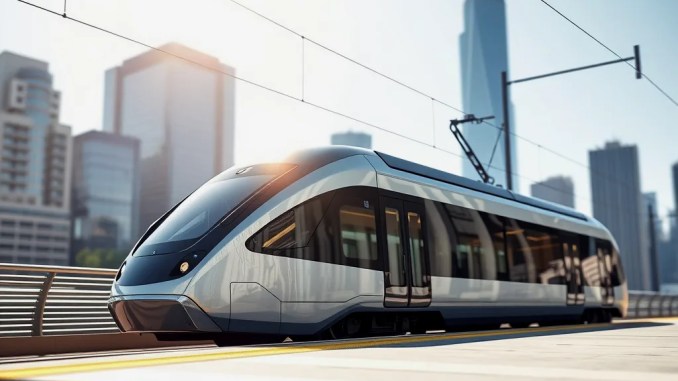
When Stadler unveiled its new battery-powered FLIRT train at the APTA EXPO in Chicago, it didn’t just introduce another regional rail vehicle—it announced a seismic shift in how urban and suburban transit systems will evolve in the coming decade. This innovative train combines cutting-edge battery technology with robust design features tailored for America’s demanding transit environments, promising to dramatically enhance efficiency, reduce emissions, and redefine passenger experience. This comprehensive overview delves into the technical prowess, operational strategy, and strategic implications of Stadler’s latest hydrogen against traditional rail models, spotlighting its potential to dominate the future of sustainable mobility. — ## The Birth of a New Transit Era: Stadler’s Battery Fluorescent Innovation Stadler’s battery-powered FLIRT is engineered explicitly for Metra, Chicago’s primary regional rail provider, emphasizing rapid deployment, environmental responsibility, and passenger convenience. Equipped with a state-of-the-art 2 MW fast-charging system and designed to hit speeds of 127 km/h (about 79 mph), it sets a new benchmark in North American regional rail. Unlike existing trains that rely exclusively on overhead electric lines or diesel engines, this model leverages lithium-titanate (LTO) batteries, renowned for their longevity, safety, and rapid charging capabilities. This combination allows the train to operate on non-electrified routes, reducing infrastructure costs significantly and enabling seamless operation across diverse track conditions. ### Key Technical Features of Stadler’s Battery FLIRT – Battery System: Lithium-titanate (LTO) packs, enabling rapid charging and discharging. – Power Source: Capable of charging via 480V station infrastructure or overhead catenary, providing operational flexibility. – Speed & Range: Reaches 127 km/h with an operational range that supports end-to-end routes without continuous charging. – Charging Efficiency: Achieves full recharge in under 1.5 hours; regenerative braking recovers energy during stops. – Construction & Design: Lightweight aluminum body, low-floor design for easy passenger access, compliant with Americans with Disabilities Act (ADA) standards. This advanced feature set enables transit authorities to incrementally electrify service, transitioning away from polluting diesel engines and avoiding the massive costs of constructing extensive overhead electrification infrastructure. ##Why Cities and Transit Agencies Embrace Battery-Driven Trains The shift towards battery-powered trains addresses multiple urban mobility challenges. First, reducing greenhouse gas emissions aligns cities with climate goals. Second, lower operational costs stem from decreased fuel consumption and less maintenance-intensive infrastructure. Third, greater route flexibility allows transit agencies to serve less-populated or newly developed areas without expensive grid upgrades. For example, Chicago’s Metra aims to expand service into suburban areas with limited electrical infrastructure. The battery FLIRT becomes the ideal solution by enabling battery reuse and rapid charging, making dedicated electrification stations and existing power grids sufficient for operation. ## Deployment Strategy and Operational Insights Metra has formally ordered eight train sets, each comprising two passenger cars and a power pack, with plans for service commencement around 2028. These trains will primarily operate on the Chicago South Suburban Line, particularly across the *Beverly* branch, a 16.4-mile stretch vital for connecting underserved neighborhoods. Deployment involves phase-wise installation of charging stations at strategic stops, enabling trains to charge during short layovers. This approach minimizes infrastructure investment while maximizing operational efficiency. ### Step-by-Step Deployment Process 1. Infrastructure Mapping: Identify key stations for rapid-charging stations based on traffic density. 2. Station Modification: Install 480V charging infrastructure compatible with the battery packs. 3. Testing & Validation: Conduct operational trials to optimize charging times and energy recovery. 4. Phased Rollout: Initiate service with a small fleet, scaling as infrastructure supports more trains. 5. Continuous Monitoring: Use data analysis to refine operations, reduce downtime, and optimize charging schedules. ## Strategic Advantages Over Conventional Diesel and Electric Trains | Aspect | Battery-Powered FLIRT | Diesel Trains | Overhead Electric Trains | | — | — | — | — | | Infrastructure Costs | Lower—needs only dedicated charging stations | High—requires fuel supply and maintenance | High—overhead wires and substations | | Flexibility | High—can operate on non-electrified routes | Limited—dependent on fuel availability | Limited—fixed tracks and infrastructure | | Environmental Impact | Minimal—zero emissions during operation | Pollutant emissions | Zero emissions but costly infrastructure | | Operational Costs | Lower—less maintenance, cheaper fuel | Higher—fuel and maintenance | Moderate—electricity cost but high infrastructure | This table underscores the strategic edge of battery trains—cost-efficiency, flexibility, and sustainability—factors becoming critical as urban centers prioritize green transit. ## Environmental and Social Impact Implementing battery FLIRT trains can substantially reduce carbon footprints, especially when integrated into existing transit networks. Cities aiming for climate neutrality find these trains pivotal in their transit plans. Additionally, their low-noise operation contributes to better urban living environments, reducing noise pollution in densely populated areas. Accessibility features ensure equitable service, providing seamless mobility for all passengers. ## Future Outlook: Scaling Green Transit through Innovation The success of Stadler’s battery FLIRT in Chicago sets a precedent nationwide. As cities confront climate imperatives, expect more transit agencies to adopt battery-electric solutions. Further advancements may include longer range batteries, faster charging, and smart grid integration, fostering fully autonomous, zero-emission transit ecosystems. In the broader perspective, these innovations contribute to reducing dependence on fossil fuels, cutting urban air pollution, and creating resilient transportation systems adaptable to future disruptions. ## Conclusion Stadler’s deployment of battery-powered FLIRT trains marks a transformative phase in American regional transit, aligning durability, cost-effectiveness, and sustainability into a single platform. Their ability to operate on non-electrified routes while offering rapid charging and high speeds makes them perfect for expanding transit networks efficiently and sustainably. This technological leap brings us closer to smarter, greener cities—where rapid, clean, and accessible transit options redefine modern mobility across the United States. ## FAQs Q1: How long does it take to fully recharge a battery FLIRT train? A1: A full recharge takes less than 1.5 hours, thanks to high-capacity fast-charging systems. Q2: What makes lithium-titanate batteries suitable for trains? A2: Their rapid charge/discharge cycles, safety profile, long lifespan, and thermal stability make LTO batteries ideal for dynamic transit applications. Q3: Can these trains operate on existing electric lines? A3: Yes, their hybrid design allows operation on overhead electric lines and non-electrified routes using battery power. Q4: How will battery trains impact urban air quality? A4: They significantly reduce emissions, helping cities meet environmental standards and improve air quality. Q5: When will these trains be in regular service? A5: The first units are expected to begin service around 2028, following infrastructure development and testing. This comprehensive overview aims to provide in-depth insights, making it the definitive guide on Stadler’s revolutionary battery FLIRT trains and their role in transforming regional transit.