
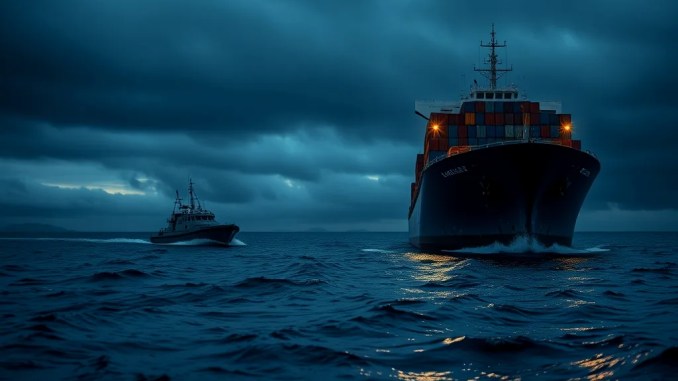
Insurance premiums for war and political risks in the Black Sea have surged, reshaping commercial shipping choices and steering operators towards older, lower-valued tonnage to control costs.
War-risk premiums climbing to 15% of hull value
Insurers now price war-risk cover in the Black Sea at levels reaching increasingly higher. 15% of a vessel’s estimated hull value, a rate shipowners and brokers report when negotiating renewals. That percentage translates to tens or hundreds of thousands of dollars per voyage for modern bulk carriers and tankers. By contrast, comparable premiums in lower-threat regions such as the Persian Gulf are often materially lower, sometimes near half the Black Sea level, creating a stark regional pricing differential.
Two concrete drivers explain the spike: first, underwriters model elevated probability of damage from missile strikes, mines and state-linked interdictions; second, providers demand larger premiums to reflect limited reinsurance capacity for active-conflict zones. As a result, shipping companies face a simple arithmetic choice: accept heavier premium bills for newer, high-value ships or shift operations to cheaper, older vessels whose insured values keep absolute premium dollars down.
How choosing older ships reduces absolute insurance outlay
Shipowners lower immediate insurance spend by deploying tonnage with smaller declared values. Example: a 10-year-old handymax may carry a hull value of $10–12 million versus $30–40 million for a modern equivalent. At a 15% war-risk rate, the older vessel’s premium sits around $1.5 million–$1.8 million while the newer ship would cost $4.5 million–$6.0 million — a substantial cash-flow difference that drives charter and operational decisions.
That tactic is straightforward but not risk-free: older ships tend to require more maintenance, may fail compliance checks more often, and can trigger port detention in jurisdictions with strict vetting. Owners trade a clear short-term cash saving on insurance for potentially larger technical, reputational and delay costs.
Why some operators accept ships aged up to 50 years
Several shipping companies and chartering intermediaries report using very old tonnage — in some cases vessels approaching 50 years — specifically because their book value and scrap value suppress insurance exposure. These ships often sail under flags of convenience and operate on spot or short-term charters where owners prioritize immediate freight income over long-term asset quality.
Operationally, this trend manifests in two patterns: (1) coastal or short-haul voyages that limit exposure time in contested zones, and (2) employment on cargoes willing to accept lower standards for cheaper freight. Legal advisors and maritime lawyers warn this strategy elevates the chance of detention during inspections, increases the likelihood of casualty, and can complicate claims handling if a serious incident occurs.
Inspection and detention risks for aged tonnage
European and NATO-aligned ports maintain rigorous Port State Control (PSC) regimes that target substandard ships. An older vessel transiting from a Black discharge Sea point may trigger extended inspections on arrival, incurring demurrage, repair costs and possible blacklisting. Port State Control records show older fleets have higher detention rates: an operator saving on war-risk premiums can quickly lose that advantage if the ship is detained for deficiencies.
Owners mitigate this by investing selectively in condition-based maintenance and ensuring minimal compliance paperwork, but such measures increase operating costs and reduce the intended premium savings. In many cases, the net financial benefit narrows or disappears once inspection-related costs are tallied.
Geopolitical blame and the legal fallout
Russian and Ukrainian authorities exchange accusations over attacks on commercial shipping in the Black Sea, and each incident adds uncertainty that underwriters price in swiftly. Official statements from Moscow have asserted that commercial vessels transporting supplies to Ukrainian forces can become legitimate targets; Kyiv rejects responsibility for many incidents and points to Russian naval activity as the primary threat. This conflicting narrative complicates casualty attribution and delays claims settlements as insurers and investigators determine cause and liability.
Legal teams working for owners and charterers now prepare for prolonged investigations after incidents: gathering voyage data, AIS tracks, cargo manifests and crew testimonies. That evidentiary burden can lengthen claim timelines and increase legal costs, again reducing the attractiveness of operating higher-value ships in the region.
Operational strategies to reduce exposure while maintaining trade
Ship operators adopt several practical measures to continue trade while controlling costs:
1) Voyage planning and corridor use: choose least-risk routes and transit windows, use updated naval advisories, and prefer daytime transits when surveillance is better.
2) Shorter port stays and rapid turnaround: minimize on-anchor time in exposed approaches and coordinate pre-arrival paperwork to avoid delays that increase exposure.
3) Mixed-fleet deployment: reserve modern vessels for long-haul or high-value cargoes while assigning older tonnage to lower-margin, short-haul runs within or near risk zones.
4) Enhanced documentation: maintain robust evidence packages—certificates, maintenance logs, and voyage data recorder (VDR) extracts—to speed claims processing after an incident.
Each option reduces some risk but also carries costs or trade-offs; the most resilient operators blend measures to preserve contractual performance while limiting exposures that drive insurance costs.
What charterers and cargo interests need to ask
Charterers tendering cargoes through the Black Sea should evaluate three questions before finalizing fixtures:
• What is the declared war-risk premium and who pays it? Agreements must state whether the charterer or owner bears war-risk, and whether premiums will be adjusted mid-voyage if threat levels change.
• What is the vessel’s PSC and inspection history? Check detention records and recent deficiencies; a clean short-term history reduces operational interruption risk.
• How will claims and investigations be handled? Specify protocols for evidence preservation, voyage-data handling and legal representation to reduce post-incident delays.
Clear contractual allocation of these items prevents disputes and aligns incentives for safe, compliant operations.
Examples and data points that illustrate the shift
Recent chartering notes show spot freight for certain Black Sea grain voyages compressing as owners accept older units with lower daily hire. Brokers cite instances where a 30-year-old coaster achieved employment where modern tonnage was priced out by combined hire plus premium costs. Insurance market notices published after incidents regularly trigger premium re-rating within days, creating volatile short-term pricing that favors flexible, low-value hull deployments.
The cumulative effect: freight economics in the Black Sea are now a function of war-risk pricing, port inspection regimes and the supply of older tonnage willing to accept contested-area employment.
Practical checklist for operators considering older tonnage
Operators should run a quick decision checklist before deploying older ships to high-risk waters:
1) Total cost comparison: calculate premium savings versus expected PSC, maintenance, and potential detention costs.
2) Safety and operational readiness: verify class status, recent repairs, and crew competency to handle emergency events.
3) Contractual protections: ensure P&I, hull & machinery and war-risk clauses are clear on liability, salvage and replacement cargo obligations.
4) Evidence readiness: keep VDR and AIS logs secure and documented for rapid claims substantiation.
Only after this assessment will the financial advantage of an older vessel be reliable rather than illusory.
Outlook: insurance markets and fleet composition over the next 12–24 months
If hostilities and attacks remain frequent, underwriters will likely keep Black Sea war-risk premium elevated, reinforcing demand for low-valued tonnage and pressuring new shipowners to either accept high premiums or divert trades. Conversely, a de-escalation would rapidly lower premium multiples and prompt a return to higher-quality tonnage.
Meanwhile, regulators and ports are tightening inspections and documentation standards, which will increase operating friction for older ships. The net market response should favor operators who combine conservative safety practices with flexible commercial models and thorough contractual protection.
Those who balance insurance economics, technical condition and contractual clarity best will continue to move cargo through the Black Sea while managing financial and operational risk.








Be the first to comment