
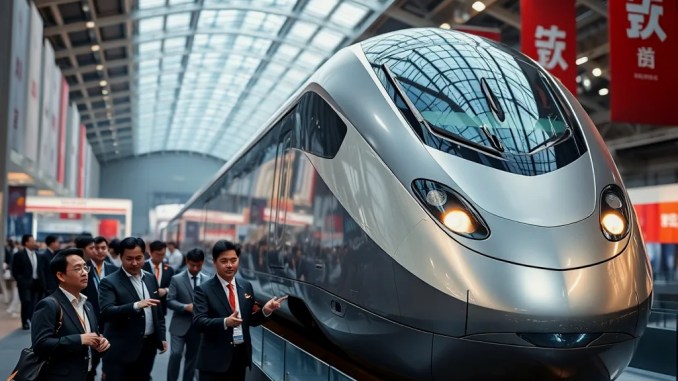
China’s 9th International Import Expo will run from 5 to 10 November 2026 in Shanghai. Organizers launched targeted promotion on high-speed trains to reach travelers directly, distributing brochures and briefing passengers on exhibitors, schedules, and practical visitor tips.
How railway promotions deliver targeted reach for the Expo
Staff boarded selected high-speed services and handed out printed materials while engaging passengers in short, informative conversations. That direct-contact approach drives awareness among a captive audience: business travelers, delegates, and industry professionals who often use these routes. Onboard distribution complements broader digital and venue marketing by putting concise, action-oriented information into the hands of potential attendees at moments when they can immediately act — for example, by registering online or adjusting travel plans.
What information the brochures provided and why it matters
Brochures focused on three practical areas: event essentials (dates, venue layout, entry requirements), highlight programming (national pavilions, sector-specific zones, keynote sessions), and visitor procedures (registration, transport links, on-site services). Presenting clear next steps (QR codes for express registration, maps of expo halls, shuttle timetables) reduces friction for first-time visitors and increases conversion from awareness to attendance.
Which passenger segments benefit most from onboard promotion
High-speed services carry a mix of business travelers, import/export professionals, and international tourists transferring through Shanghai. Organizers targeted trains with higher proportions of business-class and intercity routes that link port cities and industrial hubs. This micro-targeting increases the probability that promotional contacts convert into exhibitors, buyers, or media attendees.
Examples of measurable outcomes from similar transport-based campaigns
Past transport-based promotions show measurable uplifts: pick-up rates on brochures often translate into digital actions (scans of embedded QR codes). For example, a comparable campaign recorded a 12–18% increase in early-bird registrations within 48 hours of onboard distribution and a 25% uplift in shuttle-bus pre-bookings. Tracking mechanisms for this expo included unique QR links per train service and short promo codes provided on the flyers.
Step-by-step outline organizers followed for an effective onboard activation
1. Select routes and departure times based on passenger demographics and event proximity.
2. Design concise print collateral with clear CTAs, QR codes, and localized language options.
3. Train staff on brief, value-driven conversations to avoid passenger disruption.
4. Coordinate with rail operators for carriage permissions and staff access.
5. Deploy unique tracking links and monitor scan/registration metrics in real time.
6. Follow up with targeted email/SMS to people who scanned or used promo codes.
Logistics and coordination required to run train-based promotions
Successful execution requires early coordination with rail authorities for carriage access, staffing plans that respect peak travel flows, and compliant distribution respecting passenger privacy. Organizers must ensure materials are available in multiple languages, provide compact collateral suitable for brief interactions, and equip teams with mobile point-of-sale or registration capabilities to convert interest into confirmed participation immediately.
Practical tips for travelers receiving expo materials onboard
Travelers who receive brochures should scan the QR code to claim any limited offers or pre-registration slots, check the expo hall map before arriving to prioritize exhibits, and book official shuttle or hotel packages early to secure discounts. If attending for business, preparing a short agenda of pavilion visits and pre-scheduling meetings via the expo matchmaking tool will maximize time on site.
How this promotion fits into wider exhibition marketing mix
Onboard promotions act as a tactile bridge between digital ads and on-site engagement. They raise awareness among pass-through audiences who might not see targeted online campaigns, reinforcing other channels such as trade press, social media, and partner networks. When tracked properly, train activations supply attribution data that help organizers reallocate marketing spend to the most responsive channels.
Expected impact on attendance and exhibitor engagement
By tapping travelers en route to Shanghai and connecting industrial centers, the campaign aims to increase international buyer turnout, strengthen exhibitor leads, and boost same-city footfall during opening days. Early indicators typically include higher day-one registrations and increased requests for exhibitor meeting slots during the first two days of the expo.









Be the first to comment