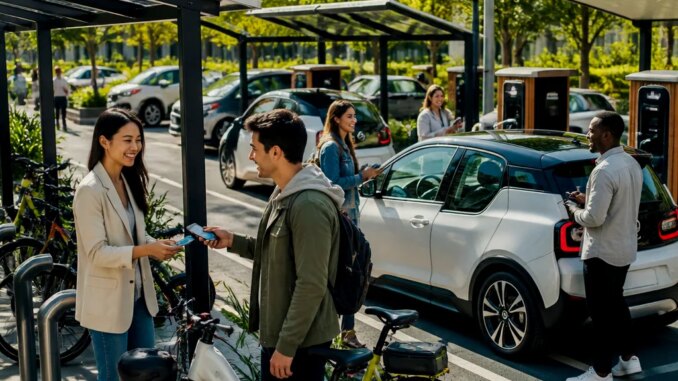
Revolutionizing Urban Transport: Los Angeles’ Bold Approach to Reduce Car Dependence
Los Angeles, a city long synonymous with car culture and traffic congestion, is now pioneering an innovative approach aimed at destablishing sustainable urban mobility. The LA County Metro Authority has launched a forward-thinking pilot program designed to minimize motor vehicle reliance by incentivizing residents to opt for alternative transportation methods for five weeks. This initiative directly targets auto-dependent households, promising not only to decrease traffic congestion but also to improve air quality and enhance overall quality of life.
The Core Objective: Cut Vehicle Miles Traveled and Promote Sustainable Transit
At its heart, the program seeks to reduce the number of miles driven per household, encouraging residents to either ditch their second vehicle or simply avoid using their car during specified periods. They are primarily homes with participants who are aged 21 or older. The strategy is straightforward but deeply impactful: by motivating behavior change through financial incentives and promoting multi-modal transit options, LA aims to reshape its urban transportation landscape.
How the Program Operates: Structured, Incentivized, Community-Driven
Participants commit to a detailed plan: to keep their cars parked for five consecutive weeks, turning instead to public transit, biking, walking, car-sharing, and micro-mobility devices. To make this sustainable and attractive, the program offers up to $600 in monetary rewards based on participation and compliance, fostering a tangible motivation for behavioral change.
This is facilitated by GoCarma, an app that tracks travel habits, distances, and the use of alternative transport modes. Participants receive weekly feedback, which not only measures success in reducing car trips but also helps them see the positive impact of their efforts—from less fuel consumption to reduced carbon emissions.
Building on Proven Success: Lessons from Santa Monica Pilot
This initiative isn’t merely theoretical. It directly builds upon a successful pilot conducted in Santa Monica, involving approximately 300 households. That pilot demonstrated clear behavioral shifts: participants who refrained from using their second vehicle for five weeks showed statistically significant increases in walking, cycling, and public transit usage.
Participants in the Santa Monica project received weekly payments of $120, totaling up to $599, along with free transit passes and bike-sharing credits. The outcome was promising: a marked decline in traditional car trips and a notable uptick in alternative mobility methods, establishing a strong foundation for broader application.
Expanding Impact: From Pilot to County-wide Initiative
This leads to the natural question: can such a program scale effectively within a larger urban environment? Los Angeles County’s latest expansion aims to enroll approximately 2,000 households, extending the benefits across the entire region. The targeted demographic now includes households with only a single vehicle, addressing a broader spectrum of urban commuters and residents with different transportation needs.
Unlike the Santa Monica pilot, which focused exclusively on multi-vehicle households, the new initiative emphasizes inclusivity, inviting single-vehicle households to participate and experience the benefits. This approach aims to maximize the reduction in vehicle miles traveled, directly contributing to regional traffic alleviation.
Why This Matters: Environmental, Economic, and Social Benefits
Beyond reducing congestion, the program delivers a suite of environmental advantages. Lower vehicle usage results in fewer greenhouse gases, reduced emissions of pollutants, and contributes to climate change mitigation strategies. Additionally, it promotes public health benefits—more walking and cycling mean improved fitness levels, which reduces healthcare costs over time.
Economically, residents save on fuel, maintenance, and parking expenses, while the city benefits from less strain on infrastructure and decreased pollution-related healthcare costs. Socially, fostering a culture of multi-modal transportation enhances connectivity, especially in underserved neighborhoods, and reduces transportation inequities.
Long-term Goals and Future Outlook
Metro LA envisions this pilot as a stepping stone toward more comprehensive sustainable mobility policies. By 2028, the region seeks to have established a robust data-driven foundation to inform future transportation investments and policies. The collected data will reveal behavioral patterns, barriers facing certain demographics, and effective incentive mechanisms.
This approach aligns perfectly with global trends focusing on smart urban planning and climate resilience. If successful, Los Angeles could serve as a model for other metropolitan areas struggling with traffic congestion and pollution, demonstrating how behavioral interventions combined with innovative technology can yield lasting change.
How Can Residents Get Involved?
- Check eligibility criteria—mostly aimed at residents with at least one vehicle and 21+ years old.
- Register through the official LA Metro or GoCarma app.
- Commit to park your car for five weeks while exploring alternative mobility options.
- Utilize public transit, bike-sharing, walking, car-pooling, or micro-mobility devices.
- Track your progress with the app and receive reward incentives based on participation.
Participating actively isn’t only about receiving compensation but also about contributing to a cleaner, less congested Los Angeles. Behavioral change at the individual level can ripple into a city-wide transformation, making Los Angeles a true leader in sustainable urban mobility.