The Sudden Downfall of Russia’s Most Advanced Stealth Fighter
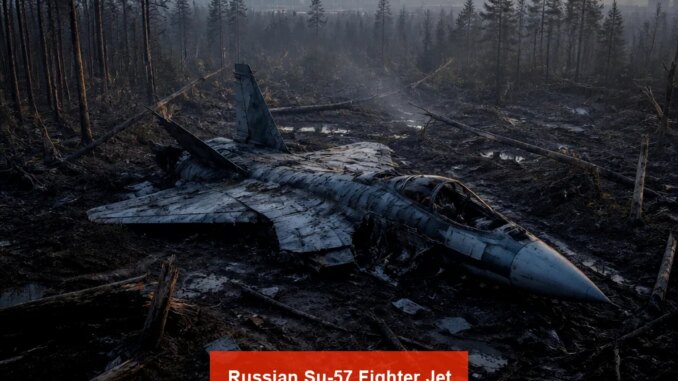
In a shocking development, a Su-57 fighter jet, Russia’s most sophisticated fifth-generation aircraft, crashed near the Moscow River. This incident has raised numerous questions about the aircraft’s current reliability, technical integrity, and future operational readiness. According to official reports, the pilot managed to eject safely, avoiding any casualties on the ground, but the reasons behind the crash demand close examination.
Understanding the Context of the Su-57 Development
The Su-57 represents Russia’s bid to regain dominance in advanced stealth technology. Developed over decades, it features cutting-edge stealth capabilities, superior avionics, and high agility. Priced around $50 million per unit, these aircraft symbolize Russia’s strategic push into modern warfare. The aircraft integrates composite materials and fifth-generation sensors that enable it to evade radar detection and operate effectively in contested environments.
Details of the Crash and Immediate Aftermath
Witnesses reported seeing the jet performing typical training maneuvers before suddenly losing altitude. The aircraft’s control systems appeared to malfunction, leading to the pilot executing an emergency ejection. Authorities confirmed that the pilot sustained no injuries, and the crash site was cordoned off for investigation. The wreckage is currently being analyzed to determine whether mechanical failure, pilot error, or external factors caused the incident.
Potential Causes and Technical Insights
- Engine malfunction: Initial evidence suggests that a problem within the powerplant could have caused the loss of control.
- Avionics failure: As advanced as the Su-57’s integrated systems are, faults in the radar or targeting modules can induce system-wide errors.
- Maintenance issues: Given the aircraft’s complexity, improper inspection or repair procedures could contribute to technical failures.
- Pilot error: Although unlikely, human factors cannot be entirely ruled out, especially under high-stress scenarios.
The Significance of This Incident for Russia’s Military Modernization
This crash comes at a crucial juncture for Russia’s efforts to modernize its air force. The Su-57 program is designed to counter Western advancements like the F-35 Lightning II. A crash that raises doubts about its reliability could slow down procurement and deployment, affecting strategic stability. Conversely, it underscores the imperative for rigorous testing and quality control before full-scale deployment.
Implications for Global Military Technology Competition
Beyond Russia, the Su-57 symbolizes a technological race among major powers to dominate future air combat. This incident prompts a reassessment of stealth aircraft development and maintenance protocols. Countries investing heavily in next-generation fighters, like China and India, watch closely, understanding that the path to deploying reliable fifth-generation fighters is fraught with technical challenges and demanding rigorous oversight.
What This Means for aviation safety and modernization
The crash highlights the critical need for continuous aircraft testing and system upgrades. It raises awareness about the importance of advanced diagnostics and predictive maintenance in cutting-edge military aircraft. Moreover, it emphasizes that while technological advancements such as the fifth-generation stealth features are essential, system robustness and pilot training remain equally vital for safety and mission success.