Ukraine’s Bold Military Strike Deep Inside Russia
In a groundbreaking move, Ukrainian Armed Forces launched a daring operation targeting a strategic airbase located approximately 1700 km within Russian territory. This operation signals a major escalation in Ukraine’s military capabilities and demonstrates a shift towards offensive strikes deep into enemy territory, challenging the traditional notions of battlefield boundaries.
Details of the Attack and Strategic Significance
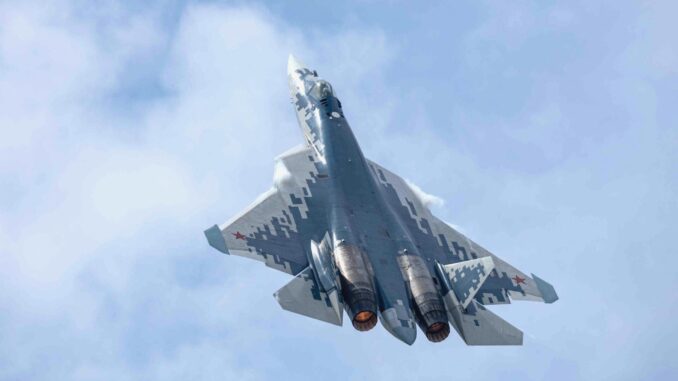
The Ukrainian military confirmed that the attack targeted a Russian air base in Chelyabinsk. This base, known for hosting advanced Russian military aircraft, was hit using a combination of precision-guided munitions and stealth technology. The operation occurred on April 25th, with Ukraine claiming to have inflicted significant damage on critical assets, including Su-57 fifth-generation fighters and Su-34 attack aircraft.
What makes this operation particularly alarming for Russia is the location of the target. Situated deep in Russian territory, the attack exposes vulnerabilities in Russia’s air defense network and demonstrates Ukraine’s evolving strategic capabilities. It also signals the potential for future operations that could target other critical infrastructure sites within Russia’s borders.
Types of Russian Aircraft Targeted
Sources indicate that the strike was aimed at multiple platforms, notably with the destruction of several Su-57 stealth fighters. These aircraft represent Russia’s most advanced fifth-generation fighters, designed for air superiority and deep strike missions. Additionally, at least one Su-34 bomber was hit, a crucial asset for precision strike operations and a fundamental part of Russia’s tactical air power.
Increasingly, Ukrainian military analysts and intelligence reports suggest that these aircraft were either destroyed or severely damaged, raising questions about Russia’s ability to maintain these assets within operational limits. The attack proves that Ukrainian forces have developed the capability to plan and execute complex, deep-penetration strikes against high-value military targets.
Implication of the Damage and Future Outlook
The Ukrainian military’s claims are supported by evidence of visible damage, with ongoing assessments trying to quantify the true extent of the losses. The attack not only impacts Russia’s immediate air power but also shakes the confidence in its strategic reserves. This move could mark the beginning of a series of deep strikes aimed at degrading Russia’s military infrastructure from afar.
What does this mean for the future? Experts suggest that Ukraine’s increasing use of advanced technology and precision-guided weapons could lead to more frequent and more aggressive deep strikes. It presses Russia to rethink its air defense architecture, potentially investing heavily in missile defenses or relocating critical assets to even more secure locations.
Enhanced Munitions and Long-Range Capabilities
The recent operations showcased the deployment of state-of-the-art munitions, including the Ukrainian-developed low radar cross-section missiles capable of evading Russian defenses. Such innovations fold into a broader strategy of asymmetric warfare, where Ukraine leverages technological advancements to level the playing field against a numerically superior adversary.
Moreover, reports confirm the use of hybrid-guided weapons with high maneuverability, allowing ukrainian forces to select specific high-value targets while minimizing collateral damage. This approach not only maximizes the operational impact but also underscores the importance of continuous innovation in modern warfare.
Supply Chain and Military Modernization
Ukraine has managed to maintain and upgrade its military hardware despite ongoing conflicts and international sanctions on Russia. Internally, Ukrainian defense industries, along with international partners, have enhanced production lines to supply advanced aircraft and missile systems. Despite disruptions, about 33% of critical components for aircraft like the Su-34 continue to arrive through various smuggling routes and regional supply networks.
This resilience in supply chains emphasizes Ukraine’s commitment to modernize and expand its aerospace capabilities, which are vital for executing these deep strikes with precision and reliability. It also indicates a broader trend of shifting away from reliance on traditional, often outdated, equipment towards more agile, technologically advanced systems.
Conclusion
Ukraine’s daring deep strike into Russian territory signals a new era of warfare, where technological innovation and strategic audacity redefine the rules. As Ukraine continues to develop its cutting-edge missile technology and smart tactics, the threat to Russian military assets inside its borders increases. This operational shift will likely catalyze significant investments by Russia to bolster its defenses and adapt to the evolving threat landscape, shaping the future of regional security dynamics for years to come.