Revolutionizing Renewable Energy: China’s Record-Breaking Offshore Wind Turbine
In a groundbreaking development that signals a new era in renewable energy, China has successfully commissioned the world’s largest offshore wind turbine, marking a significant milestone in sustainable power generation. This colossal wind energy device, situated approximately 70 kilometers off the Guangdong coast, demonstrates the immense potential of deep-sea wind farms and the innovative engineering that makes it possible.
Unveiling the World’s Largest Offshore Wind Turbine
The turbine boasts a rotor diameter of 252 meters, dwarfing traditional models and enabling it to harness more wind energy than ever before. With a hub height exceeding 270 meters, this structure brings wind power to heights where wind speeds are more consistent and stronger, thus optimizing energy production.
Technical Specifications and Design Advantages
This state-of-the-art turbine features a 16 MW capacity, capable of generating approximately 44.65 million kWh annually. It can supply electricity to around 24,000 households, demonstrating its impressive scale and efficiency.
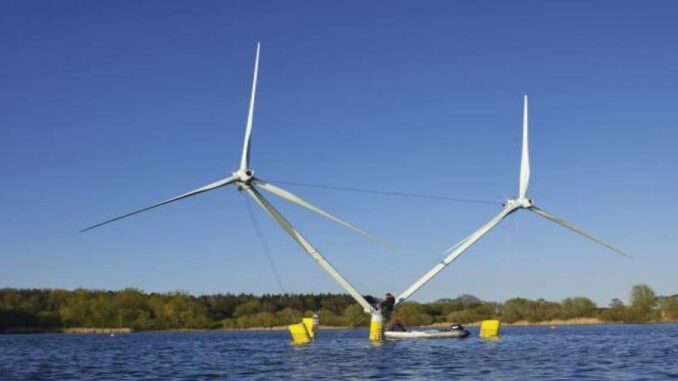
- Platform Type: Semi-submersible, floating platform that enhances operation in deep waters.
- Size: The platform measures about 80.8 meters long and 91 meters wide, weighing approximately 24,100 tons.
- Installation: Assembled at Tieshan Port, then transported via the Qiongzhou Strait to the deployment site.
Innovative Engineering and Construction Techniques
This project employs a suite of pioneering engineering solutions, including:
- Dynamic Monitoring Systems: Real-time data collection to monitor structural health and optimize performance.
- Active Ballast System: Adjusts the platform’s stability in response to changing sea conditions.
- Advanced Anchoring: Specialized anchoring techniques ensure firm placement in unstable deep-sea environments.
- High-Voltage Cables: The installation of 66 kV cables facilitates efficient power transmission to the grid.
Environmental and Economic Impact
By harnessing wind energy in deep-sea environments, China reduces its reliance on fossil fuels, contributing to global efforts against climate change. The project offers a blueprint for future offshore wind farms, especially in regions where shallow waters limit traditional turbine installations.
Economically, this initiative stimulates local industries, creates jobs, and pushes technological innovation. The deployment of such large-scale turbines demonstrates China’s commitment to becoming a leader in renewable energy manufacturing and infrastructure.
Why Offshore Wind Power Matters More Than Ever
With global energy demands soaring, the transition to sustainable sources becomes critical. Offshore wind energy can generate vast amounts of power without occupying arable land or disrupting terrestrial ecosystems. The development of giant turbines like this one unlocks new potential for clean energy projects worldwide.
Future Outlook and Challenges
While this project showcases impressive engineering feats, scaling solutions such as challenges, including high capital costs, complex logistics, and environmental assessments. However, continued advancements in floating platform technology and system integration promise to make deep-sea wind farms more accessible and cost-effective.
As more countries follow China’s lead, the offshore wind industry is poised to grow exponentially, supporting a cleaner, greener future globally.