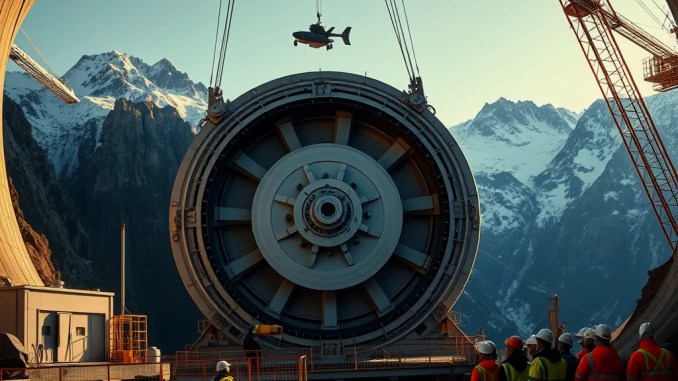
During a highly anticipated engine ignition test at Cape Canaveral Space Force Station, an intense explosion erupted on the New Glenn rocket’s outer shell and engine section, forcing the test team to swiftly alter their plans. Eyewitnesses and officials reported that the sudden blast created a brief but powerful shockwave, accompanied by a rapid dispersal of smoke and gases. Fortunately, no injuries occurred, and environmental risks were quickly mitigated through prompt action. ## Background: The Role of New Glenn and Previous Challenges New Glenn is a heavy-lift rocket measuring approximately 98 meters tall, designed to carry commercial satellites, government payloads, and deep space exploration equipment. Its development aims to compete with rivals such as SpaceX’s Falcon 9 and Falcon Heavy, offering significant payload capacity and reusability features. However, a recent mission on April 19 faced setbacks when the rocket failed to reach the desired orbit due to insufficient thrust. This failure prompted an ongoing investigation by the FAA (Federal Aviation Administration), which continues to scrutinize every aspect of the vehicle’s design and operation. The explosion during the latest test casts doubt on the rocket’s certification process, complicating plans for future launches and delaying certification approvals. It underscores the necessity for rigorous safety assessments and quality controls. ## Possible Technical Causes of the Explosion While the exact cause remains under investigation, experts suggest several plausible reasons, including: – Fuel supply line leaks – Engine fuel injection malfunctions – Structural fatigue or material flaws – Uncontrolled pressure build-up in the ignition system Telemetry data collected during the test will be essential in pinpointing the root cause. Deviations from nominal engine performance parameters could indicate hardware or software inconsistencies that led to the explosion. Additionally, detailed analysis of manufacturing records and component certifications will play a vital role in identifying potential manufacturing defects or supplier issues. ## Investigation Procedures: FAA and Independent Analysis The investigation involves multiple layers: – On-site examination of debris and the failure zone – Telemetry review to analyze real-time data during the explosion – Laboratory tests on recovered hardware and materials – Software audits to identify potential coding issues or glitches Furthermore, independent experts from third-party agencies are validating the findings, cross-referencing imagery, sensor data, and satellite photos to establish a comprehensive understanding of the event. The collaboration aims to eliminate biases and ensure transparency, providing a clear pathway for corrective actions and future safety enhancements. ## Impact on Blue Origin’s Market Position This incident shakes Blue Origin’s reputation as a reliable player in the commercial launch industry. The company’s goal is to compete with SpaceX hinges on consistent performance, cost-effectiveness, and safety. Repeated technical hiccups threaten investor confidence, inflate insurance premiums, and challenge customer trust. Notably, government agencies and critical infrastructure companies hesitate to endorse launches without proven safety records, which could restrict Blue Origin’s market share. However, this crisis also presents an opportunity. By quickly addressing the root causes, accelerating repairs, and openly sharing recovery plans, Blue Origin can ultimately build a stronger, more resilient brand. ## Environmental and Safety Protocols in the Wake of the Explosion The explosion released a mixture of chemicals, dust, and gases. To prevent hazards, officials immediately implemented safety protocols: – Conducting wind and weather analyzes to predict contaminant spread – Activating hazard alerts for local populations – Collecting soil and water samples for chemical analysis Preliminary reports indicate no immediate threat to public health, but ongoing monitoring is essential. Environmental agencies are closely monitoring long-term effects and potential contamination. ## Repair Strategies and Timeline Expectations The extent of damage dictates the repair approach. Possible scenarios include: – Rapid repairs and re-testing within weeks if damage is minor – Major structural rebuilding that could take months – Complete redesigns if fundamental flaws are identified Key steps in the repair process include: 1. Damage assessment and parts replacement 2. Manufacturing and quality assurance of new components 3. Reassembly and integration testing 4. Ground and flight simulations 5. Certification and regulatory approval Supply chain logistics, including sourcing available spare parts, will significantly influence the timeline. The company’s recovery depends on swiftly mobilizing these resources and coordinating efforts among engineers, suppliers, and regulators. ## Strategic Responses: Restoring Confidence and Mitigating Risks In response, Blue Origin is implementing multiple strategies to reduce risks and restore stakeholder trust: – Accelerating third-party audits and safety reviews – Increasing transparency by sharing detailed incident reports – Offering revised launch schedules and contingency plans – Strengthening quality controls across all manufacturing stages In the medium term, diversifying supply chains and investing in advanced simulation tools will prevent future failures. Developing a culture of safety and continuous improvement remains paramount. ## Expected Timeline for Resumption of Normal Operations The timeline hinges on the investigation’s findings, repair complexity, and certification procedures. Optimistically, the core repairs could conclude within several weeks, allowing controlled testing and validation. More conservatively, if substantive redesigns or extensive certification delays are necessary, restoring full operational capability may take months to over a year. During this period, Blue Origin must remain adaptable, managing customer expectations and contractual obligations. ## Messaging to Investors and the Public Communication should emphasize commitment to safety, rigorous investigation, and long-term resilience. Sharing a clear action plan to address root causes and outlining concrete steps to prevent recurrence will be critical in rebuilding confidence. Transparency, timely updates, and demonstrable progress will help Blue Origin emerge stronger from this setback, reinforcing its position in the competitive space industry.