Revolutionizing Hanoi’s Urban Transit: A New Era with Vingroup and Alstom
Imagine a bustling metropolis where congestion, pollution, and outdated infrastructure cripple daily life. Now imagine that city transforming before your eyes through a strategic alliance that brings international expertise directly to the heart of Vietnam. Vingroup, Vietnam’s premier conglomerate, partners with global transportation leader Alstom to deploy a cutting-edge urban rail system designed to reshape Hanoi’s future.
This collaboration is not just about laying tracks; it represents a comprehensive overhaul of Hanoi’s mobility ecosystem, leveraging proven technologies, local manufacturing capabilities, and visionary urban planning. From the design tables in France to assembly lines in Vietnam, this initiative aims to deliver a seamless, efficient, and sustainable transit network aligned with Hanoi’s 2045 vision.
Strategic Scope: Delivering 200+ Modern Trains with a Focus on Local Manufacturing
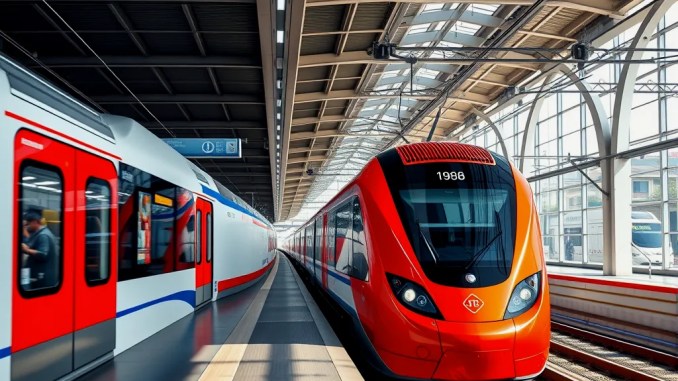
The cornerstone of this partnership involves the deployment of up to 83 advanced Metropolis trainsets, entirely designed and manufactured in France, yet tailored explicitly for Hanoi’s urban transit needs. These trains promise to revolutionize daily commuting—offering higher capacity, better energy efficiency, and enhanced passenger comfort—drastically reducing congestion and emissions.
But the initiative does not stop at importation. A critical component involves localizing production through a technology transfer agreement that enables Vietnam to assemble over 117 additional trains domestically. This approach not only accelerates workforce skill development but also nurtures Vietnam’s emerging rail manufacturing industry, making the country a regional hub for rail technology innovation.
Why the Metropolis Trains Are a Game-Changer
Designed with precision, the Metropolis trains incorporate features aimed at maximizing efficiency and passenger experience:
- Energy-smart operations utilizing regenerative braking systems
- Advanced safety protocols with integrated surveillance and obstacle detection
- Accessibility innovations ensuring ease of use for all passengers
- Operational flexibility that allows rapid adjustments to passenger volumes during peak hours
Produced initially in France, these trains will then be assembled locally, creating a blueprint for sustainable growth and technological independence, pivotal for Vietnam’s long-term urban transit planning.
Implementation Timeline and Phases
The project unfolds in two main phases:
- Phase 1: Construction of assembly facilities and ramp-up of French-produced trains, with initial deliveries scheduled for 2026.
- Phase 2: Scaling local manufacturing capabilities for the assembly of 117 trains in Vietnam, aiming for full operational deployment by 2030.
Throughout these phases, continuous training programs will equip Vietnamese engineers and technicians with skills in modern rail systems, fostering a vibrant local ecosystem vital for future expansions and upgrades.
Economic and Environmental Impact on Hanoi
This initiative promises tangible benefits beyond transportation:
- Economic growth: Job creation in manufacturing, maintenance, and operations, which accelerates local industry development.
- Urban revitalization: Improved mobility attracts investments, stimulates real estate development, and elevates the city’s global standing.
- Environmental sustainability: Transitioning from diesel buses and private vehicles to electric trains significantly reduces greenhouse gas emissions.
Hanoi aims to extend its transit network to cover the entire city by 2045, reaching a total length of 979 kilometers across 18 lines. This project acts as a catalyst, enabling the city to meet its long-term goals of smart growth and climate.
Why This Partnership Sets a New Standard
Aligning with Hanoi’s ambitious urban transformation, the partnership between Vingroup and Alstom exemplifies a