In a rapidly shifting geopolitical landscape marked by increasing tensions across Europe, Germany is spearheading a pivotal effort to reshape the continent’s defense and economic strategies. As tensions between NATO allies and Russia escalate, Berlin recognizes the urgent need for a more agile and united European response. This push for a more integrated approach aims to streamline decision-making processes, bolster collective defense capabilities, and foster strategic autonomy within the European Union (EU).
Central to this initiative is the formation of a new coordination platform, dubbed the E6 format, bringing together key ministerial finances from Germany, France, Poland, Spain, Italy, and the Netherlands. This alliance seeks to complement existing structures like the EUROGroup, but with a sharper focus on defense spending, strategic investment, and energy security. The goal is to establish a faster, more flexible mechanism that can respond promptly to emerging threats, circumvent traditional bureaucratic hurdles, and deepen collaboration across member states.
Germany’s Foreign Minister and other high-level officials are emphasizing the need for a two-speed Europe, where certain member states can act with greater urgency on critical defense and economic issues. This approach aims to avoid delays caused by unanimous decision-making, which has often hampered rapid responses in crises. Instead, the E6 format encourages voluntary participation and flexible membership, opening channels for new partners to join as circumstances evolve. This flexibility is essential to keep Europe’s strategic posture nimble and capable of countering external pressures effectively.
Strategic Goals and Defense Priorities
The core objective of this initiative is to make Europe more resilient and self-reliant in its defense and economic domains. The recent meeting, hosted in Berlin, yielded a four-point agenda focusing on:
- Enhancing defense budget cooperation
- Strengthening the Euro as a stable currency
- Securing critical raw materials
- Balancing savings and investments
Specifically, the German government calls for increased collaborative defense spending among EU members, urging the allocation of at least 2% of GDP toward military capabilities—matching NATO’s target but tailored to the EU context. A notable document circulated during the discussions emphasizes turning defense efforts into a growth engine for the continent, aligning economic revitalization with strategic security.
By elevating investment defense to a front-burner issue in the upcoming EU multiannual financial framework, the aim is to ensure sustained funding and political commitment, reducing reliance on external arms suppliers. This strategic realignment seeks to prepare Europe for multifaceted threats, including hybrid warfare, cyberattacks, and emerging military technologies.
Deepening Strategic Partnerships and European Sovereignty
This movement aligns with Germany’s broad goal to strengthen European strategic sovereignty. Berlin is actively fostering closer ties with key allies, notably Italy and Poland, through renewed bilateral agreements and joint military projects. A recent example is the German-Italian Strategic Cooperation Action Plan, which underscores commitments to enhance NATO’s European pillar through collaboration on aircraft, missile defenses, drone systems, and other critical sectors.
Chancellor Friedrich Merz has championed this vision, emphasizing that European sovereignty cannot be achieved without deepened military and economic integration. His discussions with Italian Prime Minister Giorgia Meloni have yielded a pledge to pursue joint initiatives on missile defense, electronic warfare, and shared research investments. Merz’s strategy reflects a recognition that EU independence in defense requires a concerted effort among willing member states to develop interoperable, advanced military capabilities.
Reinforcing Eastern Flanks and Defense Collaboration
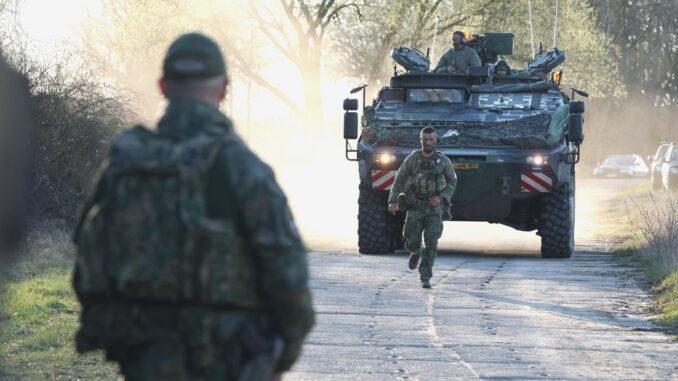
Simultaneously, the Germany-led coalition is actively working to deepen security cooperation in Eastern Europe. A proposed new defense agreement with Poland, slated for signing in 2026, exemplifies this push. This accord aims to facilitate joint military exercises, intelligence sharing, and technological cooperation in areas like drone defense and electronic warfare.
Such endeavors reflect a strategic intent to deter potential aggression on NATO’s eastern borders and demonstrate a unified continental front. German officials stress that these collaborative efforts will not only bolster national security but will also serve as a model for other EU members, illustrating the importance of coordinated military development in maintaining stability and peace across the region.
Financial Commitments and Defense Budget Growth
Amid these ambitions, Germany is significantly increasing its defense budget. The 2026 federal budget allocates approximately 82.7 billion euros to the Bundeswehr, with an additional 25.5 billion euros from special defense funds dedicated to upgrading military infrastructure and procurement. These figures demonstrate a tangible commitment to transforming strategic visions into actionable capacities.
Germany’s Defense Minister has reiterated the goal of raising defense spending to 5% of GDP, a move that would position Berlin as a leading contributor within NATO and the EU’s defense framework. Such financial investments aim to accelerate the development and deployment of next-generation systems, including advanced fighter jets, missile defense networks, and cyber rapid-response units.
The Broader Impact: Challenges and Opportunities
While these efforts mark a concerted push toward stronger EU strategic autonomy, they also face challenges. Achieving consensus among 27 member states remains complex, especially when balancing national sovereignty against collective security. The flexible nature of the E6 platform allows for broader participation, but it also risks fragmenting existing EU cohesion if not managed carefully.
Furthermore, integrating defense initiatives with economic policies requires careful synchronization to prevent resource dilution or conflicting priorities. Yet, advocates argue that such cooperation is now indispensable given the geopolitical climate, which demands rapid, coordinated responses to external threats.
By actively pushing the envelope on defense integration and strategic independence, Germany intends to shape an EU capable of navigating the uncertainties of 21st-century geopolitics. Building a cohesive, well-funded, and technologically advanced security architecture could redefine Europe’s role on the global stage, shifting from reliance on external partners to true strategic autonomy.