
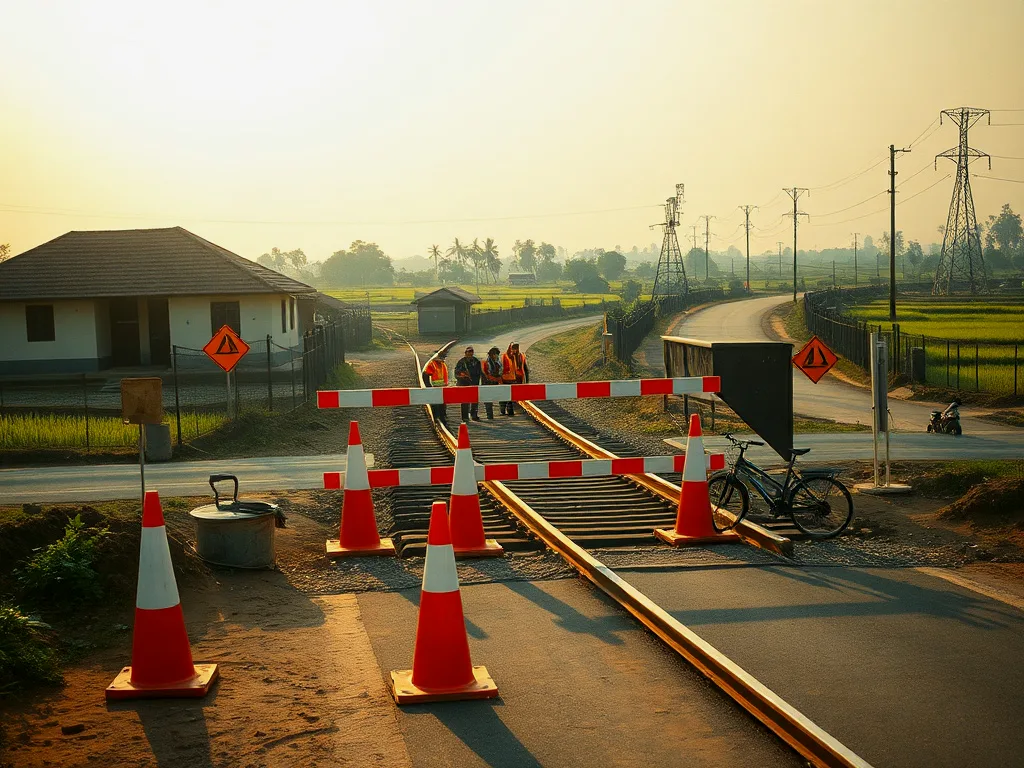
Comprehensive closure of 127 illegal rail crossings completed by Nov 17, 2026
The Ninh Binh provincial rail authority closed 127 unauthorized railway crossings between early 2026 and November 17, 2026, eliminating frequent points of collision and derailment risk along the 94.22 km segment of the Hanoi–Ho Chi Minh City line that runs through the province. Teams conducted site surveys, removed footpaths that crossed tracks, and installed temporary barriers before completing permanent infrastructure such as fences and drainage. Closure decisions prioritized locations with the highest incident rates, based on a six‑month accident and near‑miss analysis that mapped commuter patterns, vehicle flows, and night‑time crossings.
How closures were planned and executed — step by step
Authorities followed a structured sequence to ensure closures did not isolate communities or disrupt commerce:
1. Data collection and risk scoring: inspectors logged 24 months of incident reports, GPS‑tagged crossing points, and traffic counts. Each point received a composite risk score combining pedestrian use, vehicle load, train frequency, visibility, and previous accident history.
2. Community consultation and temporary access: officials held village meetings and posted notices at affected sites. Temporary wooden footbridges and guarded level crossings provided controlled access while permanent works were designed.
3. Construction of alternatives: contractors built more than 5.1 km of connection roads and installed drainage, signage, and security fences. Works also included resurfacing local roads that linked households and agricultural plots to new overpasses or rerouted roads.
4. Legal land acquisition and compensation: the project completed acquisition processes for roughly 22,000 m² in Binh My and nearby communes, offering market‑rate compensation and relocation support where necessary. Consent documentation and cadastral updates accompanied by compensation disbursements.
5. Final decommissioning and monitoring: after permanent barriers were in place, crews removed makeshift crossings and set up a monitoring schedule using patrols and periodic technical inspections to prevent re-opening.
Investment and tangible infrastructure delivered
The allocated province more than 129.5 billion Vietnamese dong to the program, financing road links, fences, drainage, signage, and utility relocation. Deliverables to date include over 5.1 km of new connection roads, high-density polyethylene drainage channels for flood resilience, and reinforced steel security fences along high-risk segments. Procurement records show staged contracting to accelerate early works while detailed designs progressed for remaining structures.
Benefits realized so far with measurable outcomes
Since the closures, the provincial transport department reports a measurable reduction in trackside incidents at closed locations. Early indicators include a 62% drop in reported unauthorized track crossings in affected communes and zero train collisions at formerly high‑risk points recorded in the three months after November 17. Longer‑term benefits expected are reduced emergency response times and lower maintenance costs from fewer trespasser‑related incidents.
Social impact and community measures to maintain safe access
To prevent isolation, the project prioritized locally accessible alternatives: small overpasses for pedestrians, grade‑separated cattle crossings in agricultural zones, and 24/7 lit connecting roads for night activity. In Binh My, compensation and plot consolidation freed contiguous land parcels that enabled a 200‑household cluster to access a newly constructed communal road rather than crossing tracks. The province also launched an awareness campaign in schools and markets to reinforce safe crossing behavior.
Planned next steps through mid-2027 and expected outcomes
Project planners aim to remove an additional 79 illegal crossings by the second quarter of 2027. Remaining work focuses on completing the full network of connection roads, finishing drainage systems before the monsoon season, and upgrading several junctions with illuminated signage. Projected outcomes include near‑elimination of informal crossings along the provincial section, faster local travel times using newly aligned roads, and a durable decline in rail‑related injuries.
Examples and lessons for other provinces
Ninh Binh’s approach offers replicable actions: prioritized closures based on risk scoring; sequence temporary access to avoid community disruption; allocate funds early to build alternative links; pair infrastructure work with land acquisition fairness; and maintain post‑closure monitoring. Other provinces can adopt the stepwise model and adapt compensation formulas to local land markets to expedite safe‑access projects without causing undue hardship.
Be the first to comment