
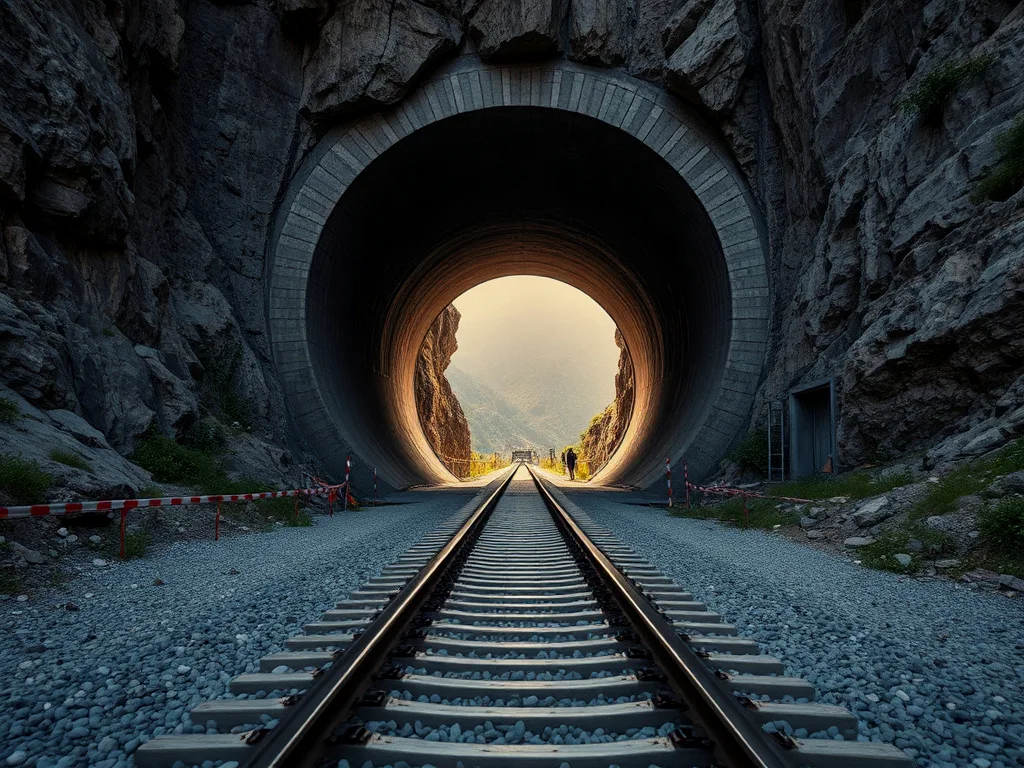
13.6 km of Main Tunnel Excavation Completed in Uttarakhand Rail Project
On 27 November 2026, excavation of the 14th tunnel in the Rishikesh–Karnaprayag 125 km rail corridor breakthrough reached, marking the completion of two primary tunnels within construction package 8. Rail Vikas Nigam Limited (RVNL) awarded the package to Megha Engineering and Infrastructures Limited (MEIL). The two primary bores measure 6,593 metres (Tunnel 14) and 7,044 metres (Tunnel 15). The package also includes escape tunnels and cross-passages that connect the bores and provide emergency egress and ventilation points.
How engineers overcame complex Himalayan geology
The alignment traverses highly variable, young Himalayan rock with frequent fault zones, squeezed ground, and perched groundwater. Project teams used the New Austrian Tunnelling Method (NATM) as the main excavation approach and implemented these countermeasures:
Ground reinforcement: systematic forepoling, spiles and pipe roofing ahead of the face in weak, blocky zones to control deformation and prevent face collapse.
Water management: pre-drainage boreholes, grouting of water-bearing seams, and installation of permanent drainage galleries to lower inflows and stabilize the surrounding rock.
Support systems: immediate shotcrete with lattice girders, systematic rock-bolting and steel sets in high-stress zones; flexible primary lining allowed for observational adjustments.
Ventilation and worker safety: staged mechanical ventilation during long drives, redundant fresh-air supply, and continuous gas and dust monitoring to keep excavation rates steady and safe.
Why the progressive matters for schedule and operations
Completing the excavation phase for Tunnel 14 reduces critical-path risk on the contract and allows work to shift from blasting and muck removal to permanent lining, trackbed construction and systems fit-out. Key effects include:
1. Reduced dependency on two-way excavation coordination: With the primary bore fully driven, concentrate efforts on secondary lining, waterproofing and installing embedded services without face-advance interruptions.
2. Improved logistics for material flow: Excavation completion shortens muck haul cycles and lets supply chains focus on precast segments, track materials and equipment for electrification.
3. Safety and commissioning milestones become measurable: With breakthrough achieved, teams can set precise targets for utility installation, signaling cable routes and ventilation shaft commissioning.
Current percentage progress and realistic timeline to December 2029
RVNL reports approximately 79% overall project progress and near 97% completion of tunnel excavation. Translating these figures into a realistic schedule requires separating civil excavation, secondary construction and systems commissioning:
Remaining civil works: secondary lining, invert construction, cross-passages and portal finishes — estimated 8–12 months for the completed bores, subject to weather and supply.
Track and systems: ballastless track or concrete sleeper installation, overhead electrification, signaling and telecoms — typically 12–18 months for a project segment of this complexity when multiple work fronts operate in parallel.
Testing and commissioning: dynamic testing, trial runs, and safety certifications — 3–6 months after system installation.
Combining these stages, the stated target of completing the majority of the underground rail corridor by December 2029 is achievable if logistics, specialized equipment availability and seasonal constraints are managed tightly.
Technical examples and step-by-step actions during finishing works
To convert tunnel excavation into an operable rail tube, project teams follow a sequenced workflow:
Step 1 — Immediate reinforcement and waterproofing: install final shotcrete layer, waterproof membranes and drainage channels along the invert.
Step 2 — Secondary concrete lining: cast in-situ or place precast concrete segments with embedded anchor points for track brackets and cable trays.
Step 3 — Track formation: prepare sub-ballast or base slab, set sleepers or ballastless slabs, and align rails to design geometry followed by welding and stress relief.
Step 4 — Systems integration: fix overhead contact system masts, string catenary wires, install signaling cabinets, track circuits and fiber-optic communication lines.
Step 5 — Ventilation and life-safety systems: fit longitudinal ventilation fans, emergency lighting, fire detection and suppression systems and cross-passage signage.
Step 6 — Static and dynamic testing: perform load, electrical and train runs to validate track geometry, resonance behavior and system interlocks before safety certification.
Operational and community impacts once the line opens
When the Rishikesh–Karnaprayag link becomes operational, benefits include shorter travel times between Himalayan towns, improved freight access for hill-area products, and robust evacuation routes in emergencies. Examples of direct impacts:
Tourism and pilgrimage: faster, year-round access for pilgrims and tourists reduces dependence on seasonal roads that are vulnerable to landslides.
Freight uplift: rail movement enables bulk transport of construction materials, agricultural goods and local handicrafts at lower cost and higher reliability.
Disaster resilience: a tunnel-majority alignment reduces the number of vulnerable surface road stretches, providing a stable corridor when monsoon-triggered landslides disrupt valley roads.
Remaining risks and mitigations through 2029
Key risks that could delay full project delivery and mitigation measures:
Seasonal monsoon and winter working limits — adopt intensive-season campaigns, temporary enclosure drys for shaft and portal works, and schedule critical pours in favorite windows.
Material and equipment bottlenecks — prequalify multiple suppliers for precast segments, electrification hardware and signaling components; forward-order long-lead items.
Skilled labor shortages — implement training pods on-site and staggered crew shifts to retain skilled tunnelling and track staff.
Geotechnical surprises — maintain an observational design approach with contingency budgets for additional grouting, steel ribs or redesign of portal transitions.
What breakthrough does not mean yet
Excavation breakthrough is a decisive milestone but does not signal immediate passenger service. Remaining tasks include permanent lining, drainage, track, power, signaling and multi-stage testing. Only after those systems are installed and certified will commercial operations begin.