
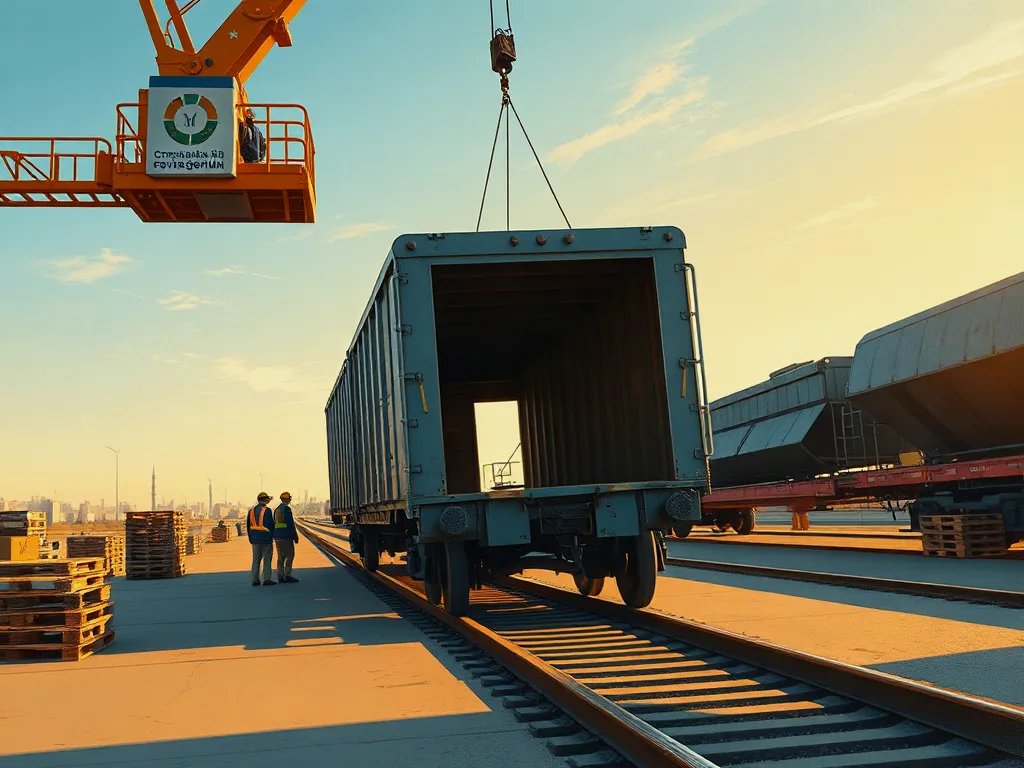
Uzbekistan Removes VAT on Imported Freight Wagons to Accelerate Fleet Expansion
President Shavkat Mirziyoyev announced on 27 November 2026 that Uzbekistan will eliminate value-added tax on imported freight wagons to quickly meet a steep rise in demand. The government expects this tax change to lower acquisition costs for private and state freight operators, enabling faster procurement of both imported and domestically produced wagons. Removing VAT directly reduces upfront capital expenditure for rail operators and leasing companies, increasing project bankability and shortening procurement cycles.
20% Discount on Railway Infrastructure Usage Fees to Boost Competitiveness
As part of the new incentive package, the state will provide up to a 20% discount on fees charged for using rail infrastructure. This reduction applies to track access and associated facility charges and targets operators running domestic and international corridors. By lowering per-tonne-kilometer fees, the measure aims to: 1) reduce logistics costs for exporters and importers; 2) improve rail’s competitive position against road transport; and 3) attract private investment in wagon fleets and terminal services.
Zero VAT for Domestic Wagons in International Transport
The policy sets a zero VAT rate for domestically built freight wagons used in international transportation. This creates incentives for local rolling-stock manufacturers to ramp up output, supporting a domestic supply chain of components, assembly, and after-sales services. Practical outcomes expected: manufacturers can offer more price-competitive lease and sales agreements, local maintenance yards will gain steady workloads, and export-oriented operators reduce life-cycle costs of equipment.
New Tariff System to Improve Transparency and Cost Allocation from 2027
Uzbekistan and the World Bank have co-developed a tariff framework that starts phased implementation in 2027. The new system separates charges by:
– Infrastructure access (per route and axle load)
– Locomotive traction services (hourly or gross-ton based)
– Wagon usage (per wagon-kilometer depending on type)
This granular approach will let shippers and forwarders model true-to-route costs, design route-optimized train formations, and negotiate targeted discounts. For example, operators moving bulk fertilizer on a single corridor can calculate exact infrastructure charges and claim corridor-specific concessions to lower unit costs.
8 Billion USD Investment Program with Clear Targets Through 2030
Uzbekistan announced an 8 billion USD investment pipeline focused on new construction and modernization. Key targets include:
– 545 km of new railway lines
– Increasing electric line share to 65%
– Expanding the electric train fleet to 31 sets
Major projects listed are the modernization of the Angren–Pap line and design work on a high-speed connection between Tashkent and Samarkand. International investors are being solicited for PPP and direct-investment structures, with corridor forecasts projecting annual freight volumes of 15–16 million tons once the China–Kyrgyzstan–Uzbekistan rail link reaches full capacity.
Plan to Produce 10,000 New Freight Wagons and Rehabilitate 6,000 Units
The national rail program for 2026–2030 targets production of 10,000 new wagons and the rehabilitation of over 6,000 existing wagons. Uzbekistan Railways aims to scale local manufacturing to about 2,000 wagons per year on average. Given target fleet growth of 5,000–6,000 units per year, closing the gap will require a combination of:
– Accelerated local factory expansions and technology transfers
– Targeted imports made cheaper by VAT removal
– Leasing and refinancing options to bring used foreign-built wagons onto the network
Example pathway: a domestic manufacturer upgrades stamping and welding lines to boost output by 50% within 18 months, while an operator imports 1,000 specialized flat wagons VAT-free to immediately serve containerized export volumes.
Operational and Commercial Impacts for Shippers and Logistics Providers
These measures change decision-making across supply chains. Practical consequences include:
– Shippers can negotiate lower per-unit rates and shift modal split toward rail for containerized and bulk cargo.
– Forwarders and NVOCCs will re-evaluate route economics, favoring rail corridors that offer discounted access and clearer tariffs.
– Wagon lessors benefit from lower acquisition costs and steadier utilization driven by new international flows.
How Businesses Can Prepare: Step-by-Step Actions
1) Review current contracts and model cost savings from VAT elimination and infrastructure discounts;
2) Engage with manufacturers and lessors to plan phased fleet increases or conversions;
3) Recalculate route-level tariffs using the upcoming granular pricing to identify profitable lane shifts;
4) Invest in intermodal terminals and loading equipment to capture diverted container flows;
5) Explore financing and leasing that leverages the new incentives to reduce capital outlays.
Risks, Constraints, and Mitigation Measures
Key risks include production bottlenecks at domestic factories, coordination delays in tariff rollout, and short-term capacity mismatches between wagon availability and terminal throughput. Mitigations: fast-track factory upgrades under public-private frameworks, pilot the tariff methodology on priority corridors then scale, and stagger wagon deliveries tied to terminal capacity milestones.
Outlook: Scaling Uzbekistan as a Central Eurasian Freight Hub
If implemented as announced, the package reduces unit costs, accelerates renewal fleet, and anchors international corridors through the China–Kyrgyzstan–Uzbekistan link. Combined infrastructure upgrades and tariff transparency can convert latent capacity into predictable services, helping Uzbekistan capture a larger share of north–south and east–west freight flows by 2030.