
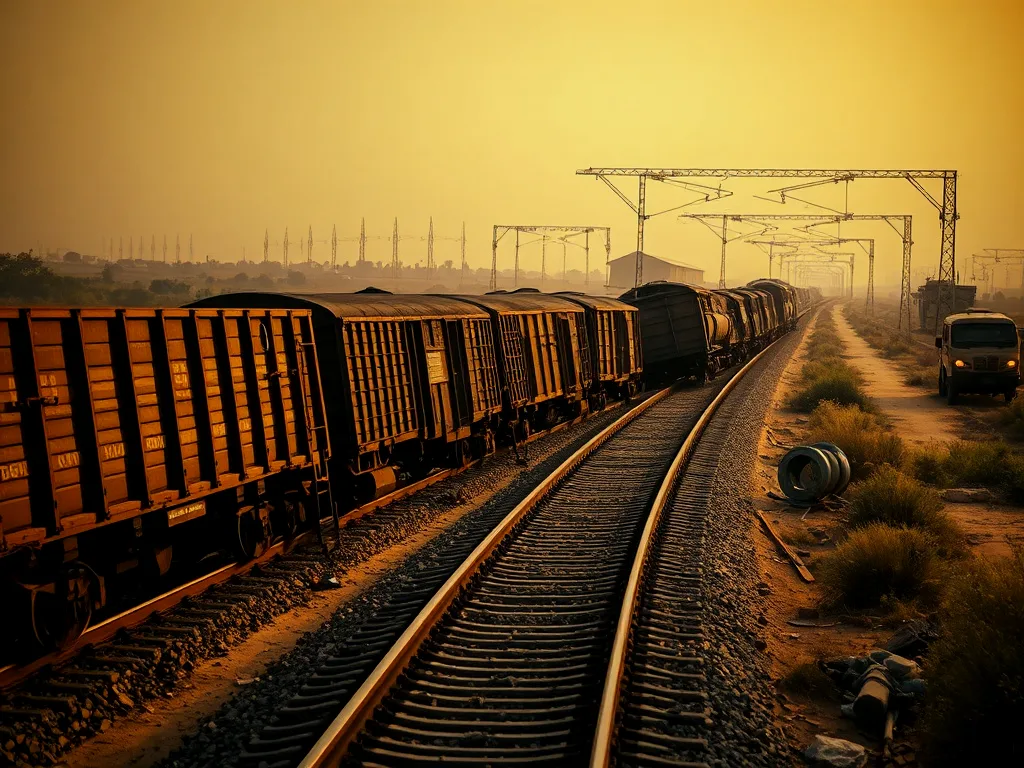
On the night of 27 November 2026, a freight wagon derailed on the Lumding–Badarpur line in Assam, interrupting rail services across the northeastern corridor. The incident occurred between Bandarkhal and Damchera stations and forced the Northeast Frontier Railway (NFR) to cancel 11 trains and shorten the routes of four others. Crews mobilized immediately to clear the site and restore traffic, while electronic ticket refunds were triggered automatically for affected journeys under railway refund rules.
Derailed Wagon and Immediate Operational Impact
The freight wagon left the rails during night operations, blocking the single-line section that links Silchar with the rest of Assam. NFR’s immediate actions included isolating the damaged track section, diverting available rolling stock where possible, and publishing revised timetables. Key long-distance services between Agartala, Bengaluru, Guwahati and Silchar experienced delays or cancellations, creating cascading disruptions on connecting services and local commuter patterns.
Which Areas and Services Were Affected?
The derailment disrupted rail connectivity for four administrative regions: Tripura, Mizoram, Manipur and southern Assam. Trains serving major nodal points—Agartala (Tripura), Silchar (Cachar district), Guwahati (Assam’s hub) and inter-regional long-haul links to Bengaluru—saw amended schedules. Passengers en route were notified by mobile alerts and station announcements; those holding e-tickets for canceled trains received automatic refunds as per NFR policy.
Repair Strategy and Timeline Considerations
Railway engineers prioritized site clearance, track inspection, and restoration of the ballast and sleeper alignment. Repair work follows a step-by-step sequence: secure the incident site and ensure safety; recover derailed rolling stock using cranes and rerailing equipment; replace or replace damaged sleepers and rails; tamp ballast and restore track geometry; run inspection trips at restricted speed; and finally, resume scheduled services. The mountainous terrain and limited access roads in the affected stretch can extend each step, so NFR emphasized safety checks over a rapid reopening. A firm reopening date was not given pending completion of inspections and rerailing operations.
Operational Challenges in Mountainous Northeast Sections
The Lumding–Badarpur–Silchar corridor spans roughly 210 kilometers of mixed terrain opened in November 2015 as a broad-gauge lifeline for India’s northeast. The line’s single-track profile, steep gradients, and frequent cuts and embankments increase vulnerability to derailments and complicated recovery. Moving heavy crane rigs and specialist equipment to confined cutting sites often require temporary widening of access paths or use of rail-mounted cranes. Weather, slope stability, and limited daylight hours for complex lifts further slow progress.
Passenger Remedies, Ticketing, and Communication
NFR implemented standard passenger remedies: full refunds for canceled services, travel on the next available train where feasible, and accommodation of passengers on diverted or short-terminated services subject to berth availability. Electronic ticketing systems automatically processed refunds while station staff handled on-the-spot queries. Timely, multi-channel communication—SMS to e-ticket holders, live updates on railway websites, and station public-address announcements—helped reduce passenger confusion during the disruption.
Context: Recent Incidents on the Same Corridor
This derailment follows another on 29 October 2026 in which the Silchar–Guwahati Express locomotive derailed on the same corridor. Recurrent incidents on the route have focused attention on maintenance regimes, slope protection works, and capacity constraints posed by single-track operation. Railway authorities typically respond by increasing patrols, scheduling targeted engineering blocks for remedial work, and reviewing track and rolling-stock condition records to prevent repeat occurrences.
Practical Advice for Travelers and Freight Shippers
For passengers: check the official railway website and mobile apps before travel, subscribe to SMS alerts when booking e-tickets, allow extra buffer time for connections through Silchar and Guwahati, and contact customer-care desks at affected stations for rebooking or refunds. For freight shippers: expect possible delays in transit time for consignments routed through Lumding–Badarpur; plan alternative routes where time-critical, consolidate consignments where feasible, and coordinate with shipping agents for updated estimated times of arrival and transshipment options.