
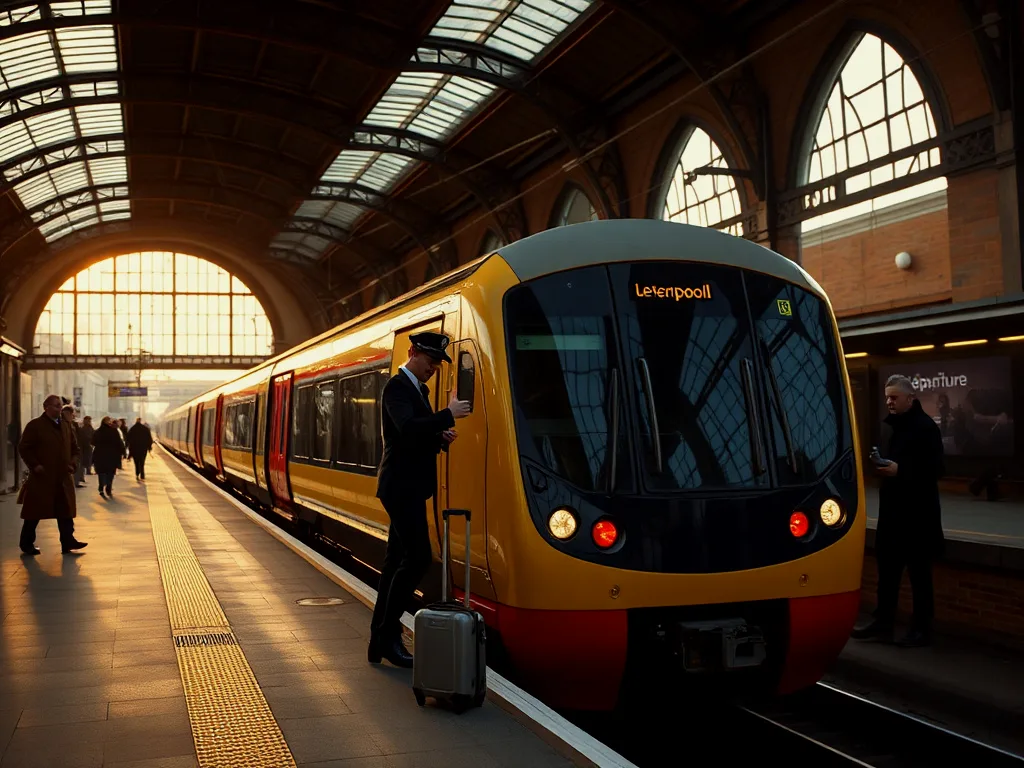
Incident summary and timeline
On 28 November 2026 an operational incident on the Liverpool Lime Street to Warrington Central corridor interrupted services from 08:05 and was declared cleared at 12:31. Emergency services led the response, and train operators reintroduced services after a staged recovery that returned most scheduled trains to normal within about 4.5 hours. Precise details of the cause were not released by emergency responders.
Which operators and routes were affected
Northern, TransPennine Express and East Midlands Railway all recorded service impacts. The disruption produced delays and cancellations on routes serving Liverpool, Warrington and onward connections to Manchester, Cleethorpes, Nottingham and Norwich. Operators reported a mix of delayed arrivals, canceled workings and revised timetables while recovery actions were underway.
Passenger experience and practical steps taken
During the incident, train crews and station teams used on-board and platform announcements to keep passengers informed. Where trains were canceled or terminated short, staff coordinated alternative onward travel or advised passengers to wait for the next available service. Passengers who were on affected trains were allowed to remain on board where safe, and stations offered welfare assistance for those facing long waits.
Delay compensation eligibility and how to claim
Northern passengers whose journeys arrived at their booked destination at least 15 minutes late may qualify for Delay Repay. To make a claim: 1) keep your ticket or booking reference; 2) check the operator’s Delay Repay thresholds and eligible ticket types; 3) submit a claim via the operator’s website with journey details and the arrival time; 4) Upload any requested evidence and choose refund or voucher options. Claims are typically processed within a few weeks; monitor claim status through the operator’s online portal.
Performance context and recent reliability data
TransPennine Express published performance figures for the period 18 October–14 November 2026 that show a 7.6% cancellation rate on the Liverpool–Cleethorpes corridor and a company-wide cancellation rate of 5.36%. The operator attributes cancellations and delays in the region to a combination of infrastructure faults, adverse weather and rolling stock technical problems. These data points help explain why a single incident can cascade across multiple services on interconnected routes.
How such incidents propagate through the network
Rail networks run tightly timed schedules; when one service is delayed or removed the following effects occur: 1) equipment and crew get out of position for later timetabled services; 2) single-line sections or junctions create bottlenecks where recovery options are limited; 3) operators reallocate rolling stock, sometimes canceling lower-priority services to stabilize the core timetable. Understanding these mechanics clarifies why a localized incident produced multi-operator disruption across Liverpool, Warrington and adjacent corridors.
Practical advice for passengers facing future disruptions
Passengers can reduce travel risk and speed recovery by taking these steps: plan alternative routes in advance (identify bus and coach alternatives and connecting rail options), use real-time feeds from operator apps or National Rail Inquiries for live platform and disruption notices, retain tickets and timestamps to support compensation claims, and allow buffer time for connections on the day. For frequent travelers on affected corridors, consider season-ticket protections and flexible fares that ease the administrative burden of claiming refunds.
What operators and infrastructure managers can do next
To reduce recurrence, operators and infrastructure managers typically pursue: targeted engineering works at chokepoints, improved contingency timetabling that preserves key connections, enhanced cross-operator incident coordination, and investment in rolling stock reliability. Transparent post-incident reporting with clear causes and remedial timelines also helps rebuild passenger confidence after high-profile disruptions.
Be the first to comment