
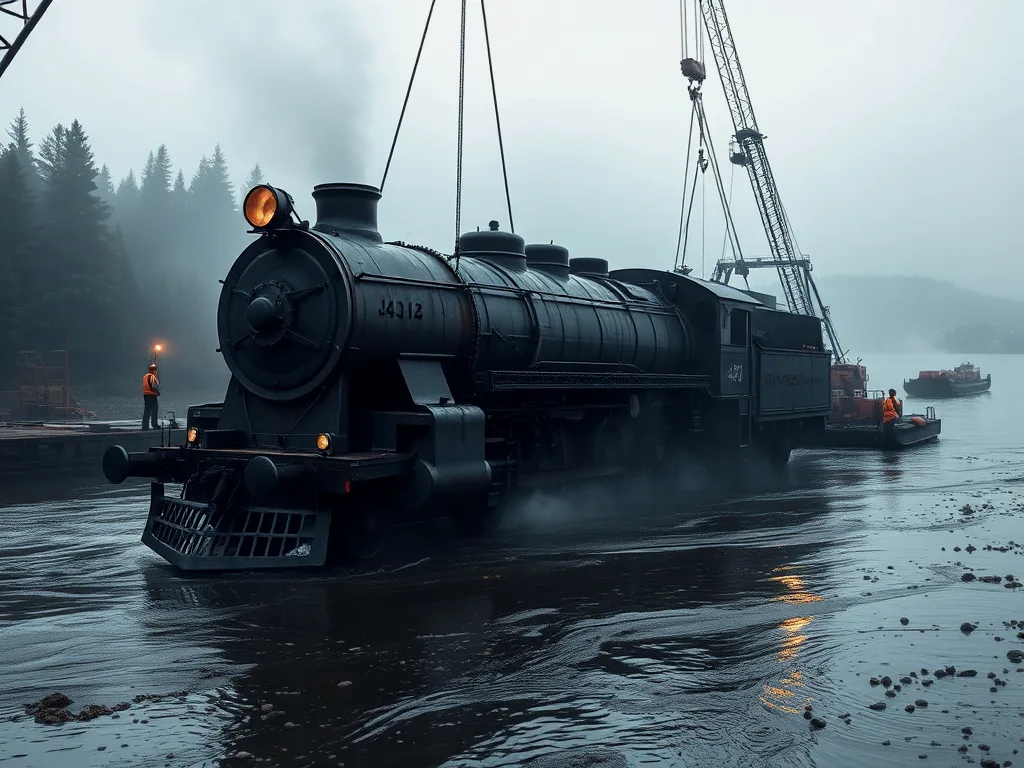
Locomotive Recovered from Skeena River and 1,400 Litres of Diesel Retrieved
On 17 November 2026, a derailed locomotive near Terrace, British Columbia, was recovered from the Skeena River. Recovery crews removed the locomotive in sections and reported extracting 1,400 liters of diesel from tanks and fuel-saturated components. Crews used containment booms and skimming equipment immediately after the recovery to limit spreading of residual hydrocarbons on the water surface.
Estimated Maximum Release and How Authorities Assess Fuel Loss
CN (Canadian National Railway) indicated the locomotive’s tanks could have held up to 11,600 liters of diesel, which represents the upper-bound potential release. Authorities combine direct recovery measurements, visual surface observations, and laboratory analysis of water and sediment samples to estimate the actual volume released. For example, teams compare pre- and post-incident hydrocarbon concentrations in river sediment cores and cross-check those against the quantity recovered during salvage operations to produce an evidence-based estimate.
On-Site Response Steps: What Crews Did, Day by Day
Response teams followed a staged, documented process:
Day 1–2: Secure the site; deploy booms and absorbent pads; assess hazards; start visual surveys up- and downstream.
Day 3–5: Mobilize heavy lifting and cutting equipment; segment the locomotive for safe retrieval; place recovered pieces in containment for decontamination.
Day 6 onward: Collect water, sediment and biota samples; remove contaminated soil; transport contaminated materials to approved disposal facilities; maintain booms during sampling and remediation.
Environmental Monitoring: Sampling Strategy and Preliminary Findings
Monitoring teams collect multiple sample types to characterize impact and guide cleanup:
Water samples: Surface and subsurface grabs at varying distances up to 50 km downstream, analyzed for diesel-range organics and polycyclic aromatic hydrocarbons (PAHs).
Sediment cores: Vertical profiling at the incident site and at control sites to map contaminant penetration and retention.
Biota samples: Invertebrates and fish tissue sampling where local species are present to check for bioaccumulation.
Preliminary field observations reported diesel odor and surface sheens as far as 50 km downstream of the derailment point. Laboratory work is ongoing to quantify concentrations and identify hotspots that require focused remediation.
Cleanup Techniques Being Used and Why They Were Chosen
Teams selected response methods to balance speed, efficacy, and ecological protection:
Containment booms to limit downstream spreading; skimmers to recover free-floating diesel; absorbent materials for residual sheens near shore; manual sediment excavation in shallow, sensitive areas to limit turbidity; and landfarming or off-site disposal for excavated, hydrocarbon-saturated soils depending on contamination levels. Techniques were chosen based on site-specific factors such as current velocity, shoreline type, and proximity to sensitive habitat.
Coordination Between Agencies and Local Communities
Federal, provincial and Indigenous authorities, plus the rail company, established unified command to coordinate sampling, cleanup, and communications. Indigenous communities participated in monitoring, provided traditional ecological knowledge for prioritizing sampling locations (for example, fisheries-relevant sites), and helped identify culturally sensitive areas that require special protection during remediation.
Rail Service Restoration and Ongoing Safety Measures
The Terrace–Prince Rupert rail corridor reopened to traffic on 23 November 2026 after track inspection and repair. Operators implemented enhanced inspection protocols, speed restrictions through the affected segment, and a review of train consist and tank integrity procedures to reduce recurrence risk. Regulators require after-action reports and may impose further operational conditions based on final environmental findings.
What the Public Needs to Know: Health, Recreation, and Fishing Advisories
Public notices explained immediate precautions:
Avoid contact with visibly oily water and shorelines; do not harvest fish or shellfish from affected stretches until specific clearance testing is complete; follow local advisories for drinking water if intakes are downstream. Authorities typically lift restrictions only after multiple rounds of confirmatory sampling show contaminant concentrations below health-based or ecological thresholds.
Data, Timelines, and What to Expect Next
Expect a multi-phased timeline:
Short term (weeks): containment, targeted cleanup, and initial sampling reports.
Medium term (months): detailed sediment and biota analyses, focused remediation of hotspots, and monitoring of recovery indicators.
Long term (1+ year): follow-up monitoring to confirm ecological recovery and final remediation reports with lessons learned and recommended policy or operational changes.
Examples from Similar Incidents and Key Lessons Applied Here
Comparable river diesel spills show that rapid boom deployment and early recovery of obvious free product sharply reduce downstream contamination. Sediment-bound hydrocarbons often require targeted excavation or monitored natural recovery where disturbance would cause more harm. Applying these lessons, crews prioritized mechanical recovery first and are using conservative sediment removal where ecological damage risk from excavation is high.
How Residents Can Stay Informed and Where to Find Official Updates
Follow updates from the provincial environmental agency, the federal transport and environment departments, CN’s public notices, and Indigenous community communications. Official updates include sampling results, area-specific closures, and timelines for lifting advisories. Local health units and municipal websites will post drinking water and recreational advisories as laboratory confirmations arrive.