
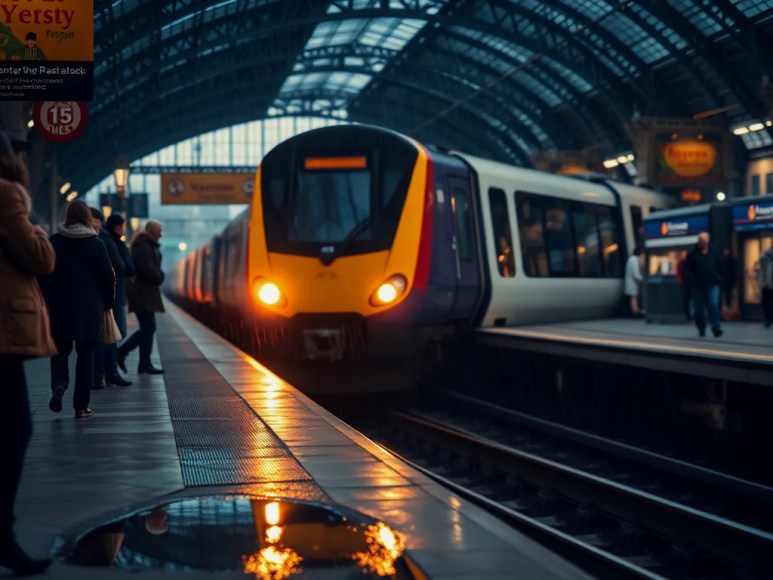
Weekday and Weekend Service Increases: What changes and where
Southeastern will operate 130 extra weekday trains and 512 extra weekend trains starting 13 December 2026. The additional weekday spread services across the network aim to reduce waiting times and create more consistent off-peak frequencies; 73 of those weekday additions serve the South East London Metro area. On Saturdays and Sundays, Southeastern adds 296 and 216 services respectively to give passengers more weekend choices and to support leisure and shopping journeys that previously fewer had options.
How the Metro network will run day-to-day
The Metro network will run at least four trains per hour on almost all routes from Monday to Saturday during daytime. On key corridors — Greenwich, Sidcup and Bexleyheath — frequency will rise at certain times to as many as six trains per hour. That change shortens average wait times and spreads capacity more evenly through the day, easing pressure on peak services and offering reliable options for midday and evening travelers.
Sidcup–Abbey Wood: Why the direct link matters
Reinstating all-day direct trains between Sidcup and Abbey Wood from Monday to Saturday reconnects passengers to the Elizabeth Line interchange without an extra change. For many commuters and airport travelers this means a single-transfer journey into central London and to Heathrow, reducing journey complexity and potential missed connections. Example: a Sidcup commuter who used to require two changes can now transfer once at Abbey Wood to reach Canary Wharf or Paddington via the Elizabeth Line faster and with fewer platform changes.
Bexleyheath, Orpington and routing changes that improve journey times
Bexleyheath passengers will get direct Charing Cross trains every 30 minutes across all seven days during daytime. On Saturdays the frequency for trains between Victoria (via Herne Hill) and Orpington will double to four trains per hour, easing crowding and offering more flexible return times. Sundays will see a new half-hourly Cannon Street to Dartford service via Lewisham and Woolwich Arsenal, creating more direct journeys to business districts and riverside stations.
Hastings–London weekday express: timetable and travel-time gains
From 14 December Southeastern will run a weekday express between Hastings and London. Departing Hastings at 08:05, the train reaches London Bridge in about 1h18 and Charing Cross at 09:33; the return leaves Charing Cross at 16:11, arriving Hastings at 17:42. This scheduled express removes intermediate stops and trims peak travel time for commuters traveling to central London, improving reliability and creating a competitive alternative to road travel during the morning and evening peaks.
Other route-specific upgrades and peak patterns
Sevenoaks and Tonbridge corridors will see up to six fast trains per hour into London at key times, while Maidstone East will receive up to four trains per hour in selected peaks. The Orpington–Charing Cross route will operate four fast trains per hour during quieter periods and on weekends, and Bromley South–Victoria will have an uninterrupted four trains-per-hour pattern during the day. Bromley North will restart Sunday services and provide 15-minute weekday peak frequencies; Abbey Wood–Dartford will target a 15-minute pattern seven days a week where infrastructure allows.
Practical examples and how to plan a trip with the new timetable
Step 1: Identify your origin and destination station and note whether it sits on a Metro corridor (Greenwich, Sidcup, Bexleyheath) or a mainline corridor (Sevenoaks, Hastings, Tonbridge).
Step 2: Check the weekday/daytime frequency – Metro corridors should show at least four trains per hour Monday–Saturday; core routes may show up to six during busy windows.
Step 3: If traveling to central London or Heathrow from the Sidcup area, prefer services via Abbey Wood for a single-change connection to the Elizabeth Line. For Hastings commuters, reserve the 08:05 outbound express where available to shave 15–30 minutes off a typical stopping service.
Step 4: Account for station-specific differences: not every station will see every extra service; consult station departure boards or Southeastern’s published station timetables for exact stopping patterns and platform allocations.
Operational caveats: engineering, rolling stock and platform constraints
Service frequency increases rely on train crew rostering, rolling-stock availability and platform capacity. Some routes will vary by time of day or day of week because of network pathing or engineering work. Planned engineering possessions or short-notice operational disruptions can change stopping patterns; always verify the live timetable on the day of travel.
When the new timetable applies and how long it lasts
The timetable becomes effective on 13 December 2026 and runs until 15 May 2027. Passengers should treat this as the published working schedule but expect local adjustments: station-specific departure times, short-term engineering works and seasonal changes may alter individual services within the overall timetable window.
How these changes affect typical passenger journeys and capacity
By increasing off-peak and weekend frequencies, Southeastern reduces forced peak-only travel and spreads demand across more departures. That distribution lowers platform crowding, smooths boarding flows and reduces pressure on interchange stations such as Abbey Wood and Lewisham. For passengers, the practical outcome is fewer missed trains, more predictable connections and shorter average wait times — especially for travel outside classic rush hours.
What passengers should check before traveling
Check live departure boards and Southeastern’s station pages for the precise stopping pattern at your station. Verify planned engineering works on the National Rail or Southeastern website and allow extra time for interchange at major hubs. If your journey depends on the Elizabeth Line interchange at Abbey Wood, confirm whether your service is scheduled to call at Abbey Wood or requires a change at a different station.