
The Korail workers’ union postponed a planned work-to-rule action from November 23 to November 26 following a multi-wagon freight derailment on the Gyeongbu Line; the union still warns of an indefinite strike beginning December 10 if negotiations fail.
Freight derailment on Gyeongbu Line: what happened and immediate impact
At 05:37 on November 21, a 21-wagon freight train traveling from Busan toward Obong derailed near Sojeongni Station in the Sejong area. Five wagons left the rails; Several struck catenary poles, damaging overhead electrical equipment and interrupting conventional-line operations. Officials reported no injuries. KTX services continued on the separate high-speed alignment, but conventional services between Cheonan, Daejeon and Seodaejeon were suspended while crews cleared wreckage and inspected infrastructure.
Korail mobilized about 180 staff plus four heavy cranes and assorted lifting gear, restoring passenger services starting with early runs on November 22 after targeted repairs and safety checks. The operator ran 15 additional passenger trains and deployed 23 shuttle buses to reduce passenger disruption during recovery.
Why the union moved the work-to-rule start date to November 26
The Korea Railway Workers’ Union publicly stated it postponed the work-to-rule to prioritize completion of recovery and safety work at the accident site. A work-to-rule approach requires employees to perform all duties strictly according to rules and technical procedures; that behavior can slow operations without formal strike protocols. The union decided a three-day delay would allow on-site teams to finish inspections and temporary repairs, reducing acute safety risks while keeping pressure on management.
Operationally, delaying the action minimized overlapping stress on crews handling the derailment while preserving the union’s leverage. The union reiterated demands for clearer causation explanations, expanded station and maintenance staffing, stronger safety standards, and additional depot and maintenance capacity for high-speed trains.
What is work-to-rule and how will it affect passengers and timetables?
Work-to-rule means staff follow every rule, safety check and paperwork step without the pragmatic shortcuts that speed routine operations. Practical consequences include longer turnaround times at depots, extended dwell times at stations for inspections, slower coupling/uncoupling and stricter speed/route checks for non-high-speed services. Examples from prior rail actions show on-time performance drops by double-digit percentage points and some services are canceled to keep critical paths running.
Korail warned that if the work-to-rule is broad in scope, some ordinary services may run late or be reduced; if it targets specific tasks (eg, signing off inspections, depot movements), the effect might be concentrated on maintenance windows and non-peak connecting services. Passengers with time-critical travel — university exams, job interviews, medical appointments — should review train status via Korail’s channels and consider bus or express coach alternatives.
Union demands: staffing, maintenance, and safety improvements explained
The union’s requests fall into three operational buckets:
1) More front-line staff and station coverage: The union says understaffing increases operational error risk during peak and disruption periods and hiring requests to reduce overload and provide redundancy.
2) Expanded maintenance capacity for high-speed fleets: With planned additions from 2027, the union seeks additional depots and storage tracks plus scheduled maintenance slots to prevent fleet deferred maintenance that can raise failure risk.
3) Strengthened safety protocols and faster incident investigations: The union wants transparent root-cause analyzes and rapid implementation of corrective measures after accidents.
Each demand links to measurable outcomes: reduced incident response times, lower deferred-maintenance backlogs (tracked monthly), and defined staffing ratios by station and maintenance facility.
Regulatory and investigative response ongoing
The Ministry of Land, Infrastructure and Transport elevated the railway-accident response to a heightened alert level. Railway police, safety inspectors and technical teams conducted on-site forensics examining wagon condition, track superstructure, and overhead electrical damage. Investigations will evaluate technical failures (eg, axle, brake, wheel defects), infrastructure defects (track geometry or fastening failures), and operational factors (load distribution, speed, signaling). Authorities plan to publish findings and corrective actions once root causes are confirmed.
How KTX–SRT integration and future fleet growth feed the dispute
Planned integrations of high-speed services and additional trainsets from 2027 increase train-km and maintenance demands. The union argues that the existing depot footprint and staffing are insufficient for growth: more trainsets require more storage, scheduled maintenance cycles, and night-window work capacity. Without those investments, increased utilization can compress maintenance windows, which raises the probability of in-service defects.
Korail’s long-term plans foresee phased fleet additions, but the union insists capital and operational plans must align: new depot construction timelines, staffing recruitment schedules, and revised maintenance cycles should be published and tracked jointly to prevent conflict escalation.
What travelers should do now — step-by-step guidance
1) Check live service updates: open Korail’s official site or mobile app before leaving for the station. Push alerts and station notices will reflect cancellations or delays.
2) Have alternatives ready: identify express buses, intercity coaches, or carpool options for time-sensitive trips. Book refundable fares where possible.
3) Allow buffer time: add 60–90 minutes to schedules around November 26 and December 10 if traveling through the Gyeongbu corridor.
4) Confirm connections: if you have onward KTX or SRT legs, verify that connecting conventional services are running; consider booking directly on high-speed lines where available.
Union’s deadline: Dec 10 indefinite strike remains on table
The union preserved its plan to begin an indefinite strike at 09:00 on December 10 if negotiations make no progress. Regional union meetings and strike preparations continue. An indefinite strike would likely produce larger, system-wide disruptions than a work-to-rule action and could force emergency contingency timetables or government intervention.
Korail encouraged passengers with critical travel to monitor updates and use alternative routes; the company emphasized safety checks will not be compromised during any industrial action and that operational notices will be issued through official channels.
Likely scenarios and timelines — concise projections
Short-term (days): localized delays and extra rolling stock movements as the recovery completes; Korail maintains contingency timetables. Medium-term (weeks): if work-to-rule is active, expect slower turnaround and selective cancellations. Long-term (months): if negotiations fail and a strike begins December 10, the network could face prolonged service reductions until a settlement is reached or liquidation mediation interventions.
Investigations into the derailment should produce technical recommendations within weeks; operational and capital responses (hiring, depot building) will require months to plan and years to complete, so near-term conflict resolution depends mainly on management agreeing interim measures and timelines.
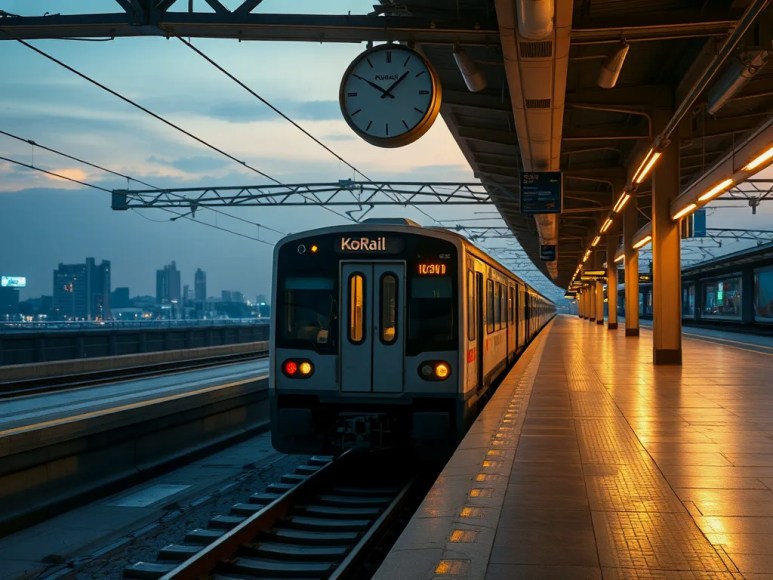
Cover image is AI-generated to represent the incident.