
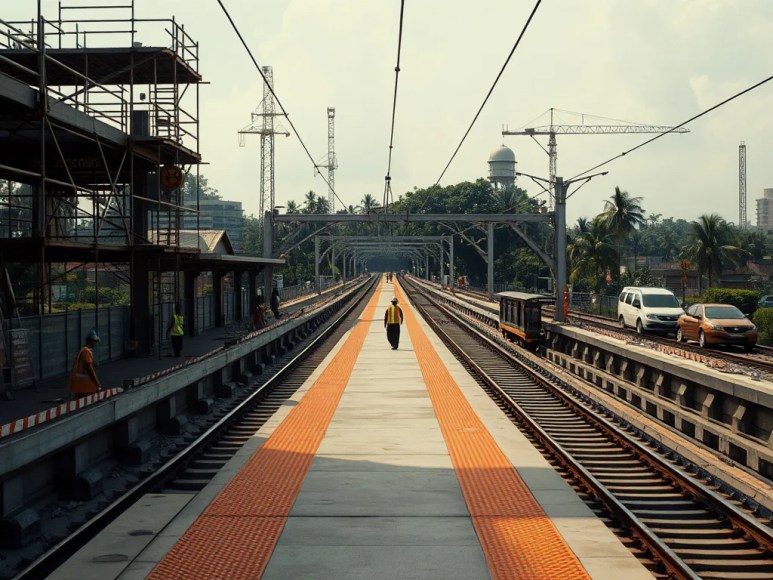
Porur–Vadapalani six stations remain closed despite Yellow Line partial opening
Chennai Metro Rail Limited (CMRL) opened the 14.64 km Yellow Line segment between Poonamallee Bypass and Vadapalani on 11 October 2026, yet six stations on the Porur–Vadapalani stretch are not serving passengers. Construction finishes on platforms, concourses and facades are underway, but CMRL is with holding passenger service until automatic train operation (ATO) trials and regulator safety certification meet operational requirements. Trains currently pass these stations without stopping.
Which stations are affected and what remains to be done?
The closed stations are Alapakkam Junction, Karambakkam, Valasaravakkam, Alwarthirunagar, Saligramam Warehouse and Saligramam. Four lies on the double-deck viaduct that carries two corridors stacked vertically. Remaining work focuses on station entrances, passenger circulation areas and finishing systems. Platform structural work is roughly 95% complete, but access elements and station-level equipment need finalization before service can begin.
Why ATO testing and CMRS approval determine the opening date
CMRL must complete ATO trials across the Vadapalani–Poonamallee Bypass section and secure clearance from the Commissioner of Metro Railway Safety (CMRS). CMRL will not open the stations relying solely on manually operated train runs; the regulator requires validated automated operation performance and integrated signaling checks. ATO governs acceleration, braking and many train movement functions while a staff member remains onboard; GoA4-level automation is the higher target for unattended train operation but requires separate certification.
What timeline is CMRL signaling?
CMRL sources expect civil works to finish in January–February 2027. Operationally, they caution that passenger service could slip to mid-2027 due to ATO test schedules and regulator review. Earlier speculation named March 2027 as a possible opening window, but the emergence of extensive automated-operation trials shifted expectations toward June–July 2027 for higher automation readiness — not a guaranteed revenue-service start date.
How does the double-deck viaduct complicate completion?
The double-deck viaduct stacks two independent metro corridors at different elevations, creating a technically complex footprint for station layouts, vertical circulation and signaling runs. Integrating passenger flows, fire evacuation routes and interlockings between two corridor control systems demands extra calibration and testing. For example, stair, escalator and lift zones must align to platform edge doors and CBTC equipment racks, which extends station validation time beyond ordinary elevated-station commissioning.
Who supplies the signaling and rolling stock, and why that matters
Hitachi Rail supplies the communications-based train control (CBTC) and ATO infrastructure used on the second phase. The system supports high-frequency service and, when certified, higher Grades of Automation (GoA), including GoA4 unattended train operation. Alstom Metropolis three-car EMUs form the rolling-stock fleet. Even with on-time train deliveries, line- and station-level systems require separate integrated testing: vehicle-to-wayside radio links, ATP/ATO handshakes, platform safety interfaces and emergency procedures must all be proven under operational scenarios.
How will the delays affect riders and local traffic?
Commuters near the unopened stations face longer commutes and additional road travel to reach operational hubs such as Vadapalani. Anecdotal travel times to the active station can rise by up to 20 minutes during peak traffic. Until the six stations open, local last‑mile demand shifts to buses, taxis and private vehicles, increasing surface congestion in nearby corridors. CMRL and municipal traffic planners will need to monitor modal shifts and consider interim feeder adjustments.
Ridership data from the Yellow Line early operation
Between 11 and 31 October 2026 the Yellow Line carried 583,272 passengers. Across the Green and Blue Lines during October, 10,240,136 journeys occurred, bringing total network ridership for the month to 10,823,408. The Yellow Line’s 21‑day average was approximately 27,775 passengers per day, a figure that reflects limited initial operating hours and not full mature demand.
Step-by-step what must happen before passenger service can begin at the six stations
1. Complete remaining civil finishes: entrances, concourses, canopies and passenger-area systems. 2. Install and commission platform equipment: lighting, lifts/escalators, signage and safety barriers. 3. Integrate wayside CBTC hardware with station systems and verify radio coverage. 4. Run staged ATO trials that validate speed profiles, braking curves and platform approach behavior under supervised conditions. 5. Conduct emergency and evacuation drills involving station staff and operations control. 6. Compile trial evidence and submit to CMRS for independent inspection and certification. 7. Receive CMRS clearance and publish a firm passenger-service start date with contingency plans.
What to watch next and likely scenarios
Watch CMRL statements on ATO trial completion and CMRS inspection dates. Best-case scenario: civil works finish early 2027 and ATO tests proceed smoothly, allowing phased openings in late Q1 or Q2 2027. Conservative scenario: unexpected integration issues during multi‑corridor testing push openings towards mid to late 2027. Any further hardware or software adjustments in Hitachi’s CBTC or Alstom train interfaces will directly affect certification timing.
Practical recommendations for commuters while stations remain closed
Riders traveling from areas served by the unopened stations can reduce delay by using timed feeder buses to Vadapalani, carpooling to active stations, or shifting travel times outside peak hours. Check real-time CMRL advisories for shuttle services and temporary entrance openings. Municipal bus schedulers could optimize feeder timetables to match Yellow Line headways and alleviate roadside congestion around the unopened stations.
Conclusion: the opening depends on tests and regulator sign-off, not just construction
Construction progress brings the Porur–Vadapalani stations close to readiness, but integrated ATO validation and CMRS safety certification remain the gating items. Ridership numbers for the Yellow Line’s initial weeks show strong demand potential, yet passenger access to the six stations hinges on successful automated-operation trials and formal regulator approval — the outcomes that will set the definitive opening timetable.