
Investment overview and purpose
SNCF Voyageurs is rolling out a €300 million program focused on increasing reliability, availability and passenger capacity on the Atlantic corridor. The plan splits into two pillars: €210 million for upgrading four Technicentre maintenance hubs and €90 million for modernizing trainsets in service on the Atlantique and Océane axes. SNCF expects these interventions to reduce downtime, speed routine servicing and enable higher-frequency timetables by raising fleet availability.
Which maintenance centers get upgraded and what changes matter?
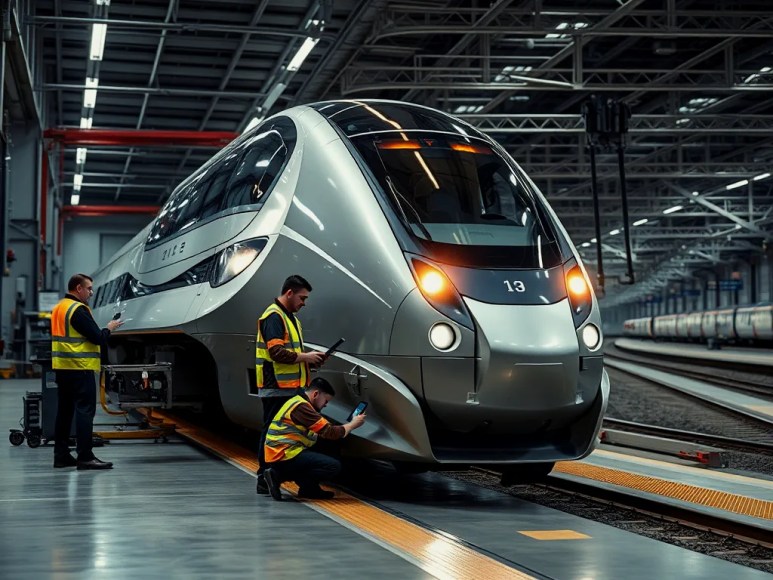
The program targets Bordeaux, Rennes, Nantes-Chantenay and Châtillon technicentres. Upgrades include expanded cleaning facilities, new lifting and exchange equipment for bogies, axles and traction motors, and reconfigured workshop flows to shorten corrective-repair turnaround. At Châtillon a newly opened heavy-lift line allows simultaneous removal and replacement of major running-gear components — a change that alone can cut a multi-day intervention to a single shift in many cases.
How much capacity increases and why that matters
SNCF projects a 15% rise in preventive and corrective maintenance capacity. Practically, that means quicker scheduled overhauls and fewer out-of-service days per set. With roughly 900 maintenance staff already working across Technicentre Atlantique on about 105 TGV sets, the uplift translates into several restored sets available each month — enough to add services or provide resilience during peak travel periods.
Nantes-Chantenay: a €70M new facility designed for future fleets
Nantes-Chantenay receives a dedicated €70 million new-build facility featuring four platform tracks, two maintenance lines and modern train-washing equipment. Designed for double-deck Duplex sets and future TGV M units, the site anticipates mixed-fleet servicing needs and opens in 2028. By planning layout and tooling around higher-capacity rolling stock, SNCF reduces the need for later retrofits and shortens routine service times for larger sets.
Trainset renewals: what the €90M buys passengers
The €90 million fleet renewal tranche targets systems that drive passenger experience and operational uptime: HVAC reliability, toilet plumbing and waste systems, USB power points and interior LED lighting. These are engineered to lower mean time between failures (MTBF) and to simplify modular replacements. The expected outcome is fewer in-service failures, faster depot interventions and the flexibility to increase seat availability on busy corridors.
Fleet growth: 28 TGV Duplex Océane sets for the Atlantic axis
SNCF will deploy 28 TGV Duplex Océane twin-deck sets to the Atlantic axis. Each new set of seats 556 passengers, compared with 459 seats in older Atlantique units — a per-train capacity gain of nearly 21%. That seating uplift directly reduces per-passenger operating cost on high-demand services and helps meet demand growth without proportional increases in train paths.
Ridership context and demand drivers
In 2025 the Atlantic axis carried 42.6 million passengers, a 25% increase versus 2017. The network serves 62 points and faces both organic growth and competitive pressure from low-cost long-distance coaches and airlines. Extending the life and capability of existing trains provides a cost-effective buffer while new-build fleets enter service.
Extending TGV service life: the O2D program and its targets
The O2D program, launched in 2023 and separate from the Atlantique package, covers 104 TGV sets (81 single-deck and 23 double-deck). With a budget exceeding €600 million, it aims to move designs originally sized for ~34 years to either 40- or 50-year service lives through structural checks, system renewals and selective component replacement. SNCF projects staged returns of refurbished sets — 26 in 2026 and 23 in 2027 — with work running to 2033.
Complementary modernizations and how programs fit together
Between 2020 and 2026 SNCF invested €250 million in mid-life upgrades for 50 sets, increasing capacity on those trains from 509 to 556 seats. Separately, the order for 100 TGV M sets represents a €3.5 billion investment to renew the fleet long-term. Each program targets different scopes: depot capacity, life-extension, seat-capacity upgrades and new-build replacement. They operationally overlaply but should not be summed as one aggregated investment because of different objectives and timelines.
Operational examples: faster turnaround and higher frequency
Two practical effects the program delivers:
1) Faster bogie exchanges: simultaneous removal tools reduce a complex bogie swap from multiple shifts to one, returning sets to service within 12–24 hours instead of 48–72. That can free a unit for one additional daily round-trip on a busy route.
2) Modular interiors: standardized electrical and sanitary modules allow depot teams to swap failing components in a single shift without complex rewiring. That reduces in-service cancellations resulting from onboard failures.
Timeline, workforce and measurable goals
Key milestones: new lifts and equipment already commissioned at Châtillon; Nantes-Chantenay opening targeted in 2028; staged fleet renewals through 2027 and O2D continuing to 2033. Measured KPIs include depot throughput (sets/day), mean downtime per failure, percentage of scheduled maintenance completed on time and in-service availability rate. Staffing remains near 900 technicians for the Atlantic technicentres, with training investments to operate new lifting rigs and modular systems.
How passengers and operators benefit
Passengers gain more reliable heating/cooling, working USB outlets, improved lighting and fewer service interruptions. Operators gain fleet resilience that lets them run higher-frequency timetables or reassign freed trains where demand spikes. Financially, increasing seat capacity on existing paths delays the need for extra train paths and yields better revenue per train-km.
Be the first to comment