
Enhanced Dispersal of Combat Aircraft at Night
Royal Air Force personnel now routinely move combat jets into hardened shelters and hangars during night hours to reduce exposure to potential unmanned aerial vehicle (UAV) attacks. This tactic shortens response time for scramble operations while placing aircraft behind reinforced concrete and steel, which absorb blast and fragmentation effects. Bases pair dispersal with documented parking plans that ensure operational sortie rates remain high even when a proportion of the is sheltered.
Active Counter-UAS Systems Deployed on Airfields
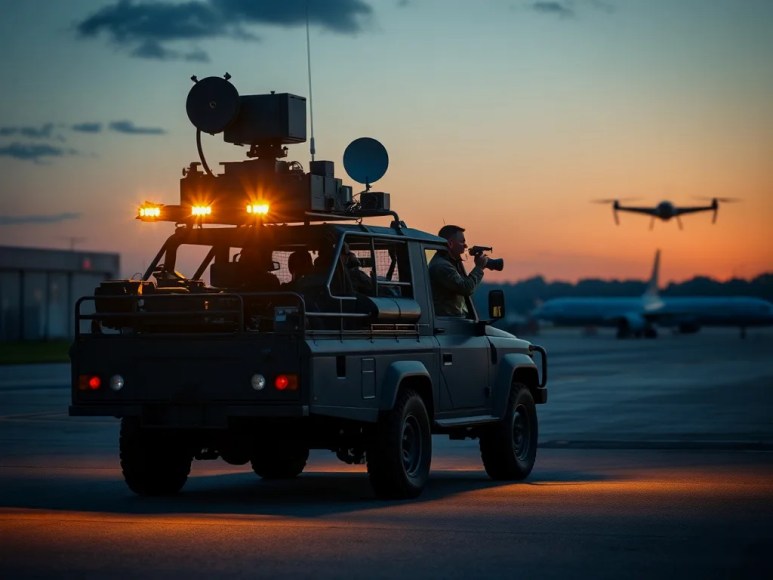
Air bases are integrating layered counter-UAS (C-UAS) systems that combine detection, identification, tracking, and defeat. Typical deployments include long-range radar arrays for early detection, electro-optical/infrared (EO/IR) cameras for visual classification, and radio-frequency (RF) sensors to locate control links. Defeat options range from RF jamming to directed-energy prototypes and kinetic interceptors in trials. For example, installing fixed RF-suppression arrays around aprons and temporarily deploying mobile jamming vans during high-threat periods has reduced unauthorized drone penetrations in recent exercises.
Access Control and Perimeter Hardening Measures
Effective base defense extends beyond the flightline. Strengthened perimeter fencing, intrusion detection sensors, and controlled approach corridors limit opportunities for hostile drones to loiter near sensitive areas. Bases now map no-drone buffer zones with geofencing overlays tied into base airspace management. Ground controls enforce vehicle and personnel vetting at multiple concentric checkpoints, and new lighting schemes reduce silhouette cues that commercial drones exploit for target acquisition.
Intelligence-Led Alerts Following Suspicious Incidents
Recent unauthorized drone sightings at RAF Lakenheath and earlier incidents near RAF Fairford triggered immediate intelligence reviews and temporary posture changes. Commanders use a standard incident playbook: isolate the affected zone, verify aircraft readiness, escalate C-UAS posture, and coordinate with host-nation law enforcement and allied units. These steps create predictable, auditable decision trails and allow rapid reallocation of air policing assets if intelligence indicates a sustained campaign.
Layered Personnel and Technical Responses to Sabotage Threats
Following alerts about potential Russia-linked sabotage targeting firms supplying Ukraine, the Ministry of Defense and MI5 expanded monitoring and protective measures around defense contractors. Actions include enhanced security clearances for critical-site visitors, periodic vulnerability assessments, and mandatory reporting chains for abnormal activity. Technicians and base staff receive targeted briefings on recognizing tampered equipment and reporting cybersecurity anomalies tied to operational technology that could affect ground-handling systems.
Infrastructure Investments and New Hardened Shelters
Parliamentary discussions now prioritize constructing additional reinforced aircraft shelters and refurbishing existing ones to contemporary blast standards. Investment plans emphasize modular, quick-build shelters for deployable squadrons and centralized maintenance hubs with hardened bays. Where available, bases adopt redundant utility routing and protected fuel lines to maintain sortie generation even if one node sustains damage.
Operational Examples and Measurable Outcomes
In recent trials, bases that combined hardened parking with active detection and RF suppression logged a measurable decline in successful proximate drone intrusions: mean time to detect dropped from >10 minutes to under 2 minutes, and unauthorized close-proximity events fell by over 70% during enhanced posture. Practical lessons include predefining safe approach corridors for service UAVs, standardizing alarm priority levels, and rehearsing multi-agency response drills quarterly to keep procedures crisp.
Step-by-Step Rapid Base Response Checklist
1. Trigger: Confirm drone detection via radar/EO/IR or validated sighting.
2. Immediate actions: Dispense aircraft to shelters, arm C-UAS defeat if authorized, and activate perimeter lockdown.
3. Communication: Notify air traffic control, base operations, and national C-UAS fusion centers; issue NOTAMs for temporarily restricted airspace.
4. Assessment: Classify threat (commercial, hobbyist, hostile) using RF signatures and onboard sensors.
5. Remediation: Implement jamming or intercept, detain suspects on ground if present, and collect forensic evidence from recovered UAS.
6. After-action: Conduct threat brief, update risk registers, and adjust patrol and detection postures based on findings.
Balancing Readiness with Legal and Civil Constraints
Bases coordinate C-UAS defeat actions with civil aviation authorities to avoid unintended disruption to civilian traffic. Legal frameworks require validated probable cause before kinetic or persistent RF countermeasures in many jurisdictions, so procedures include rapid legal consultations and preauthorized escalation thresholds to maintain compliance while protecting assets.
Forward-Looking Adaptations and Allied Cooperation
Emerging approaches emphasize swarm-detection software, AI-assisted sensor fusion, and integrated sharing of drone-threat indicators across NATO partners. Collaborative trials focus on interoperable C-UAS standards so allied units can export sensor feeds and control defeat assets under tight security protocols. Investing in domestic manufacturing of counter-UAS components reduces supply-chain exposure to adverse influence and accelerates fielding of tailored solutions.
What Airbases Can Do Now
Short-term priorities include auditing shelter capacity versus sortie requirements, expanding RF-sensing footprints, running realistic red-team drone exercises monthly, and formalizing joint response agreements with local police. Medium-term steps: fund additional hardened bays, deploy advanced sensor fusion, and institutionalize cross-domain training that mixes ground security, cyber, and air operations teams.